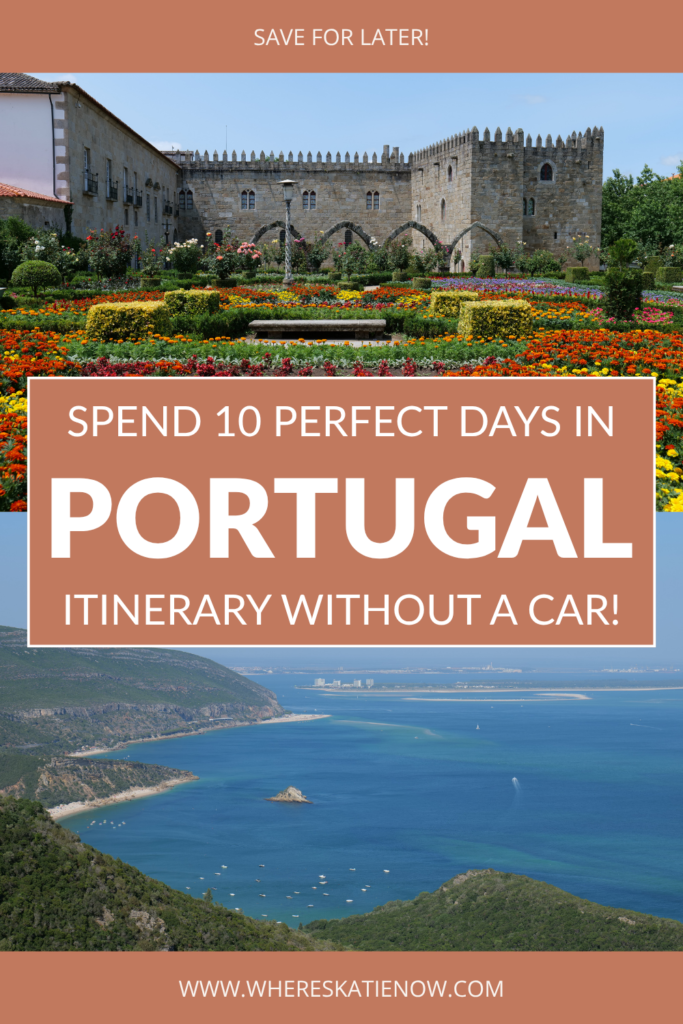
The BEST 10 Days in Portugal Itinerary (Without A Car)
Dreaming of the perfect 10 days in Portugal itinerary but don’t want the stress of hiring a car, constantly moving hotels, and overplanning every little detail?
Well, I’ve done this exact trip myself solo, and figured out how to see the best of Portugal – from iconic Lisbon and Porto to hidden gems like Arrábida and Amarante – stress-free.
And now you can steal my exact itinerary and do the same – no extra planning needed!
There’s no confusing logistics and no rushed one-night stops.
Just two iconic city bases (Porto and Lisbon), simple public transport, and guided day trips that are genuinely worth your time and money.
I’ll share exactly how to structure your trip, what each day looks like, and all of the little things I wish I’d known before I did this itinerary for myself.
Ready? Let’s plan your dream 10 days in Portugal!
Disclaimer: Some of the links on this blog are affiliate links. That means if you click on one and make a purchase, I may earn a small commission – at no extra cost to you. I only recommend products, places and services I genuinely love and use on my own solo travels. Thank you for supporting my adventures so I can continue to provide free content on this blog! 💛
What You Can See With 10 Days in Portugal
This 10-day Portugal trip is designed to show you some of the best places to visit in Portugal, plus a few hidden gems that most first-time visitors completely miss!
Here’s exactly what your trip will look like:
Days 1–4: Porto
- Exploring the charming old town and the riverside of Porto
- Take to the water on a Douro River boat cruise
- Visit Amarante (a true hidden gem) OR the Douro Valley (for wine + views!)
- Day trip to Braga, Guimarães, and Bom Jesus do Monte
Day 5: Travel from Porto to Lisbon
- Optional stop in Coimbra (highly recommend to break up the journey!)
Days 6–10: Lisbon
- An itinerary to see the very best of Lisbon (trams, miradouros & Pasteis De Nata!)
- Visit Arrábida Natural Park (Lisbon’s most underrated day trip!)
- Day trip to Évora OR join a tour to see central Portugal’s highlights
- Visit the must-see Sintra, Pena Palace, Cascais and Cabo da Roca
- See the highlights of Belém and finish with a relaxed Tagus River cruise
How This Portugal Itinerary Works
If you’ve ever looked at the typical Portugal itinerary for first-timers, you’ve probably noticed one thing: A LOT of hotel changes.
And, especially if you’re travelling solo (like me!), that can get tiring fast!
So, I decided to go against most of the advice out there and build my own stress-free, easy itinerary – without a car – but also without missing out on the most beautiful places in Portugal.
You’ll stay in just two bases (Porto and Lisbon) for your entire 10 days in Portugal, which means no constant packing, no dragging your suitcase up Portugal’s famous hills every other day, and no time wasted just on travel days.
Instead, this itinerary is a mix of walkable cities, easy journeys by public transport, and guided day trips for those harder-to-reach hidden gems!
How to Get Around Portugal Without A Car
I know Portugal without a car sounds limiting, but honestly, it’s one of the easiest countries in Europe to do this in!
For this 10 days in Portugal itinerary, you’ll mainly rely on three things:
- Walkable cities (both Porto and Lisbon are perfect for exploring on foot!)
- Easy journeys by public transport (to get to places like Amarante or Evora)
- Guided day tours (for places that are harder to reach or easier with transport included)
And the good news is that Portugal does public transport surprisingly well!
The train network, run by Comboios de Portugal, is reliable and connects major towns and cities. The most popular connection is the high-speed service between Porto and Lisbon.
Although the high-speed services are always more expensive than the local routes, so keep that in mind if you’re travelling on a budget.
Then, to fill in the gaps that trains don’t cover (or if you are travelling on a budget), Portugal is also well served by a network of short and long-distance buses.
These services are run by FlixBus, ALSA and Rede Expressos, and I was again surprised by how reliable they were during my trip!
And finally, there are some places in Portugal that are difficult (or even impossible) to reach via public transport. So for these, I would recommend you join a guided tour.
I joined four tours during my trip to Portugal, and had amazing experiences on all of them!
For each day of this Portugal itinerary, I will share the exact transport I used, plus any alternatives you could consider.
Katie’s Top Tip: Book your key transport (like Porto to Lisbon) in advance, but leave some day trips flexible until you arrive. This gives you flexibility depending on the weather and your energy!
The Ultimate 10 Days in Portugal Itinerary (Without A Car)
Days 1–4: Porto (Your First Base)
I personally chose to fly into Porto first because it felt like a gentler, quieter introduction to Portugal than flying into the capital.
Porto is smaller than Lisbon, easier to get around, and definitely has a slower pace!
Getting to Porto
Chances are, you’ll be flying into Porto, as Porto International Airport is served by regular connections from airports around the world.
Some of the most popular connections are London, Barcelona, Paris, Rio and Toronto.
Porto Airport is then about 20–30 minutes from the city centre, and you can easily get in via the metro (most affordable option) or by taxi or Uber.
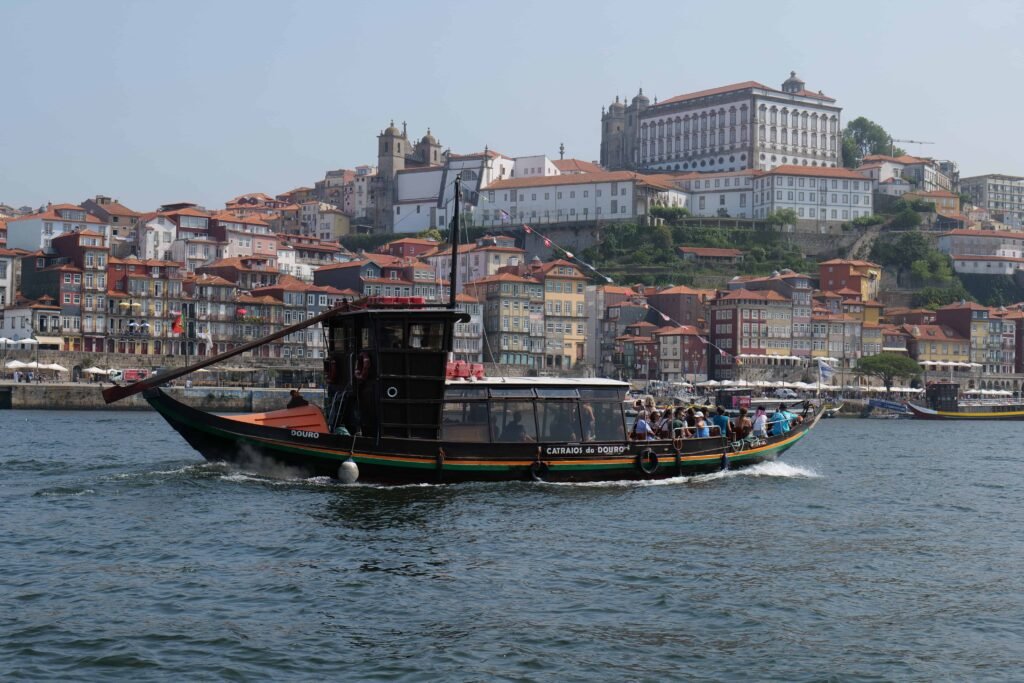
Where to Stay in Porto
For this Portugal itinerary without a car, location really matters. So I recommend you stay in one of these neighbourhoods:
- Ribeira → beautiful, historic, right by the river (best atmosphere but slightly busier)
- Baixa → central, practical, great for transport and walking everywhere
When I stayed in Porto, I prioritised being able to walk everywhere (and also having good access to public transport and tour pickup points), so I stayed in Baixa.
For hotels, I recommend the spectacular Gran Cruz House (located right by the water in Ribeira!) or B The Guest Downtown in central Baixa.
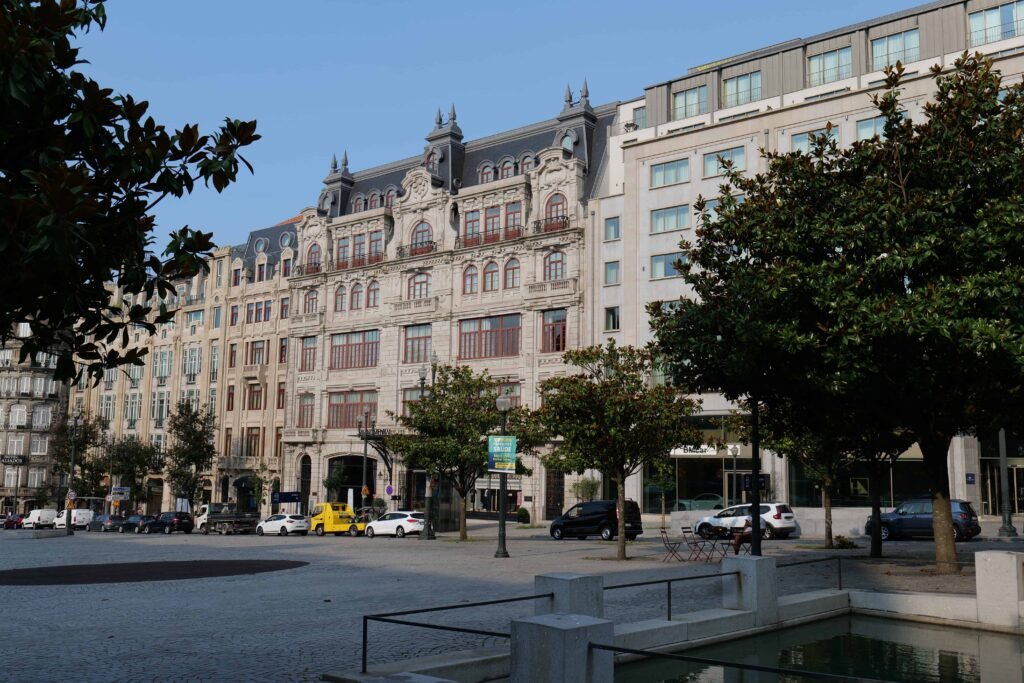
Where to Eat in Porto
- Taberna Rio
- Casa Guedes Rooftop
- Terra Nova
- Tasco
Porto is also one of the more affordable cities to visit in Western Europe, which makes eating out feel a lot less stressful on a budget!
Day 1: Arrive in Porto
The biggest mistake I see people make with any itinerary is trying to do too much, too soon.
After a long flight, new surroundings, and figuring out all of the logistics of getting from the airport to your accommodation, your energy is always going to be lower than you expect.
So your arrival day is all about settling in, rather than a packed itinerary!
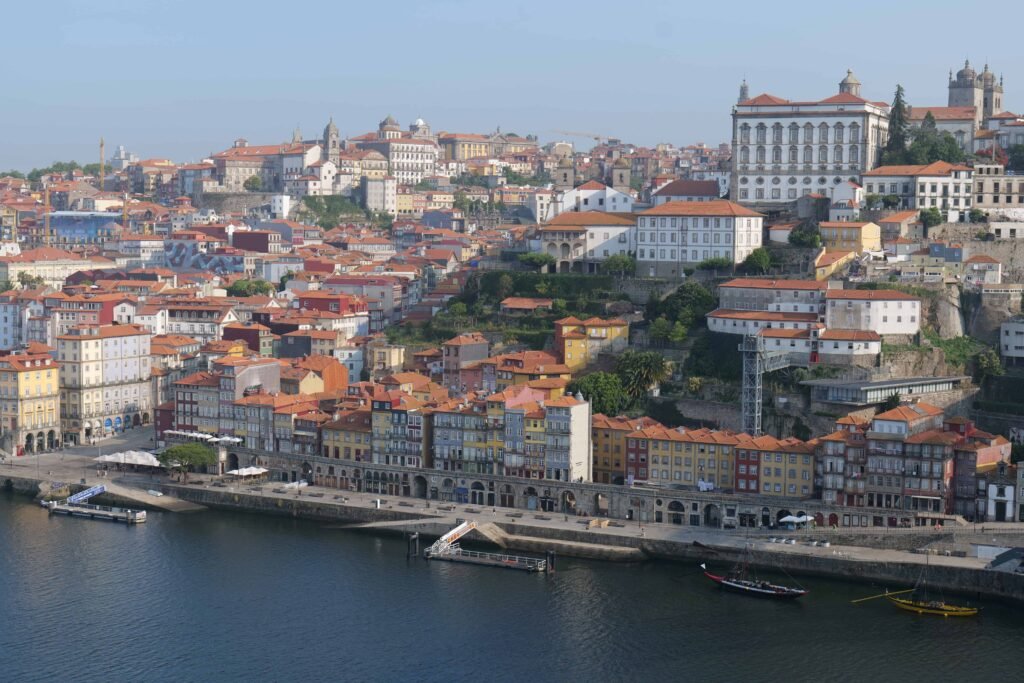
How to get from Porto Airport to the City Centre
The simplest and most budget-friendly option is the metro (Line E – purple line), which takes you directly from the airport into the city centre in about 30 minutes.
Here’s exactly what to do:
- Follow signs for “Metro” inside the airport (it’s very well signposted!)
- Buy an Andante Card from one of the ticket machines (you’ll need this for all public transport in Porto)
- Load it with a Z4 ticket (this covers the airport to city centre route)
- Validate your card in the machines before boarding the metro
Alternatively, if you’re arriving at night, tired, or just want a zero-stress option, a local taxi, Uber or Bolt is a good option too – just a bit more expensive.
Arrival
Once you arrive, keep things simple and do what you feel (without feeling like you have to rush straight into sightseeing, even if you’re not feeling it!)
But if you do feel like heading out to explore straight away (which I did on my trip!), I highly recommend heading to Porto’s beautiful Crystal Palace Gardens.
I ended up sitting there all afternoon on my first day in Porto, reading my book under a tree and looking out over the city. And honestly, it was the perfect way to arrive in Portugal!
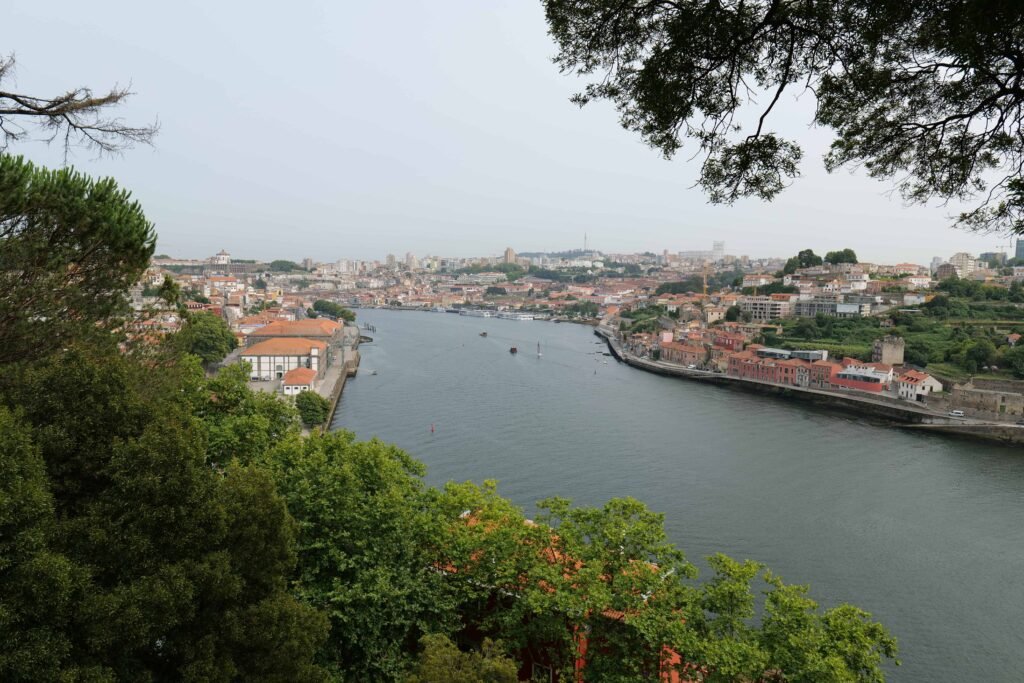
Day 2: Porto Highlights + River Cruise
Your first full day is your main Porto sightseeing day, and it was one of my favourite days of my entire 10-day Portugal trip.
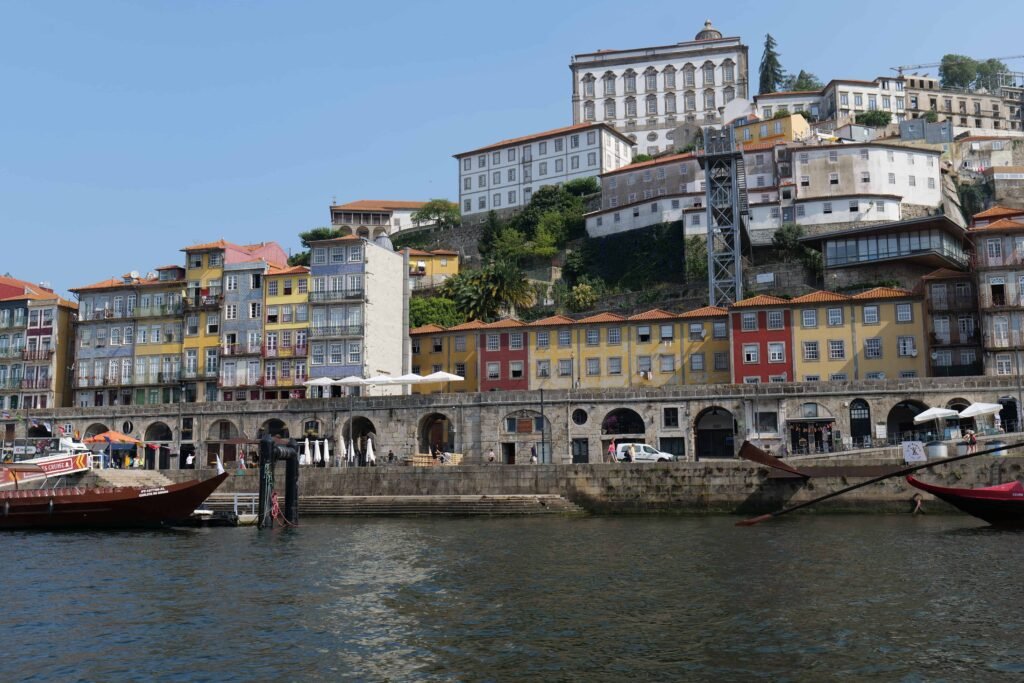
This is the day you’ll see postcard-worthy views from endless miradouros, the tiled buildings Porto is famous for, and the spectacular Ribeira riverfront!
Morning: Walking Porto’s Highlights
Porto is best explored on foot.
(Yes, it’s hilly, and yes, you’ll walk a LOT. But this is the best way to see the highlights!)
You can use public transport to get around Porto if you need it, but the real magic is wandering between the miradouros, getting lost down the cobbled streets of the old quarter, and stumbling across tiled churches!
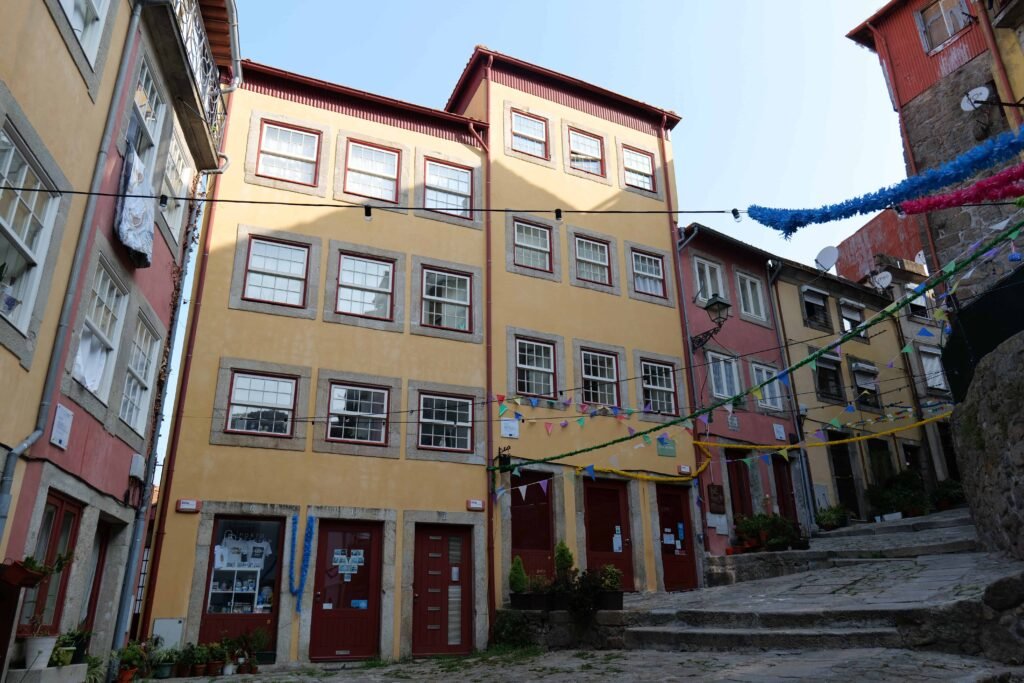
Here are the highlights I recommend you see:
Start your morning walk through Porto at Capela das Almas, one of the most photographed buildings in the entire city!
The famous blue-and-white azulejo tiles cover the entire exterior of the building, and each one works to tell religious stories, right across the façade of the chapel.
It’s right near Bolhão, so it’s an easy starting point if you’re staying centrally. But I would highly recommend you visit early if you can, as it gets very busy later in the day.

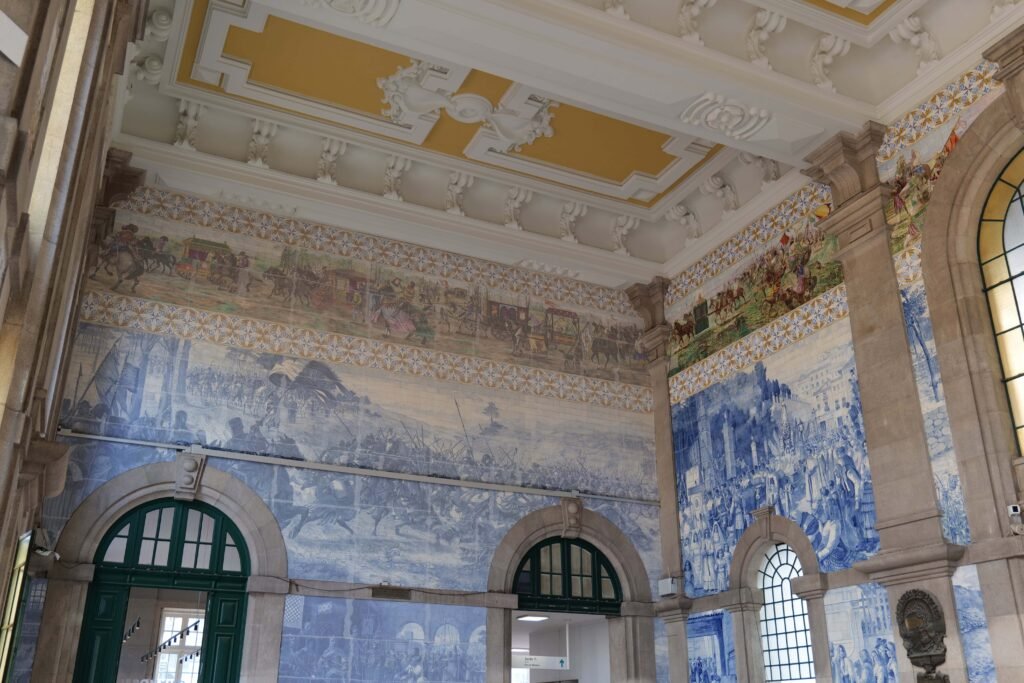
From there, walk downhill to São Bento Railway Station.
Even if you’re not getting a train, you have to visit inside this grand station! The entrance hall walls are covered with over 20,000 blue-and-white tiles showing scenes from Portugal’s history, and it’s one of the most beautiful stations in Europe!
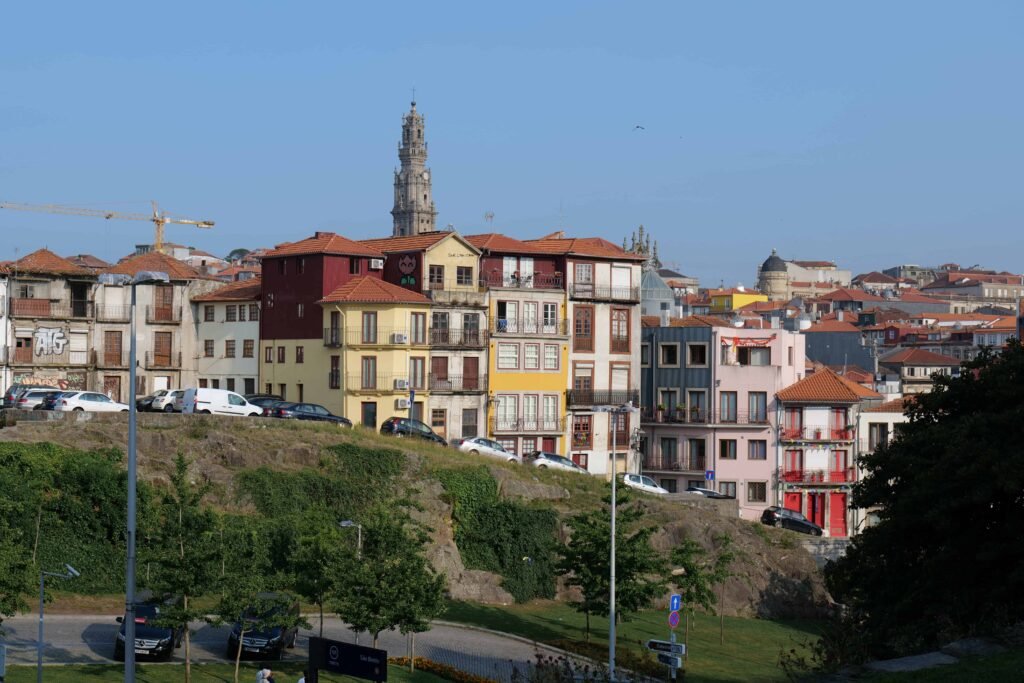
Next, continue your walk to Miradouro da Vitória, one of my favourite viewpoints in Porto and (surprisingly!) a bit of a hidden gem compared to other miradouros in the city.
From here, you’ll get your first proper look at the famous colourful buildings of Porto!
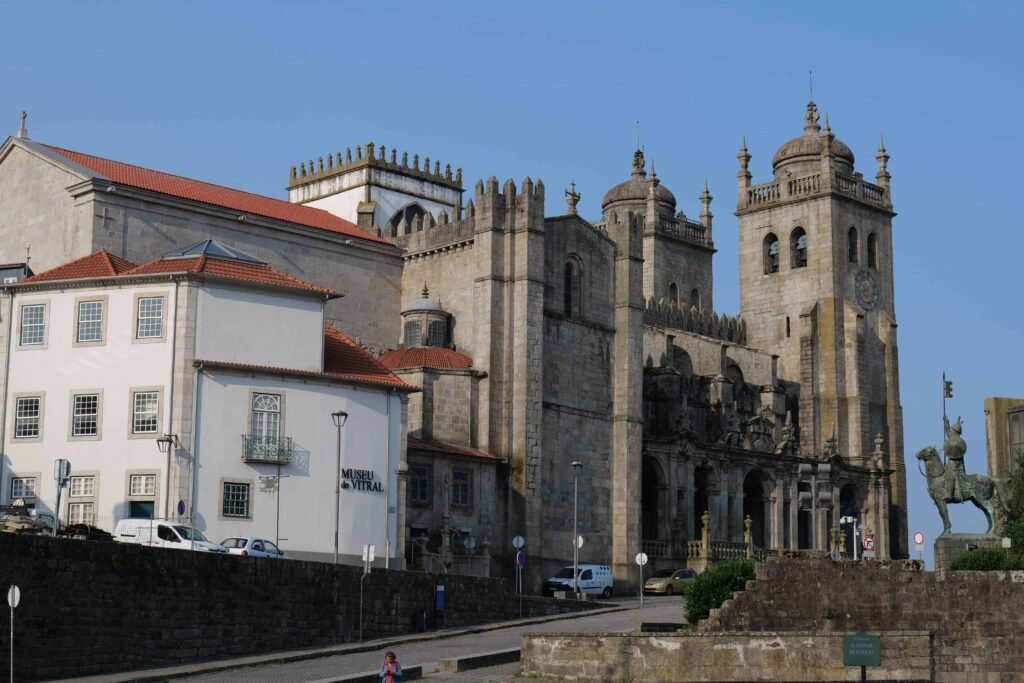
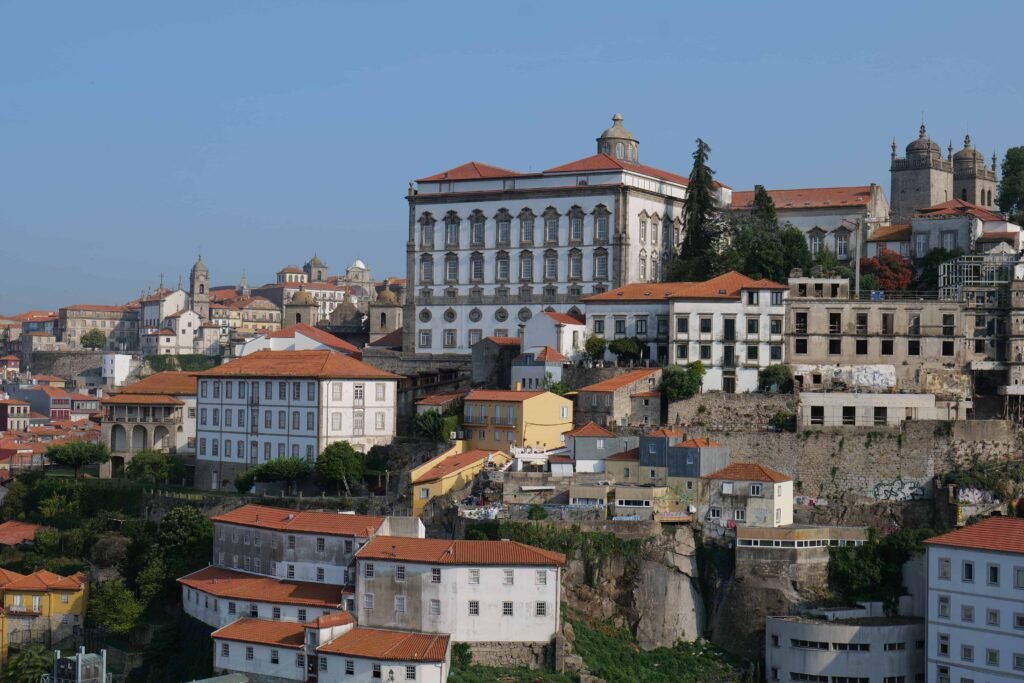
The next part of your walk continues to the incredibly grand Porto Cathedral, which sits at one of the highest points in the entire city of Porto.
The cathedral square has another amazing viewpoint, and it’s also where the streets start to slope dramatically down through Porto’s oldest quarter to the Douro River – but you’re not heading down just yet!
Instead, walk to the iconic Luís I Bridge – my highlight of this Porto self-guided walk!
I recommend you cross the upper level of the bridge, starting on the right-hand side for iconic views over the rooftops of Ribeira and, of course, the sparkling Douro River.
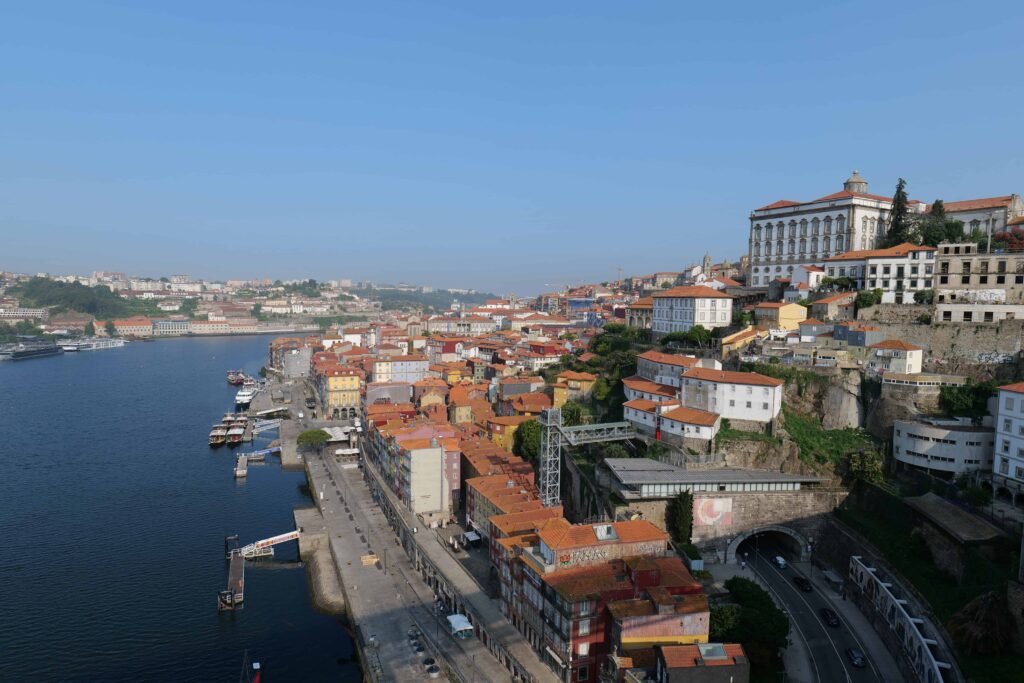
Once in Gaia, there are two miradouros I recommend you visit – Cais da Ribeira de Gaia and Miradouro da Serra do Pilar, right next to the grand Serra do Pilar Monastery.
These miradouros have the best views in the whole of Porto, looking back across the Douro at the colourful, waterfront neighbourhood of Ribeira – your next stop!
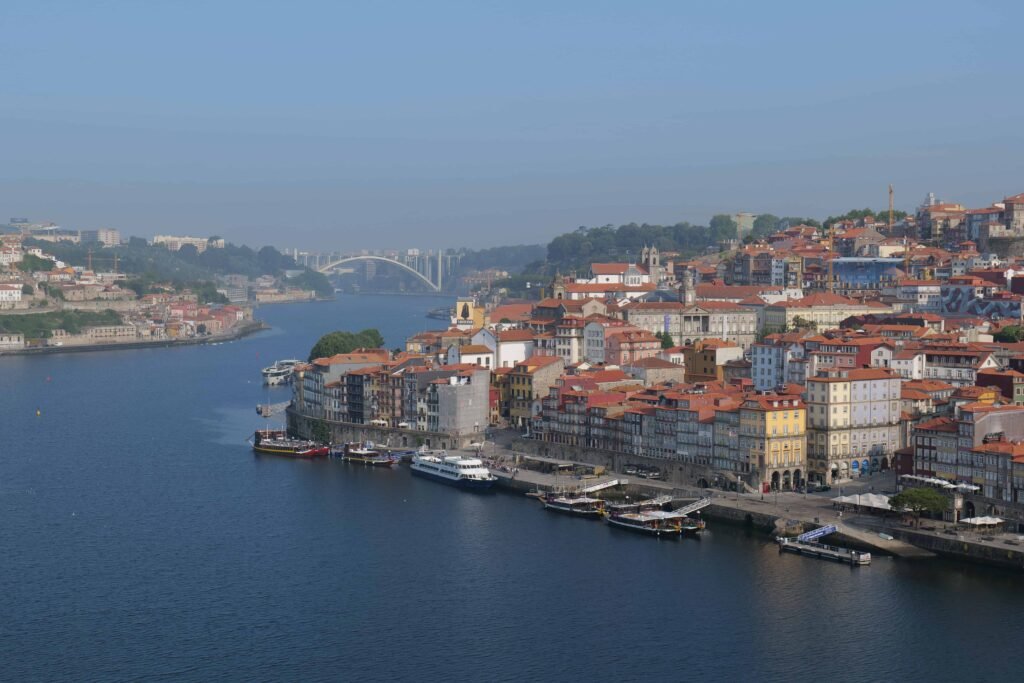
Finally, cross back over the Luís I Bridge and walk through the beautiful old quarter of Porto to get to the famous Ribeira District.
To get there, you can either cross the bridge on foot (on the opposite side for different views). Or, if you fancy a bit of adrenaline, hop on the cable car across the river.
Ribeira is the perfect neighbourhood for yet more photos, to visit the stunning Palácio da Bolsa, and stop for a well-deserved lunch break after a full morning of walking!
I recommend the Portuguese restaurant Muro do Bacalhau. It’s located right on the Ribeira waterfront, so definitely sit outside if the weather is nice.
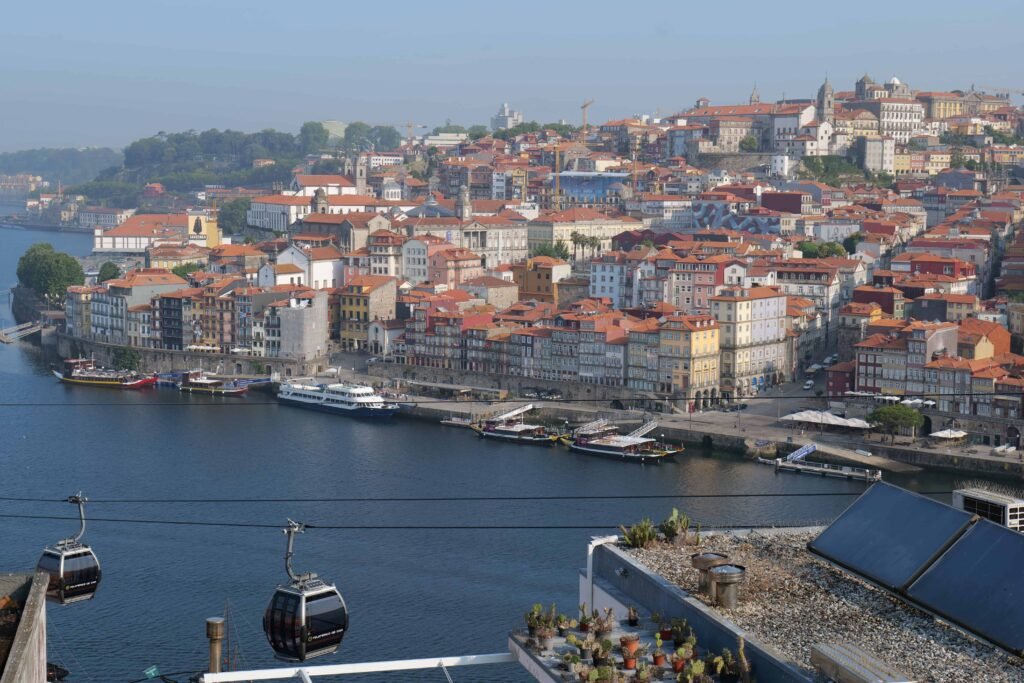
These are my highlights in Porto, but definitely not everything you will see!
So if you want a full step-by-step route, I’ve got a more detailed 3 days in Porto itinerary that you can read here on the blog!
Or, if you’re not confident navigating a new city solo or just want to enjoy some local context as you walk, you could also join this amazing guided walking tour of Porto instead.
Afternoon: Douro River Cruise
By the afternoon, your feet will be feeling it in a big way – and I know I was very ready for a break from all that walking by this point.
So this is the perfect time to take to the water for a relaxing Douro River Cruise!
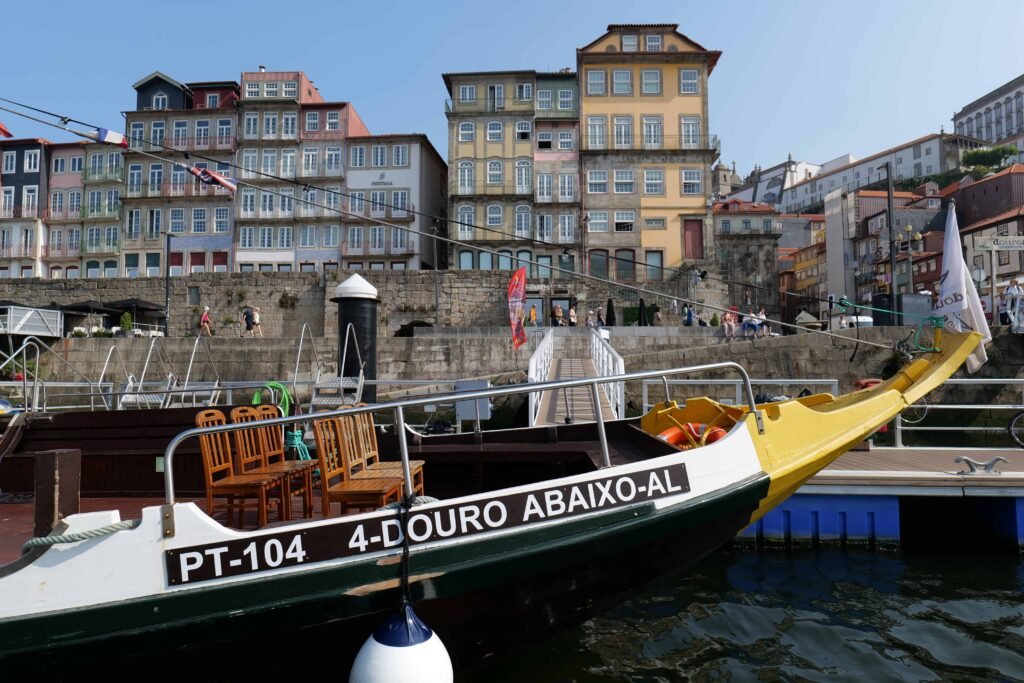
The boat trip is easy to book on the day along the riverfront, but I recommend you book in advance online to guarantee your preferred timing (especially in peak summer).
The cruise I took left directly from the Ribeira waterfront and lasted about 50 minutes.
We sailed in a traditional, beautifully decorated Rabelo boat and passed under Porto’s famous six bridges – including the Luís I Bridge.
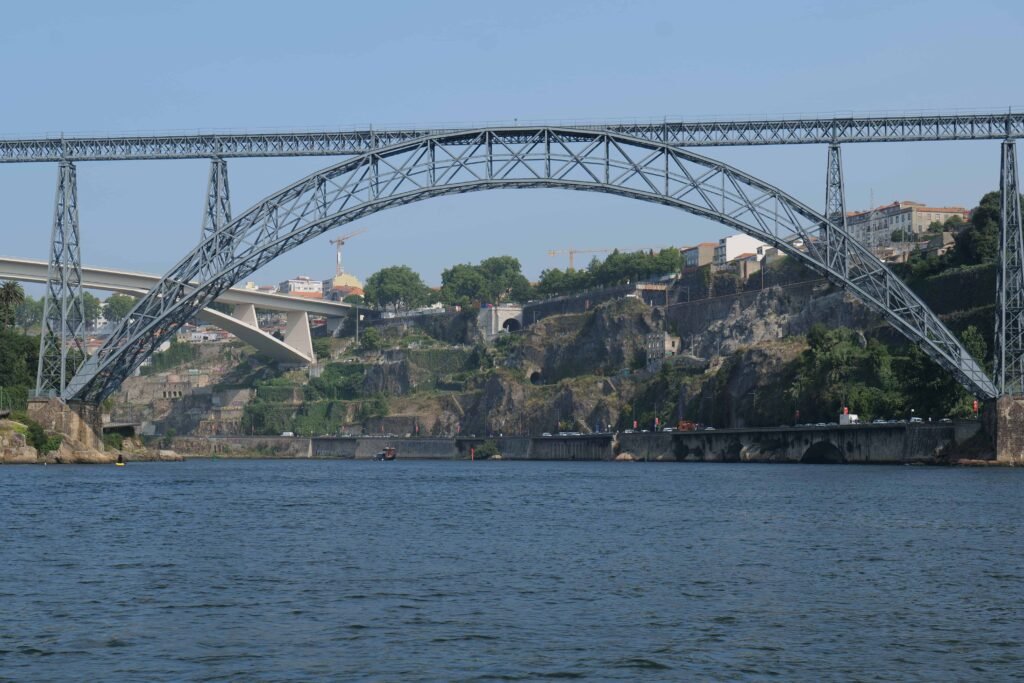
I’ve gotta be honest, I almost skipped this boat trip when I was in Porto because it sounded like a bit of a tourist trap – but I’m so glad I didn’t!
It was so lovely to see a completely different perspective of this beautiful city from the water. And after a full morning of exploring Porto on foot, it was a perfect, relaxing break!
Evening: A Fado Show + Dinner
The amount of time you have left after your boat trip depends on how long you walked in the morning.
For example, I walked well into the afternoon, then had lunch, and then joined the 50-minute Douro boat trip – so I wasn’t done until around 4pm. But if you joined the Porto walking tour, you’ll probably have finished a lot earlier than that.
Either way (unless you’re staying in Ribeira), you have to get back up to central Porto – and that walk is STEEP!
You can either do this walk on foot or, do what I did, and take the Funicular dos Guindais to get back up to Porto Cathedral and the city centre.
Once you’re back in the centre, you could continue your sightseeing into the evening if you have the energy. Ticking off more central sights like:
- Torre dos Clérigos
- Praça do Município
- Igreja de Santo Ildefonso
- Praça da Liberdade
- Igreja do Carmo
Or, you could head (by tram or on foot) back into Gaia and spend a relaxing evening enjoying a delicious, traditional Portuguese dinner and a live Fado show!
Day 3: Amarante OR Douro Valley (Choose Your Adventure!)
Today, your Portugal itinerary can go one of two ways – with a relaxed getaway to the small town of Amarante or a full day of sightseeing on a guided Douro Valley tour.
The choice is totally up to you and what you want from your trip!
Option 1: Amarante (Relaxed + Underrated)
If you love discovering places that feel slightly under the tourist radar, Amarante is such a perfect choice for your third day in Porto.
This is what I chose, and I’m so glad I did!
I spent the morning exploring central Porto again (which is great if you like to explore at a slower pace or ran out of time yesterday), then took a bus to Amarante for the afternoon.
This meant I didn’t feel rushed leaving early, and it gave me time to revisit a couple of spots in Porto I’d loved the day before – especially the Crystal Palace Gardens!
Then, after lunch, I headed to the small, peaceful town of Amarante.
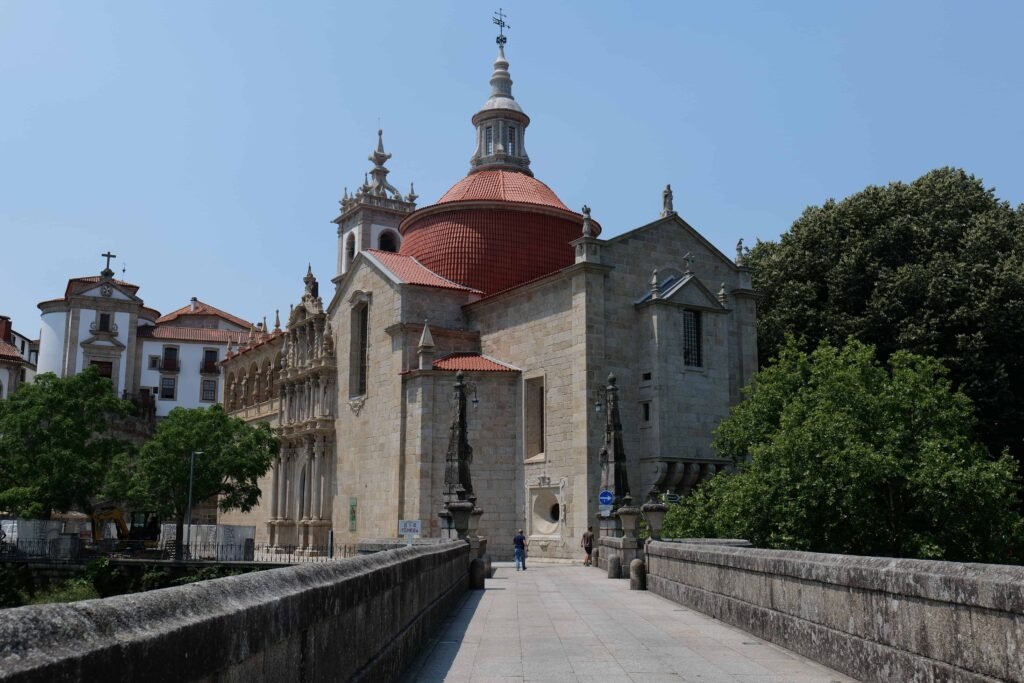
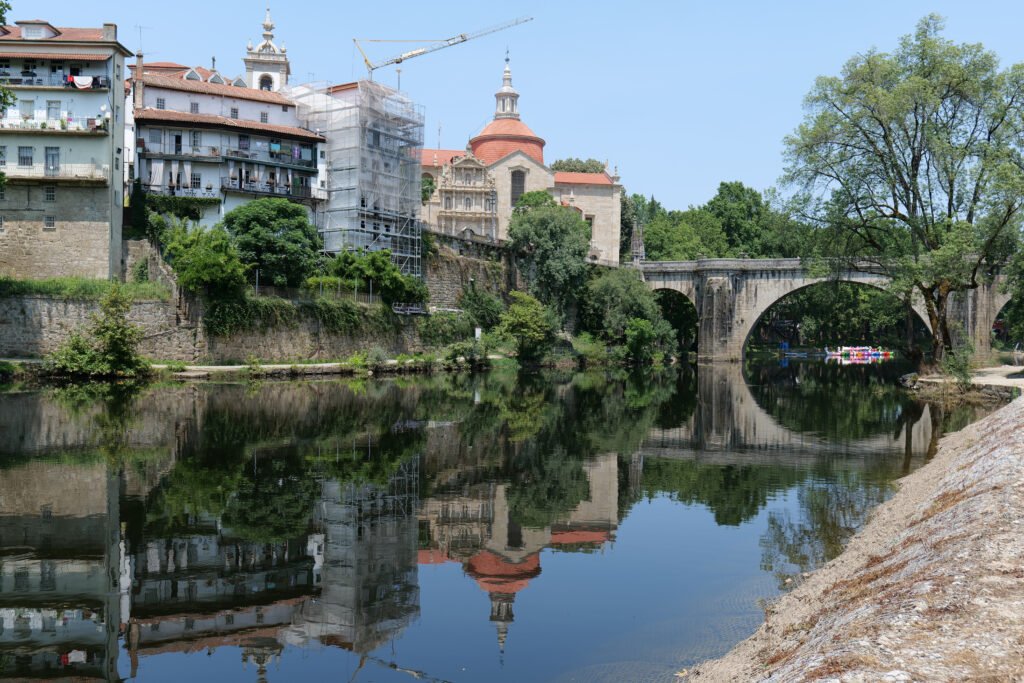
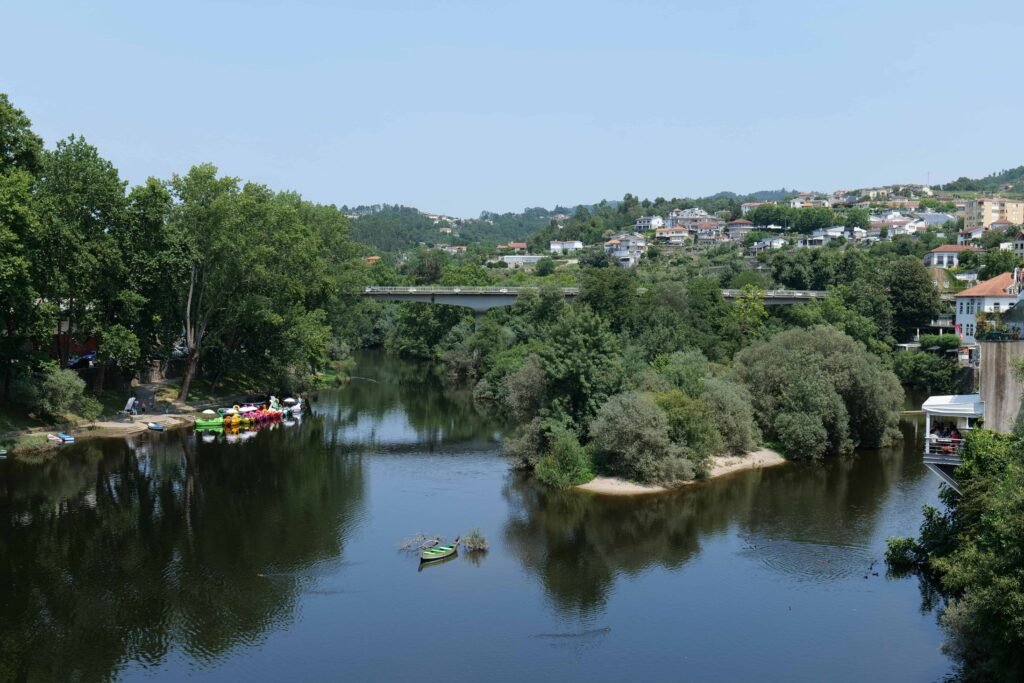
The centre of the town is built around the Tamega River and the beautiful São Gonçalo Bridge, which leads straight to São Gonçalo Church.
I spent most of my time in Amarante walking along the riverfront and across the bridge, and also just sitting by the river with a drink and a local pastry.
After two busy sightseeing days in Porto, that slower energy was exactly what I needed!
How to get to Amarante from Porto:
Tickets are very inexpensive, and you can book them online or at the bus station.
- Go to Campo 24 de Agosto Bus Terminal in Porto
- Take a bus to Amarante (I went with Rede Expressos) for about 1 hour and 15 minutes
- Amarante Bus Station is just a short walk from the beautiful São Gonçalo Bridge
Option 2: Douro Valley (Structured Sightseeing + Very Scenic)
If you love dramatic landscapes and want to enjoy one of the most famous tourist experiences in the country, today is the day to properly visit the Douro Valley!
This region is one of the oldest wine-producing areas in the world and also a UNESCO World Heritage landscape. So even if wine isn’t your thing, the scenery makes it worth visiting.
But because transport connections are very limited (and long!) without a car, the easiest way to do this day trip is to join a guided day tour from Porto.
This includes:
- Transport through the valley (with stunning photo stops!)
- A boat trip along the Douro River
- A visit to and a tour of a vineyard
- Wine tasting
Even though I didn’t choose this option on my own trip (I don’t drink), I would definitely join this tour on a future visit to Portugal – and it’s one of the most recommended Porto day trips for good reason!
Day 4: Braga + Guimarães Day Trip
Visiting Braga and Guimarães was by far my favourite day trip from Porto!
During my Portugal itinerary without a car, I joined this guided tour from Porto that visited Bom Jesus do Monte, Braga, and Guimarães in one day.
I loved that I was exploring a different side of northern Portugal to the city streets of Porto and quiet Amarante!
Plus, this is such a good example of why a day trip can actually work better with a guided tour than on public transport (rather than feeling like a compromise).
Yes, you can get trains from Porto to Braga and Guimarães individually. But to see them both (plus Bom Jesus do Monte) in one day is NOT easy to plan.
And you’d likely have to cut one of these beautiful places out (or extend your trip).
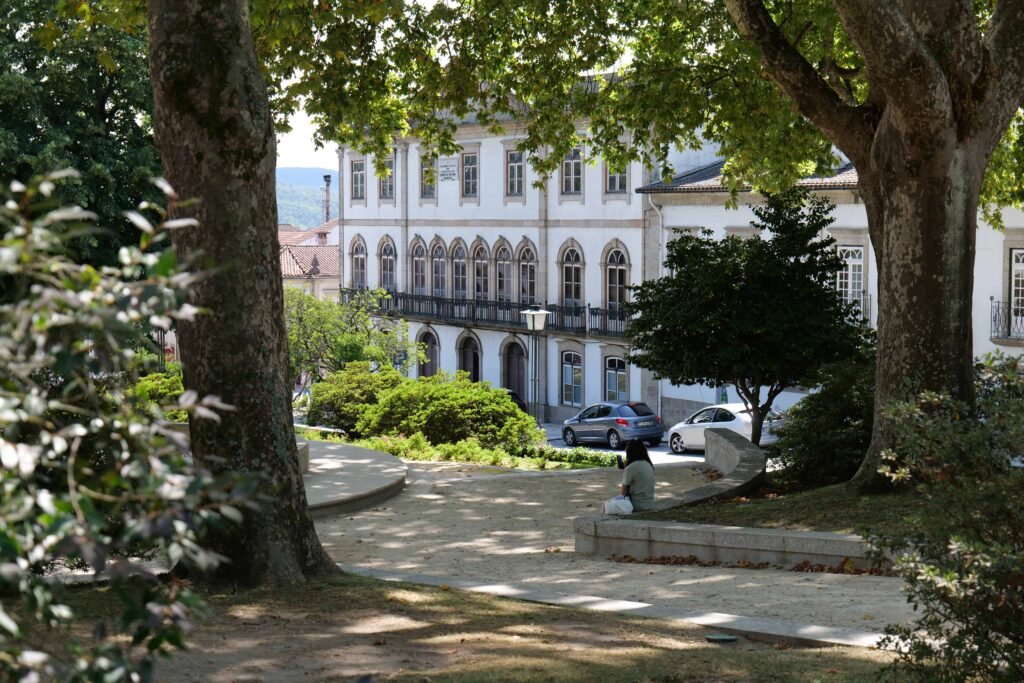
Stop 1: Bom Jesus do Monte
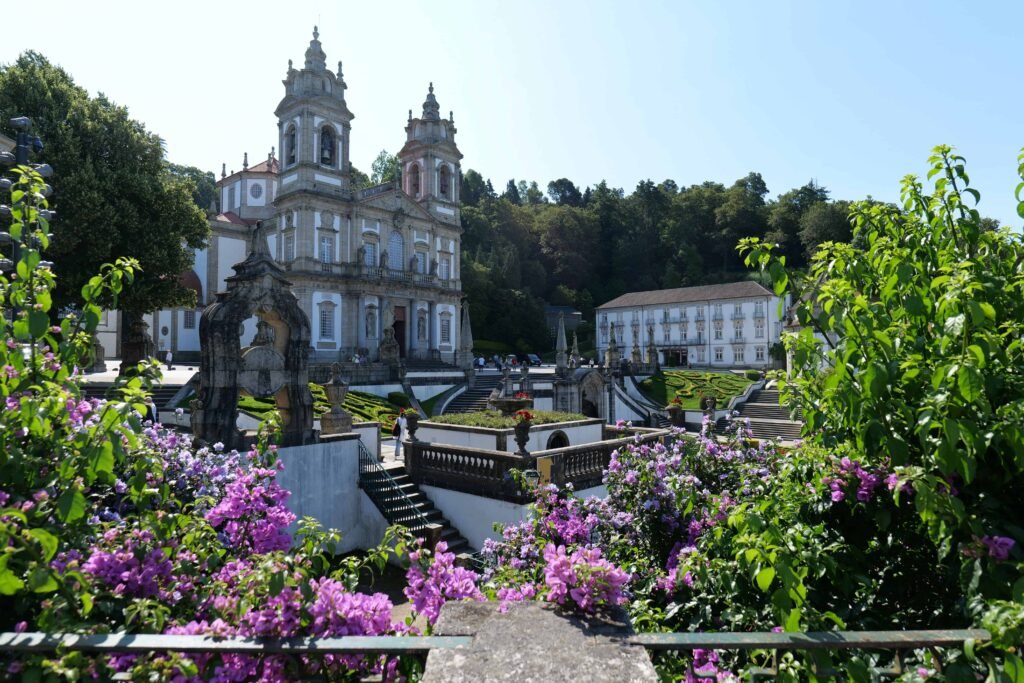
My tour began at the Sanctuary of Bom Jesus do Monte, just outside Braga, and it is honestly such a breathtaking start to the day!
It’s one of the most important religious pilgrimage sites in Portugal and also one of the most recognisable landmarks in northern Portugal.
But the highlight for most visitors at Bom Jesus do Monte is the famous zigzag staircase.
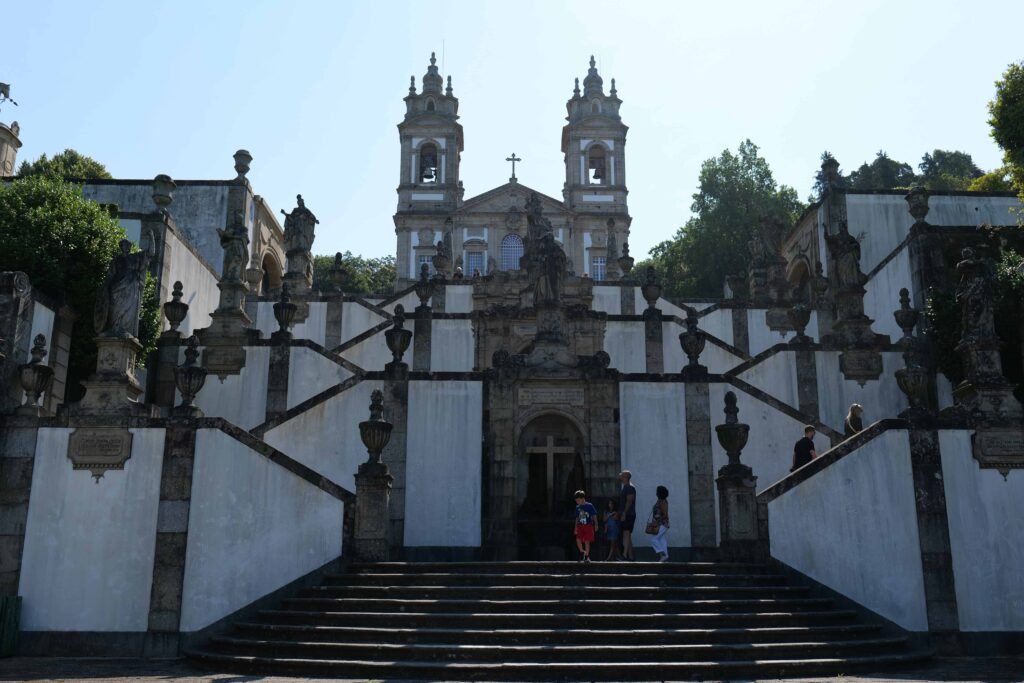
As the tour drops you at the top of the staircase, you’ve got two options to see it:
- Walk down (and then back up) the staircase
- Take the historic funicular (one of the oldest water-powered lifts operating in Europe!)
The walk looks intense (and it is steep and a LOT of steps), but it is also very manageable for most abilities if you take your time.
Plus, the steps are broken up by fountains and terraces, so there are lots of places to stop.
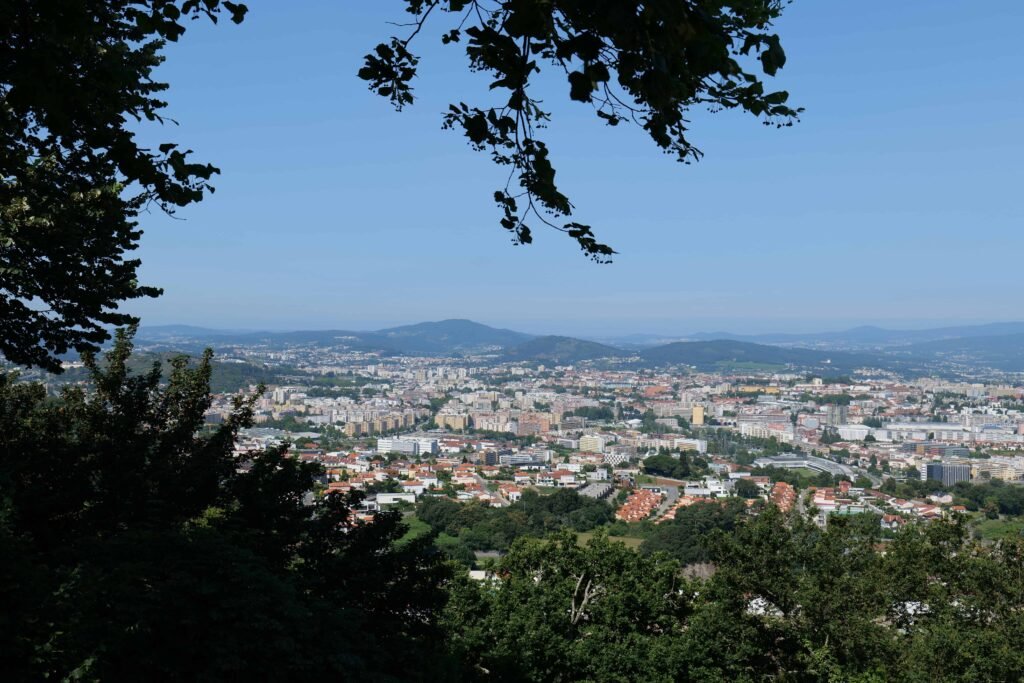
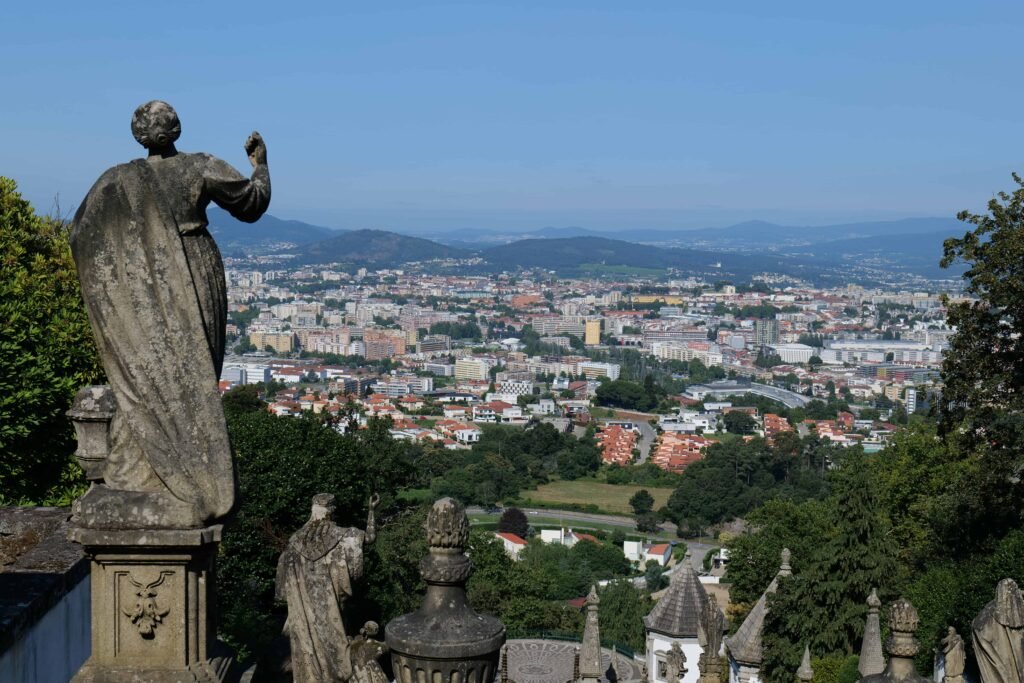
And, of course, you don’t have to walk down the steps at all – you will still see the best of the spectacular views over Braga and the surrounding countryside from the top!
I personally walked halfway down to take a photo of the steps leading up to the Sanctuary of Bom Jesus do Monte, but spent most of my time at the top admiring the views.
Stop 2: Braga (My Favourite City in Portugal!)
Braga is often skipped in shorter Portugal itineraries, which is such a shame, because it’s so underrated, utterly beautiful, and easily one of the best cities to visit in Portugal!
It is also one of the oldest cities in Portugal, and is often called the country’s religious capital because of its large number of churches and historic sites.
Braga ended up stealing my heart on this trip, to become my favourite city in Portugal!
And the guided tour I joined from Porto gave us plenty of free time to explore the historic centre, relax in the colourful Santa Bárbara Garden, and visit Braga Cathedral!
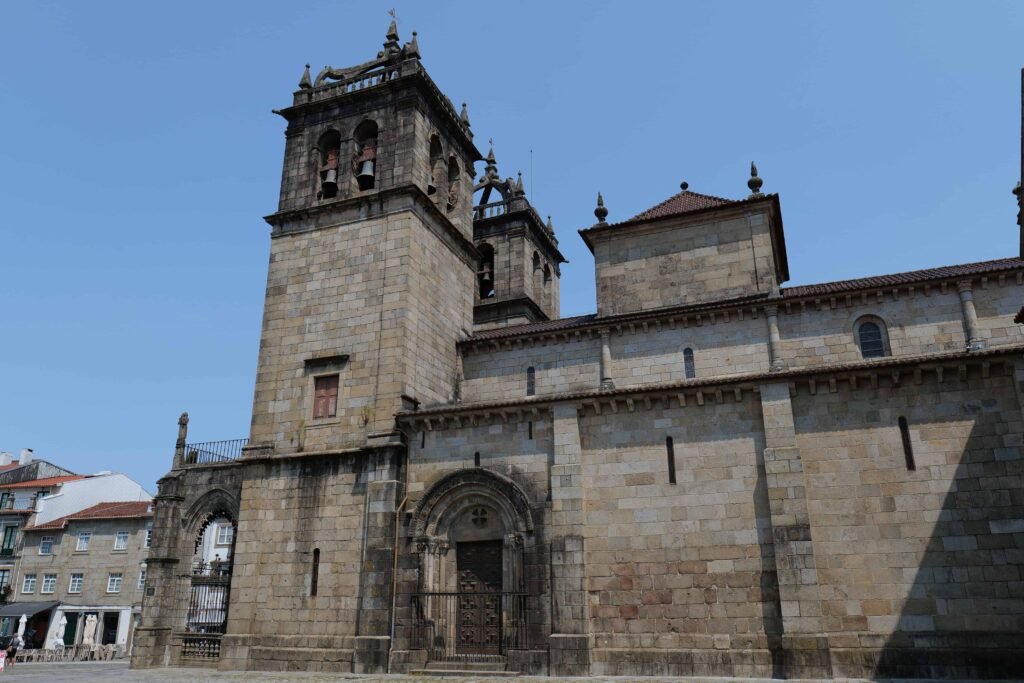
Your first stop is Braga Cathedral, the oldest cathedral in Portugal.
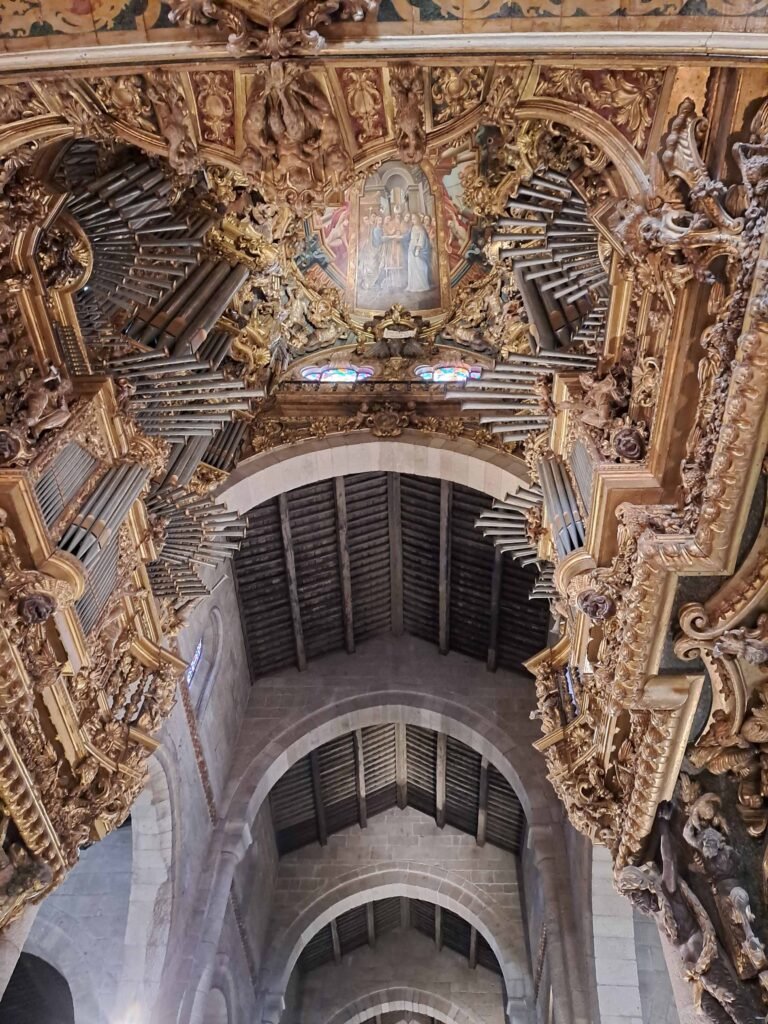
And even if visiting churches isn’t usually your thing when travelling, the cathedral in Braga is historic and super impressive to visit – both inside and outside.
I thought the painted frescoes inside the cathedral were especially beautiful!
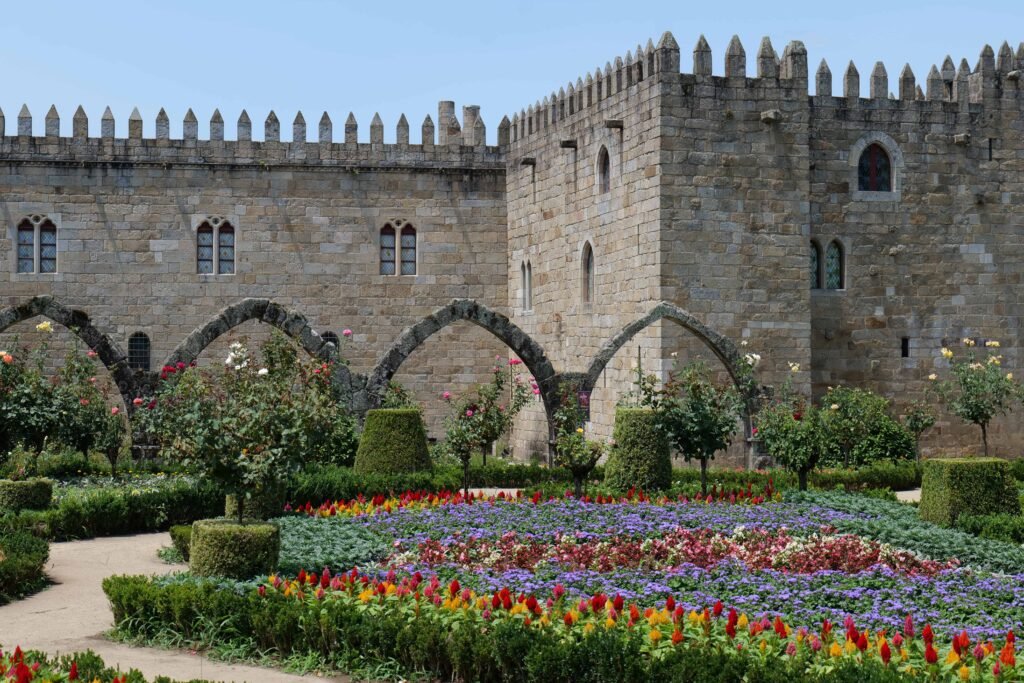
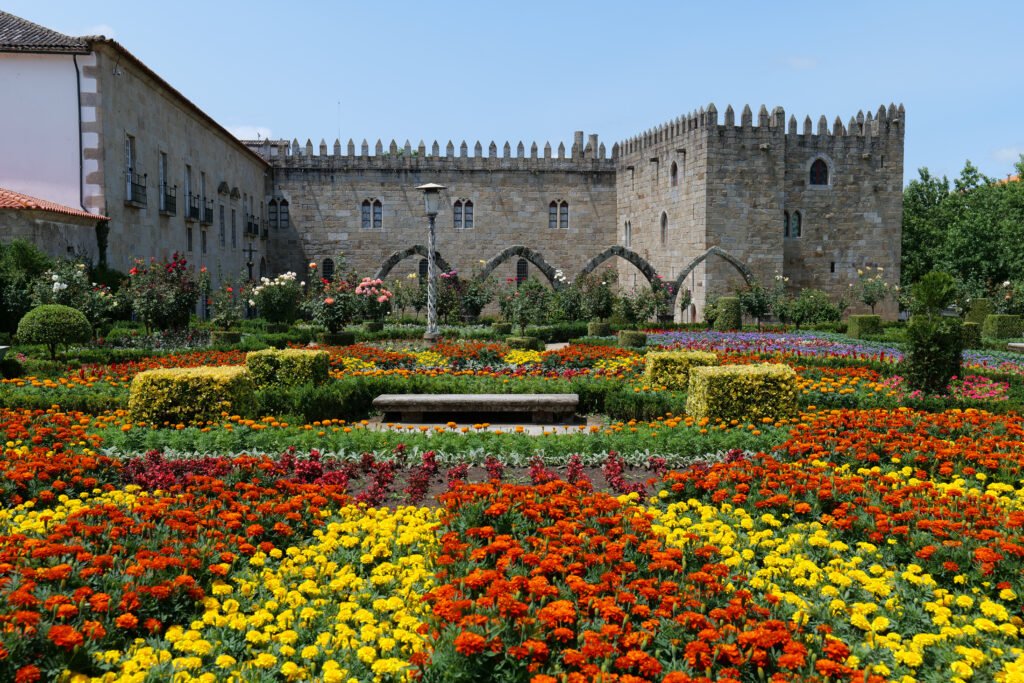
Then, from the cathedral, it’s just a short walk to Santa Bárbara Garden, which was my favourite spot to visit in Braga!
It’s not huge, but I visited at the end of June, and a spectacular display of summer flowers and roses was in full bloom against the old stone of the medieval palace.
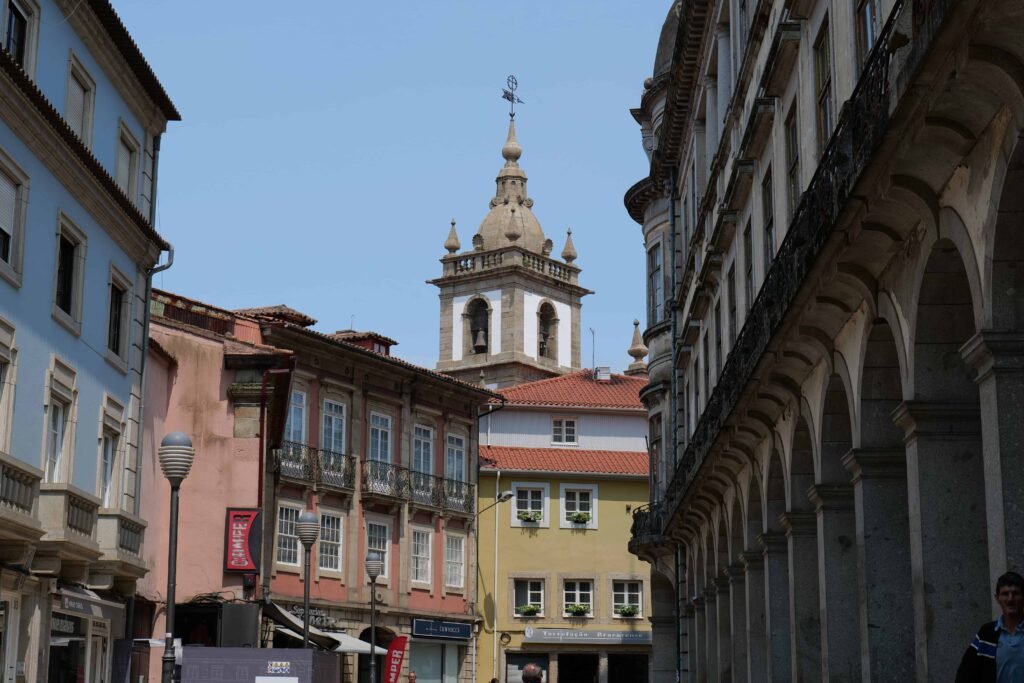
After the garden, the best thing you can do in Braga is simply enjoy a relaxed city walk.
Some of my highlights were:
- Arco da Porta Nova
- Raio Palace
- Praça da República
I loved that, even though I was on a guided tour, I never felt rushed. Braga is the main stop of the day, and I had plenty of time to sightsee, relax in the gardens and enjoy lunch.
But when I next return to northern Portugal, I will definitely spend a few days in Braga!
Stop 3: Guimarães (The Birthplace of Portugal)
Your final stop is the small city of Guimarães, often called the birthplace of Portugal because the country’s first king, Afonso I of Portugal, was born here.
And you genuinely do feel that sense of history as soon as you arrive!
The historic centre of Guimarães is a UNESCO World Heritage Site, and walking through the compact medieval streets feels completely different to Braga and Porto.
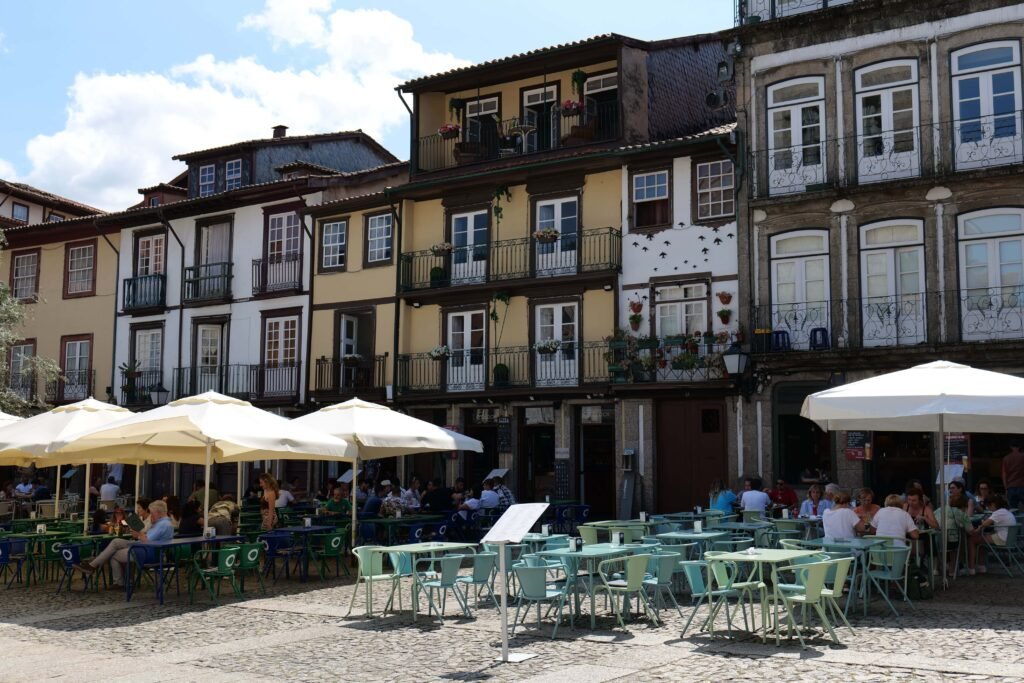
Guimarães is definitely a city where the streets themselves are the only attraction you need!
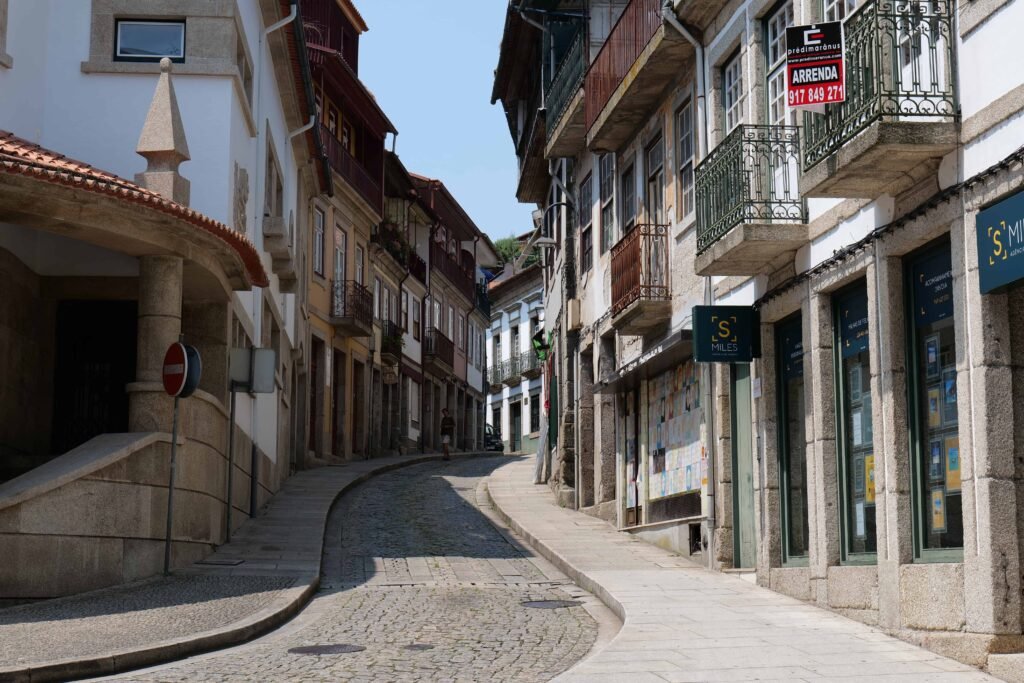
I loved wandering past the traditional stone buildings, relaxing at a shady café terrace in Largo da Oliveira Square, and exploring the quiet cobbled streets and alleyways.
You don’t need a checklist here, but here are a few highlights to look out for:
- The Palace of the Dukes of Braganza
- Largo da Oliveira Square
- Church of Saint Francis
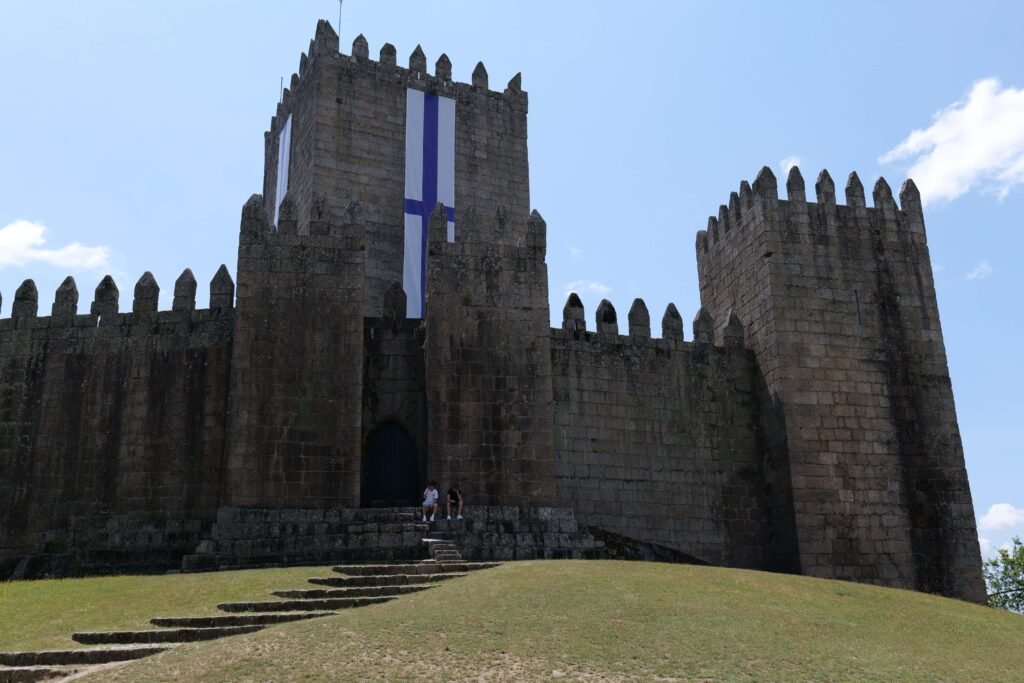
My tour group started at the picture-perfect Guimarães Castle (located just outside the old town), before we had plenty of time to explore the historic centre of Guimarães itself!
Days 5–10: Lisbon (Your Second Base)
Now halfway through this 10 days in Portugal itinerary without a car, it’s time to move on to Portugal’s vibrant capital city: Lisbon!
Lisbon offers bigger city energy, loads of amazing things to see and do, plus easy access to some of the most iconic day trips in the whole country.
Where to Stay in Lisbon
Choosing the right area to stay in Lisbon makes a huge difference when you don’t have a car (especially if you’re travelling solo, like me!)
These are the three neighbourhoods I recommend:
- Baixa → flat (rare for Lisbon!), central, easy to get everywhere
- Chiado → slightly more affordable, still central, great cafés and atmosphere
- Alfama → beautiful and historic, but very hilly
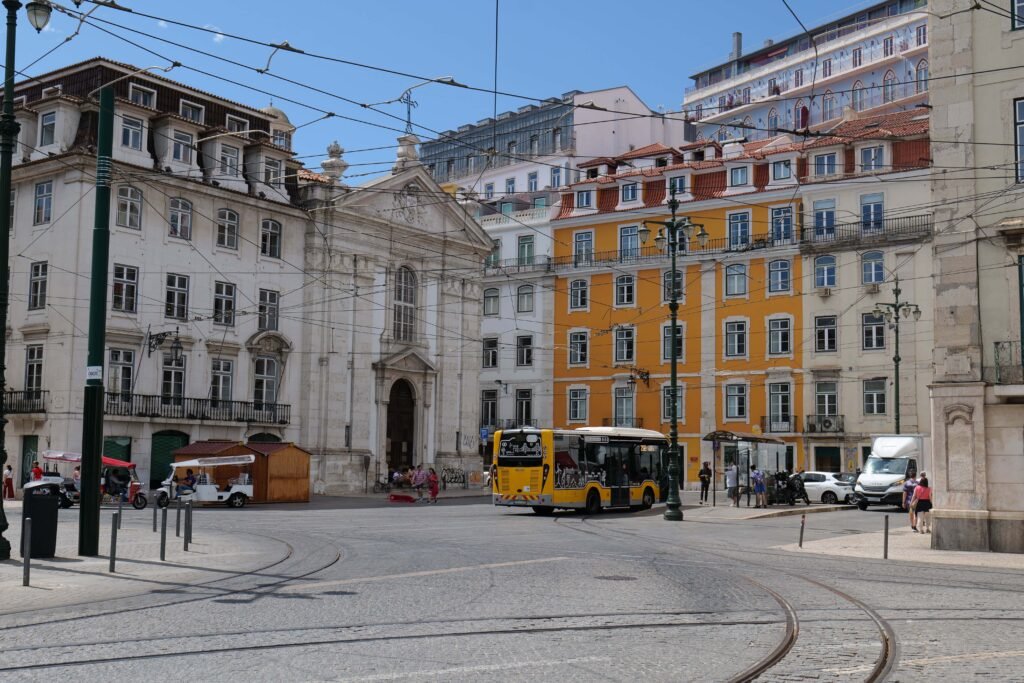
When I stayed in Lisbon, I prioritised being able to walk everywhere (and also having good access to public transport and tour pickup points), so I stayed in Baixa.
For hotels, I recommend Eurostars Lisboa Baixa in the Baixa neighbourhood, Hermitage Castelo in beautiful Alfama, and Le Consulat in Chiado.
Where to Eat in Lisbon
- Time Out Market (great if you want variety in one place!)
- O Velho Eurico
- Alfama Cellar
- Tapisco
- Taberna da Rua das Flores
Day 5: Travel to Lisbon (Via Coimbra)
Travel days don’t have to feel like a write-off!
To make the most of your 10 days in Portugal, I highly recommend you break up your journey from Porto to Lisbon with sightseeing in Coimbra.
But let’s go through both options:
Option 1: Direct from Porto to Lisbon (Simplest Option)
If you want the easiest route, just get the train or bus straight from Porto to Lisbon:
- Train from Porto Campanhã → Lisbon Oriente or Santa Apolónia
- Journey time: around 2.5–3.5 hours
- Book via Comboios de Portugal (CP)
- Choose an Alfa Pendular (fastest) or Intercidades train (more affordable)
You could also take a bus (with FlixBus, ALSA or Rede Expressos), which is cheaper than the train but slightly less comfortable and also a bit slower, taking 3 to 3.5 hours.
Option 2: Stop in Coimbra
This is what I did on my travel day from Porto to Lisbon, and I’d 100% recommend it!
Coimbra sits almost perfectly between the two cities, which makes it the easiest and most natural place to sightsee for a few hours instead of doing the whole journey in one go.
The city has a slightly slower, more traditional atmosphere, and is also quieter than Porto and Lisbon, despite being very studenty thanks to the University.
It also feels a bit off the beaten track for tourists, and more local, which I loved!
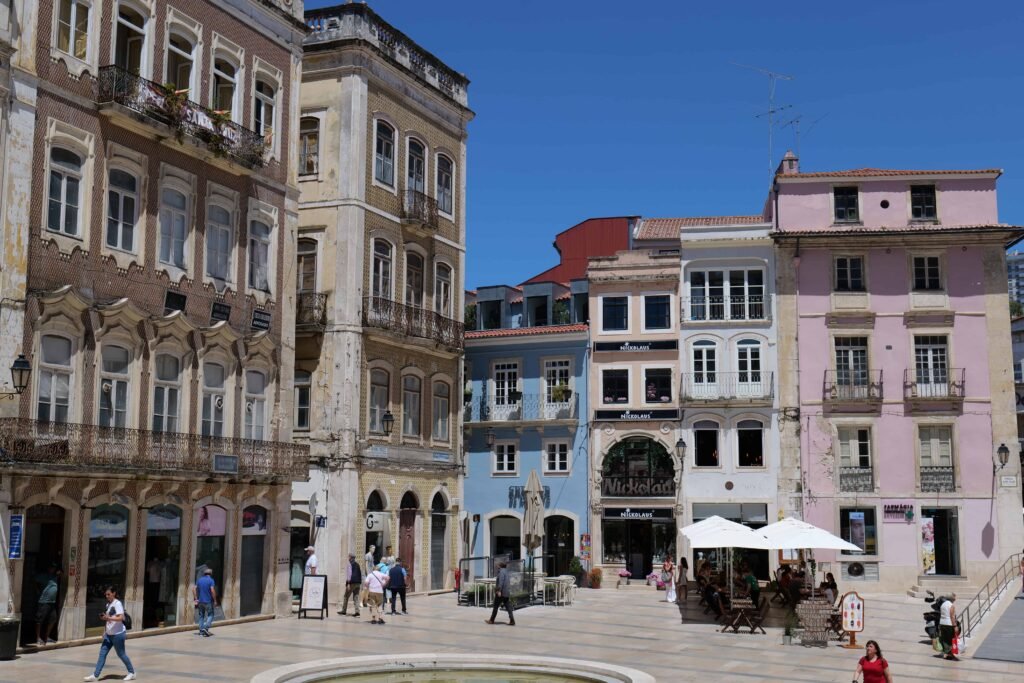
The best way to experience Coimbra is simply to walk through the old town.
The historic centre climbs steeply up the hillside toward the university, and you’ll pass quaint churches, beautifully tiled buildings, and stunning viewpoints the higher you go.
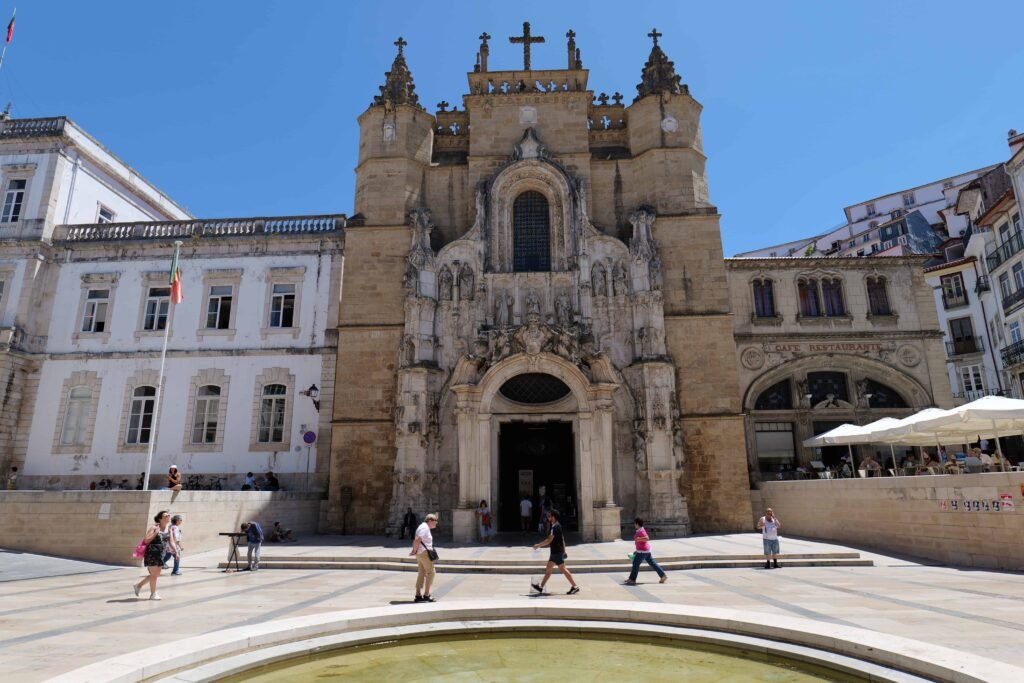
In the lower part of the old town, the Monastery of Santa Cruz is one of the most historically important buildings in Coimbra (and Portugal) – but most visitors walk straight past it!
Portugal’s first two kings, including Afonso I of Portugal, are buried here. And it’s peaceful and ornate to visit inside, but also well worth a photo stop from the outside.
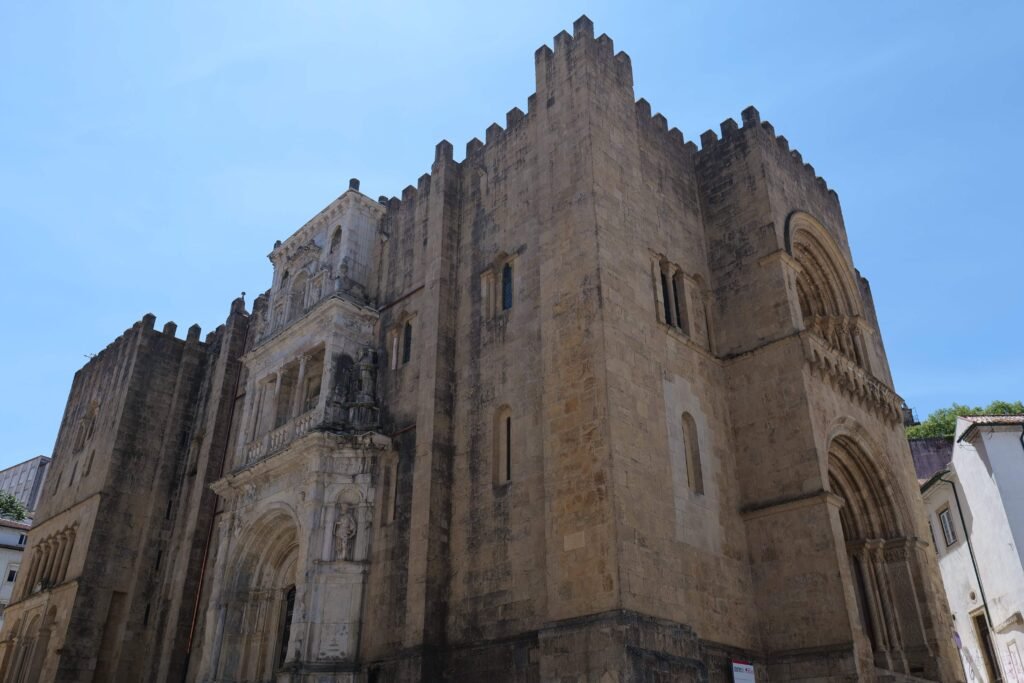
As you continue climbing up to the university, you’ll see Sé Velha (Coimbra’s Old Cathedral).
This was one of my favourite churches to photograph in Portugal because it looks almost like a dramatic fortress rather than a traditional cathedral from the outside!
At the top of the historic centre, you’ll finally reach the University of Coimbra campus, which is the true heart of the city!
It’s one of the oldest universities in Europe and a designated UNESCO World Heritage Site.
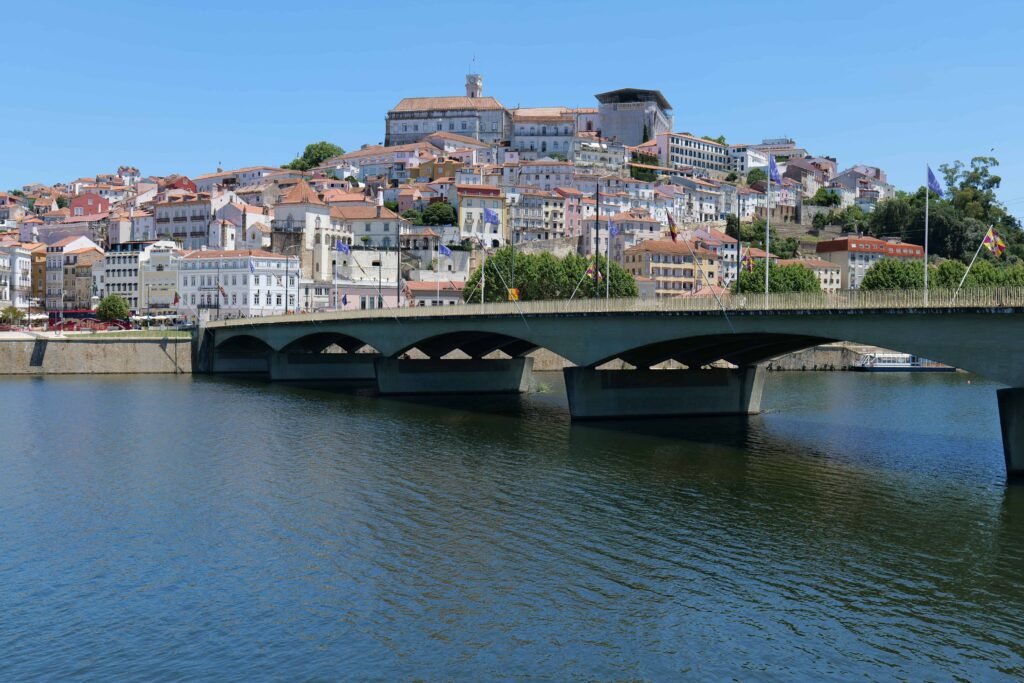
Plus, the university sits high above the city, so parts of the campus offer beautiful views across the rooftops and down to the sparkling Mondego River!
Even if you only have time to walk through the main courtyard area, it’s absolutely worth a photo stop. But I also highly recommend visiting the stunning Joanina Library.
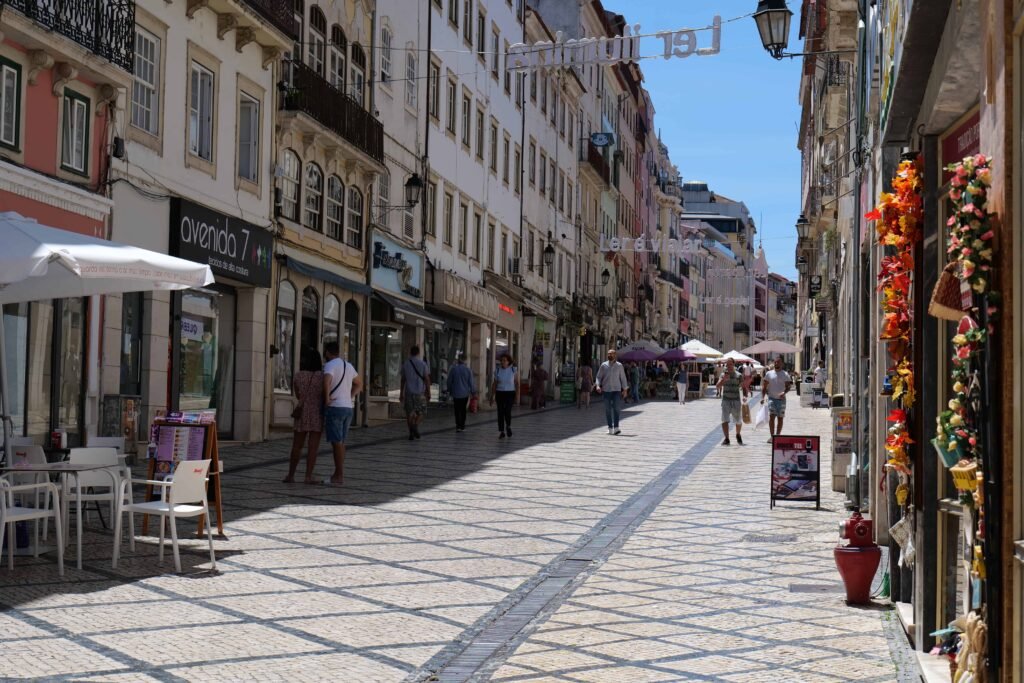
Finally, before leaving Coimbra, it’s worth walking down to the Mondego River.
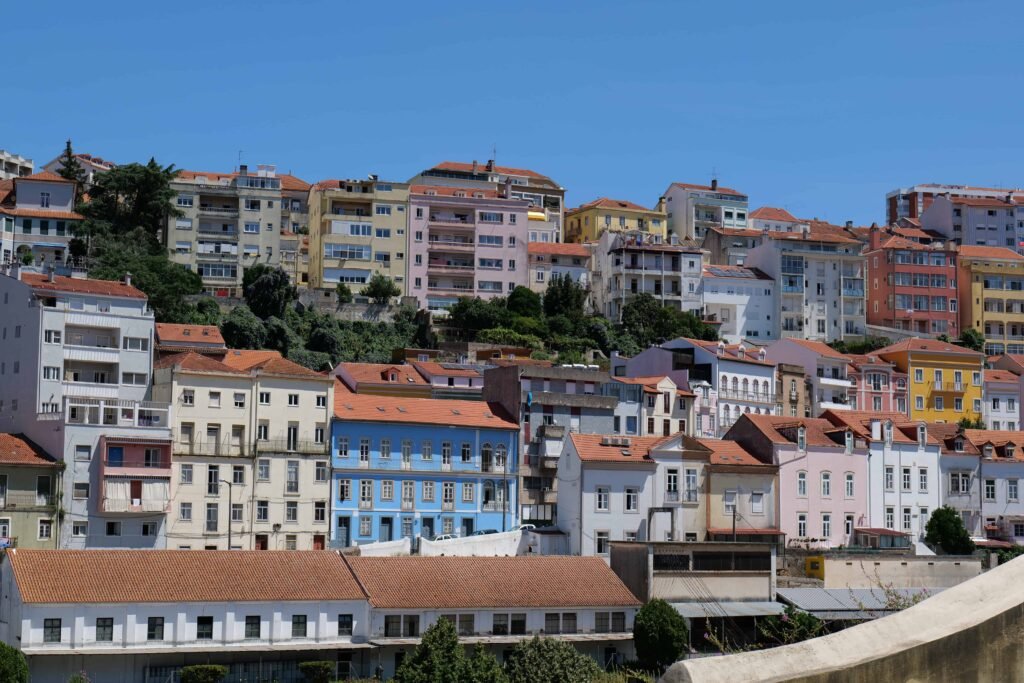
From the riverside, you get one of the best views back toward the old town rising above you, with the colourful buildings climbing up the hillside to the University!
Logistics:
I left Porto early in the morning (around 9am) and took the train to Coimbra. I then spent around 4 hours sightseeing and relaxing by the river, before getting the train to Lisbon.
- Get the train (or bus) from Porto to Coimbra – 1 hour 15 minutes
- Store your luggage at Coimbra-B station (there are self-service lockers here that are easy to use and take card payment)
- Take a taxi or local bus to Coimbra Old Town (10 mins)
- OR walk along the Mondego River to the old town instead (30 mins, partly uphill)
- Return to the station and continue by train (or bus) to Lisbon – 2 hours
Day 6: Highlights of Lisbon
Your first full day in Lisbon is your main sightseeing day in the city, so be prepared for a lot of walking – and steep hills (lots and lots of hills!)
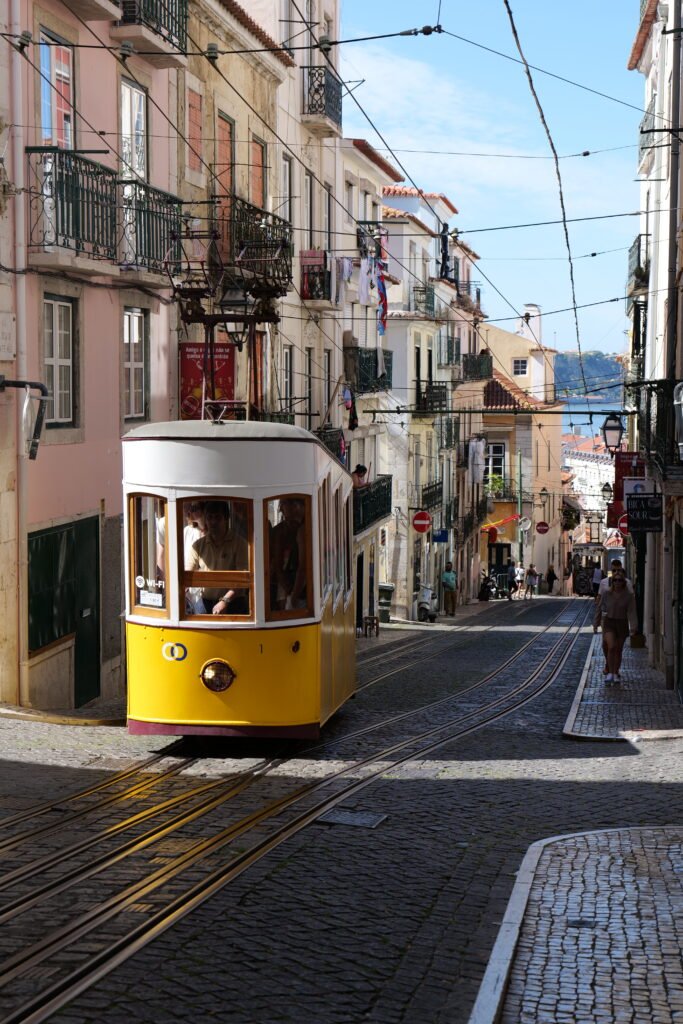
This is when you’ll ride the famous yellow tram through Lisbon’s oldest streets, explore the maze-like neighbourhood of Alfama, and stop at some of the most beautiful viewpoints.
It’s a full day, but it ended up being one of my favourites on my Portugal itinerary!
Morning: Tram 28, Alfama & Lisbon’s Oldest Streets
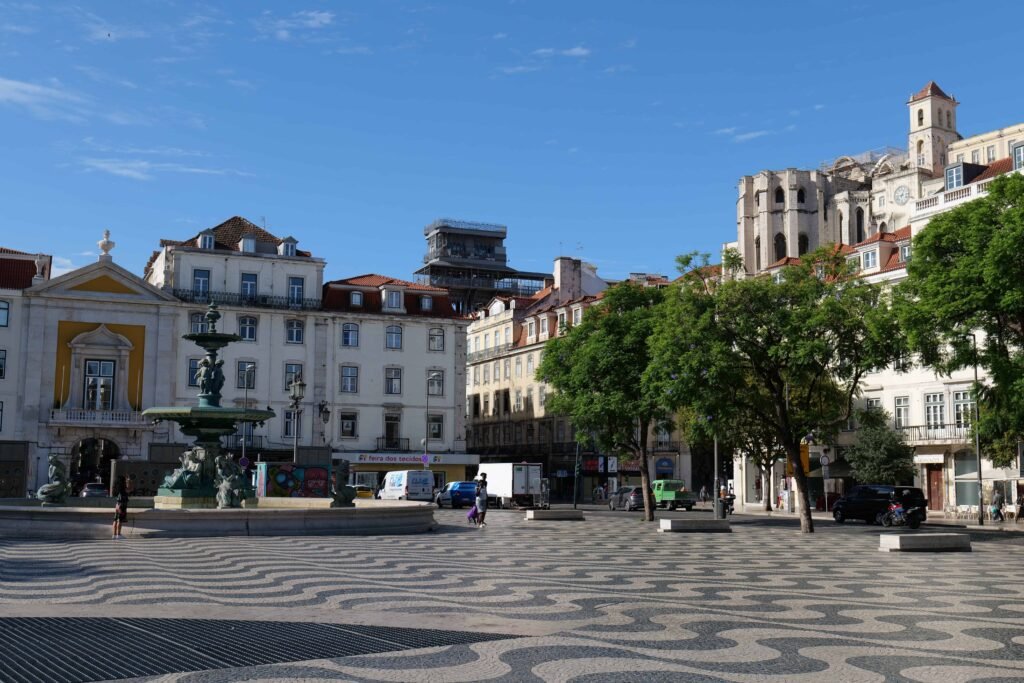
Start your morning early in Rossio Square (Praça Dom Pedro IV), one of Lisbon’s main historic squares and the perfect place to begin your day exploring the city.
Rossio has been the heart of Lisbon for centuries. And today it’s busy, lively, and full of elegant buildings and cafés.
It’s the perfect place for an early breakfast!
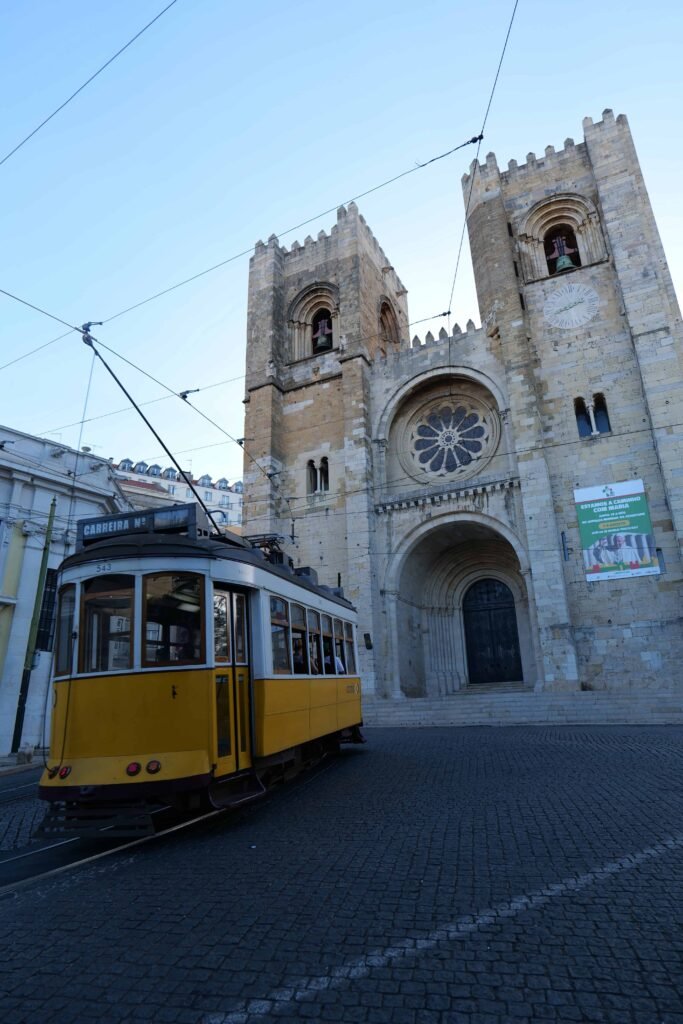
After breakfast, walk to Martim Moniz Square, where you’ll pick up the iconic Tram 28 (ideally before 9am, or as early as you can manage).
This tram isn’t just public transport, but a moving sightseeing route through some of Lisbon’s oldest and most beautiful neighbourhoods!
It’s also a great way to get your bearings before you explore the city on foot. And you’ll have a much more enjoyable experience in the morning when it’s quiet.
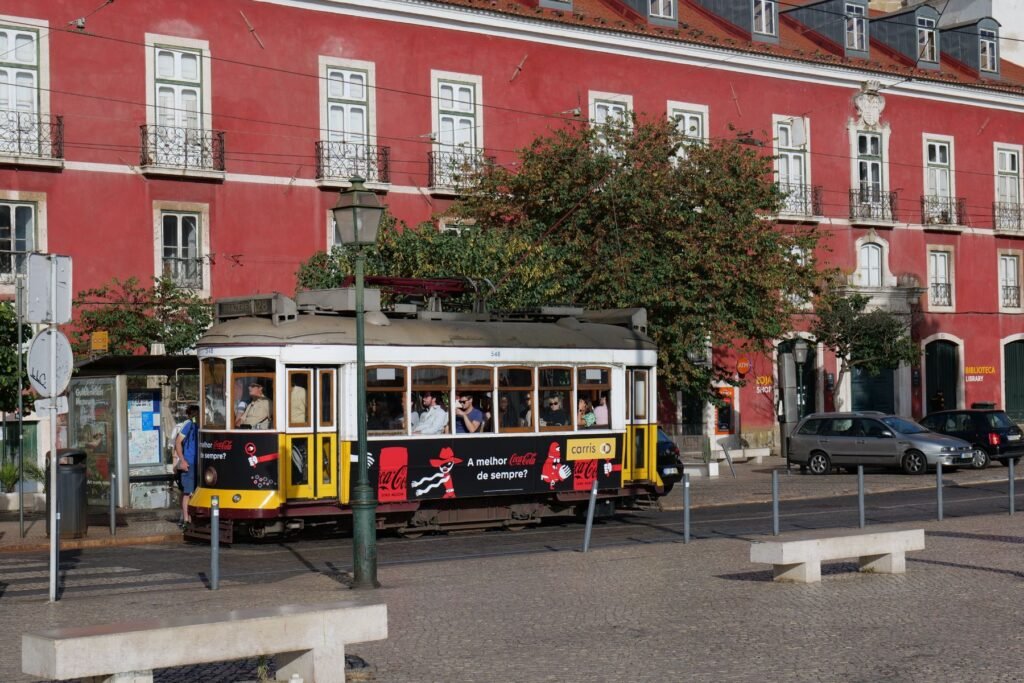
I recommend you enjoy the full tram route (45 minutes) before walking to explore Alfama on foot – Lisbon’s oldest neighbourhood and one of my favourite parts of the city!
Alfama remarkably survived the huge 1755 Lisbon earthquake that destroyed much of Lisbon, which is why it still feels so historic and looks so beautiful today.
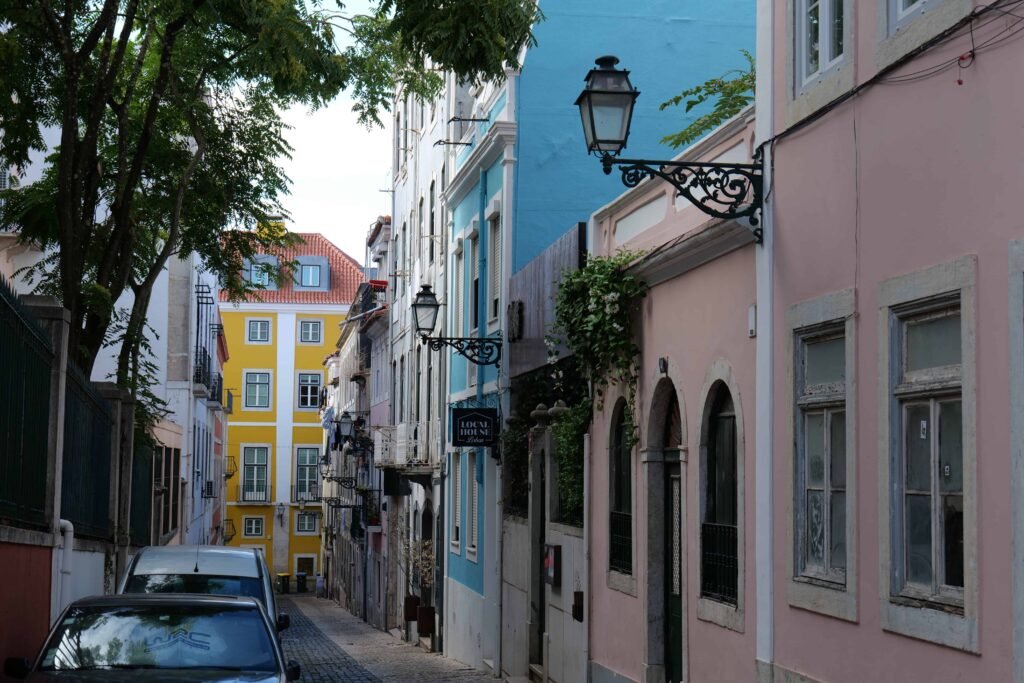
The streets of Alfama are narrow, maze-like, and full of tiny alleyways, colourful houses, and hidden viewpoints waiting to be discovered.
It’s a neighbourhood where wandering without a map is always best!
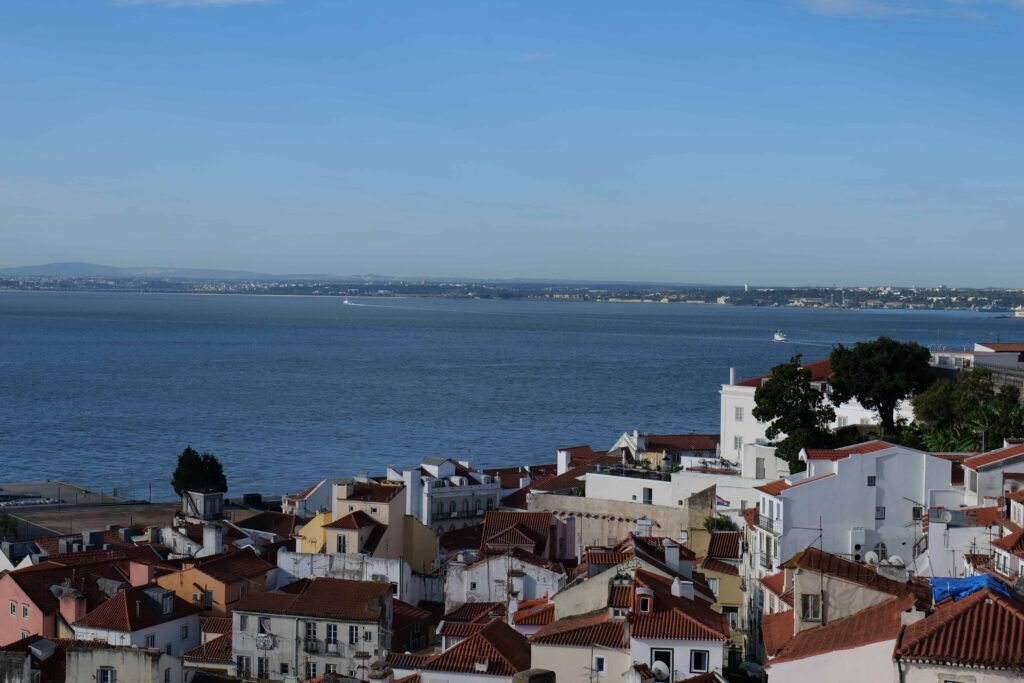
But, as you explore, there are a few highlights you’ll definitely want to make sure you see, including Miradouro das Portas do Sol.
This is one of Lisbon’s most famous viewpoints, looking out across the terracotta rooftops stretching all the way down to the sparkling Tagus River!
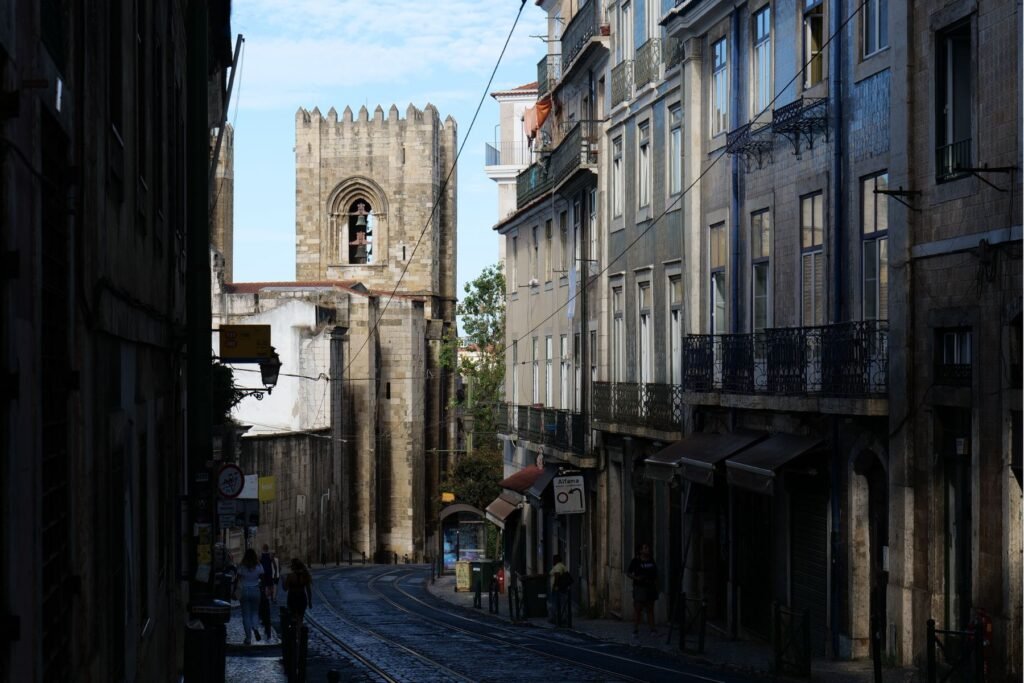
And, just a short walk away is Lisbon Cathedral (Sé de Lisboa), the city’s oldest church.
Like the cathedral in Coimbra, Lisbon Cathedral almost looks like a fortress, and is a beautiful example of Lisbon’s medieval history before the earthquake completely reshaped the city!
Afternoon: Riverside Walks, Bairro Alto & Lisbon’s Best Viewpoints
After a long lunch to rest your feet, it’s time to head downhill towards the River Tagus.
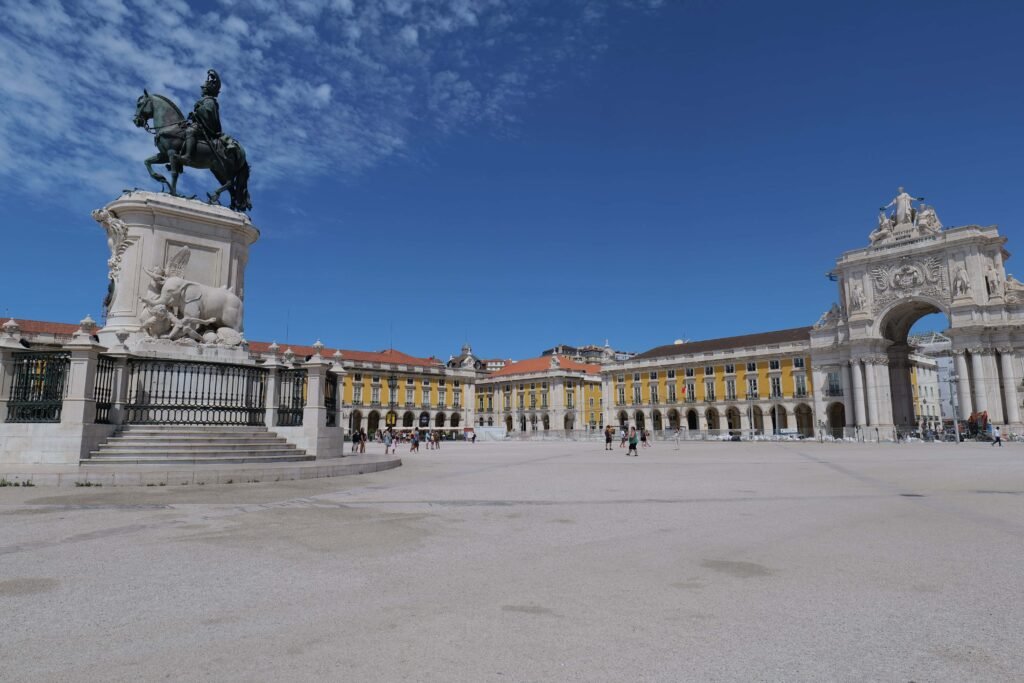
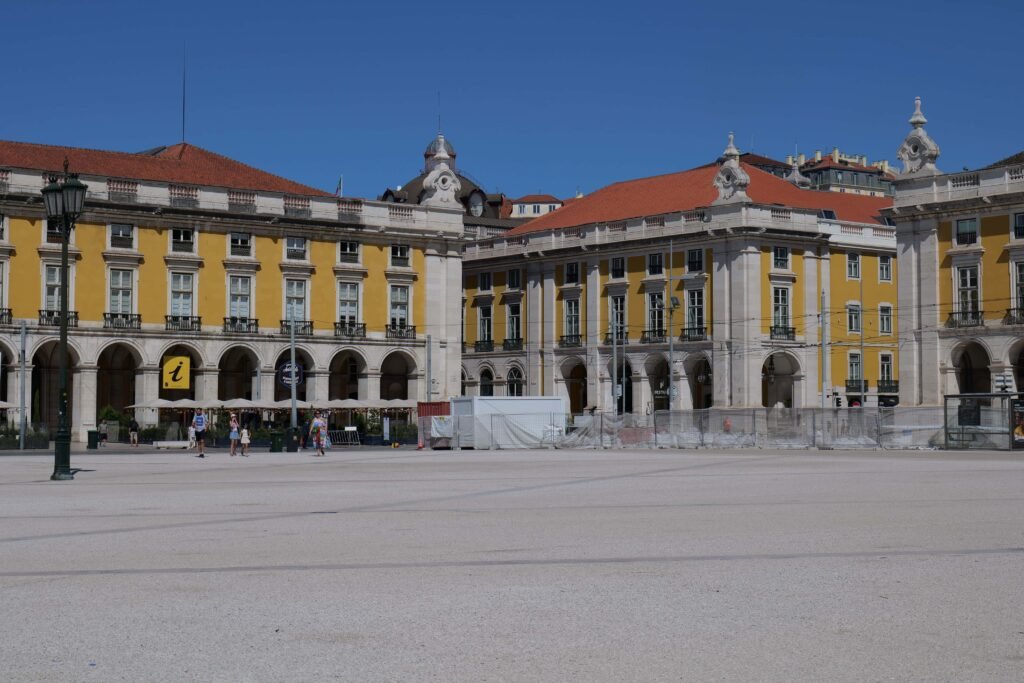
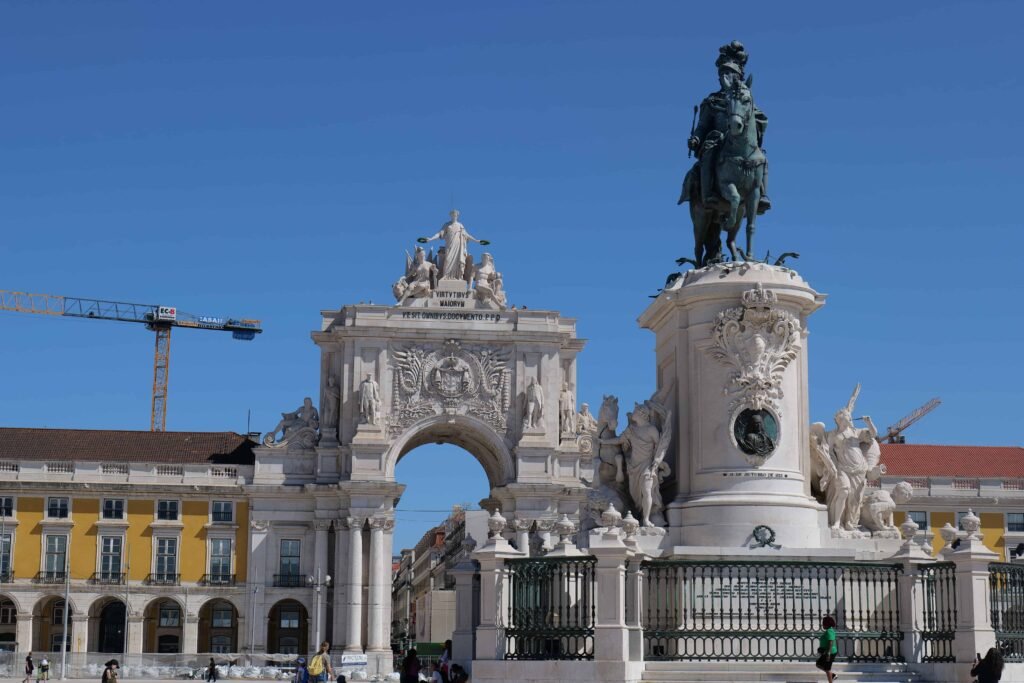
Your walk will lead you to the famous Arco da Rua Augusta, the grand ceremonial arch marking the entrance to Lisbon’s main square – Praça do Comércio – by the river.
The arch is also surrounded by the most beautiful, grand and typically “Lisbon-yellow” buildings, for the most perfect photo opportunity!
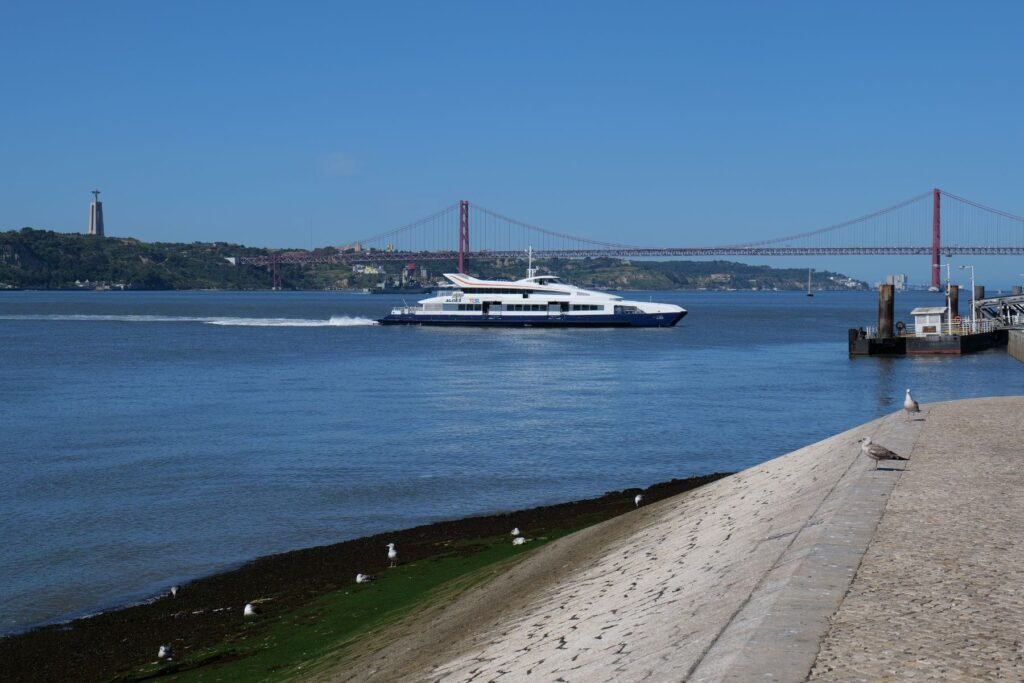
I also recommend you take the time to enjoy a walk along the River Tagus – or you can do as the locals do and sit and relax on one of the benches!
I loved sitting here for a while (with an ice cream of course!), watching the water and the boats passing by.
It’s the perfect spot to pause after a busy day exploring Alfama’s hilly streets!
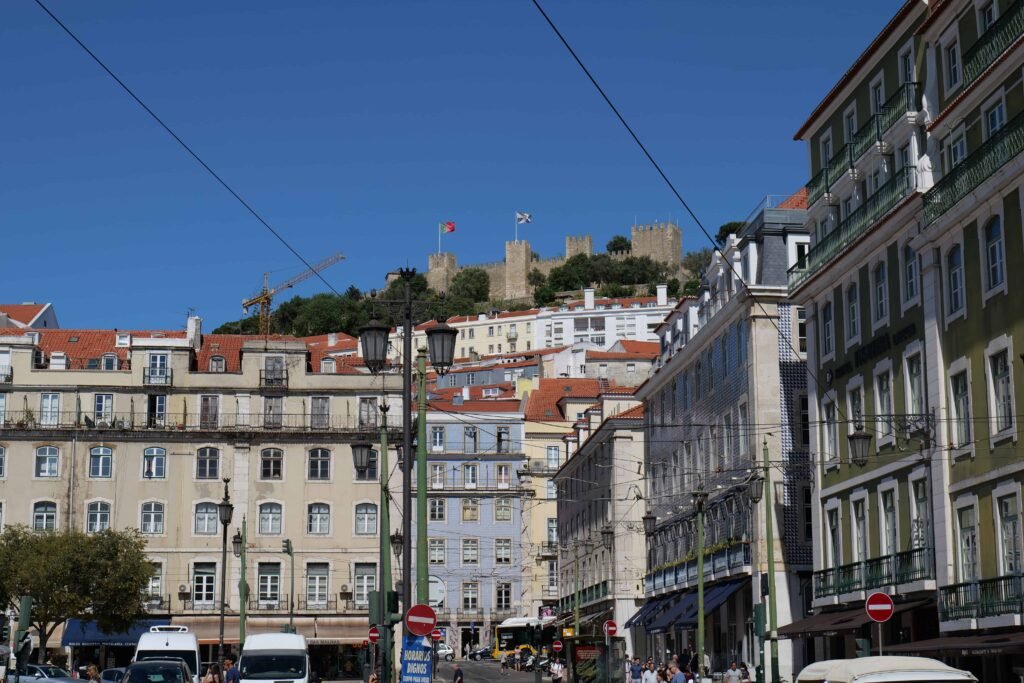
Finally, to end your day in Lisbon, walk into the neighbourhood of Bairro Alto, which, during the day, feels quiet and residential compared to its nightlife reputation.
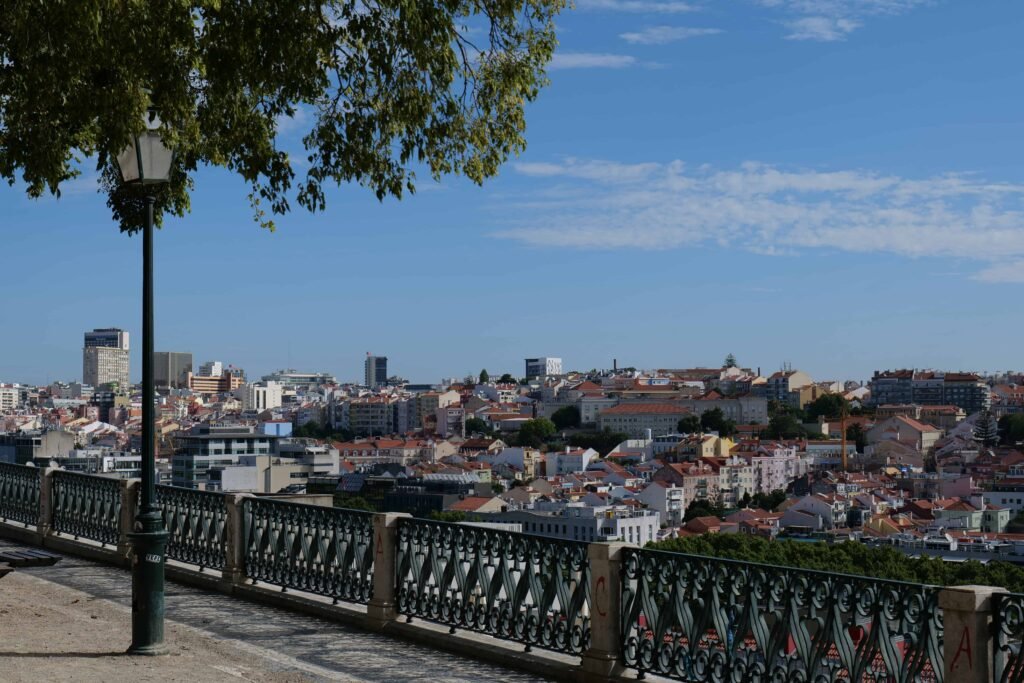
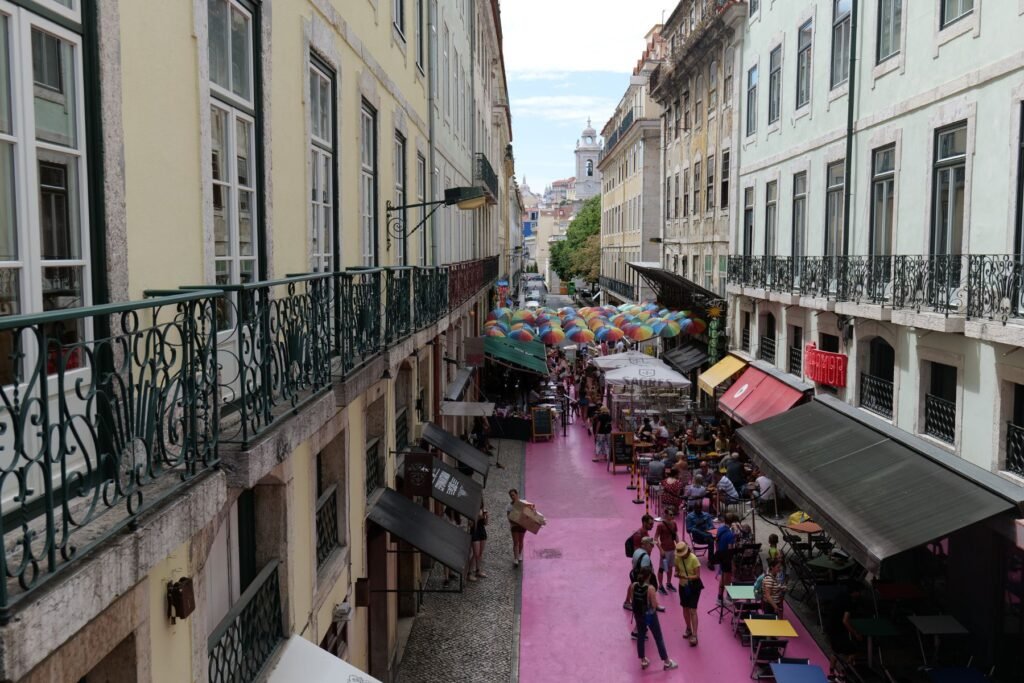
In Bairro Alto, I recommend you see Lisbon’s famous Pink Street, and also the beautiful Church of São Roque, before finishing at Miradouro de São Pedro de Alcântara.
From here you get a direct view back across Lisbon’s rooftops toward São Jorge Castle – it’s one of my favourite viewpoints in Lisbon and seriously underrated!
These are my highlights in Lisbon, but definitely not everything you will see!
So if you want a full step-by-step route, I’ve got a more detailed 3 days in Lisbon itinerary that you can read here on the blog!
Or, if you’re not confident navigating a new city solo or just want to enjoy some local context as you walk, you could also join this amazing guided walking tour of Lisbon instead.
Evening: Fado Dinner
In the evening, I really recommend booking a Fado dinner experience.
Fado is traditional Portuguese music, and a huge part of Lisbon’s (and Portugal’s) culture.
Throughout the evening, you’ll enjoy a delicious, typically Portuguese dinner (and drinks, of course!), before enjoying an incredible live performance of Fado.
Day 7: Arrábida Natural Park
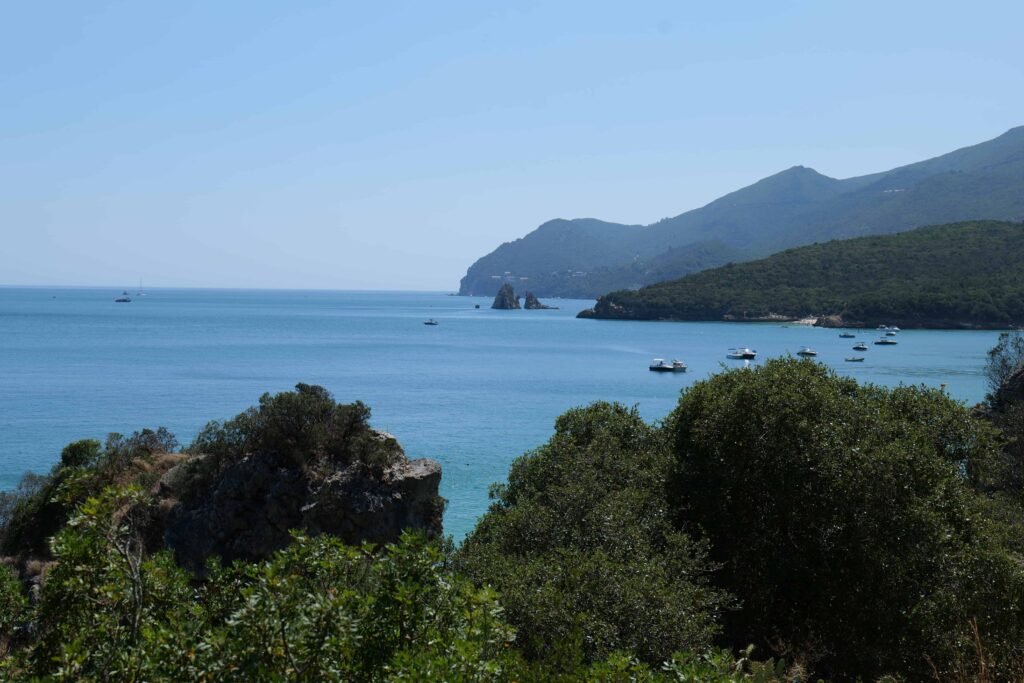
I hardly ever see Arrábida Natural Park included in a Portugal itinerary, which honestly surprises me, because this ended up being one of my favourite days of the whole trip!
It’s just an hour from Lisbon, yet the scenery feels completely different.
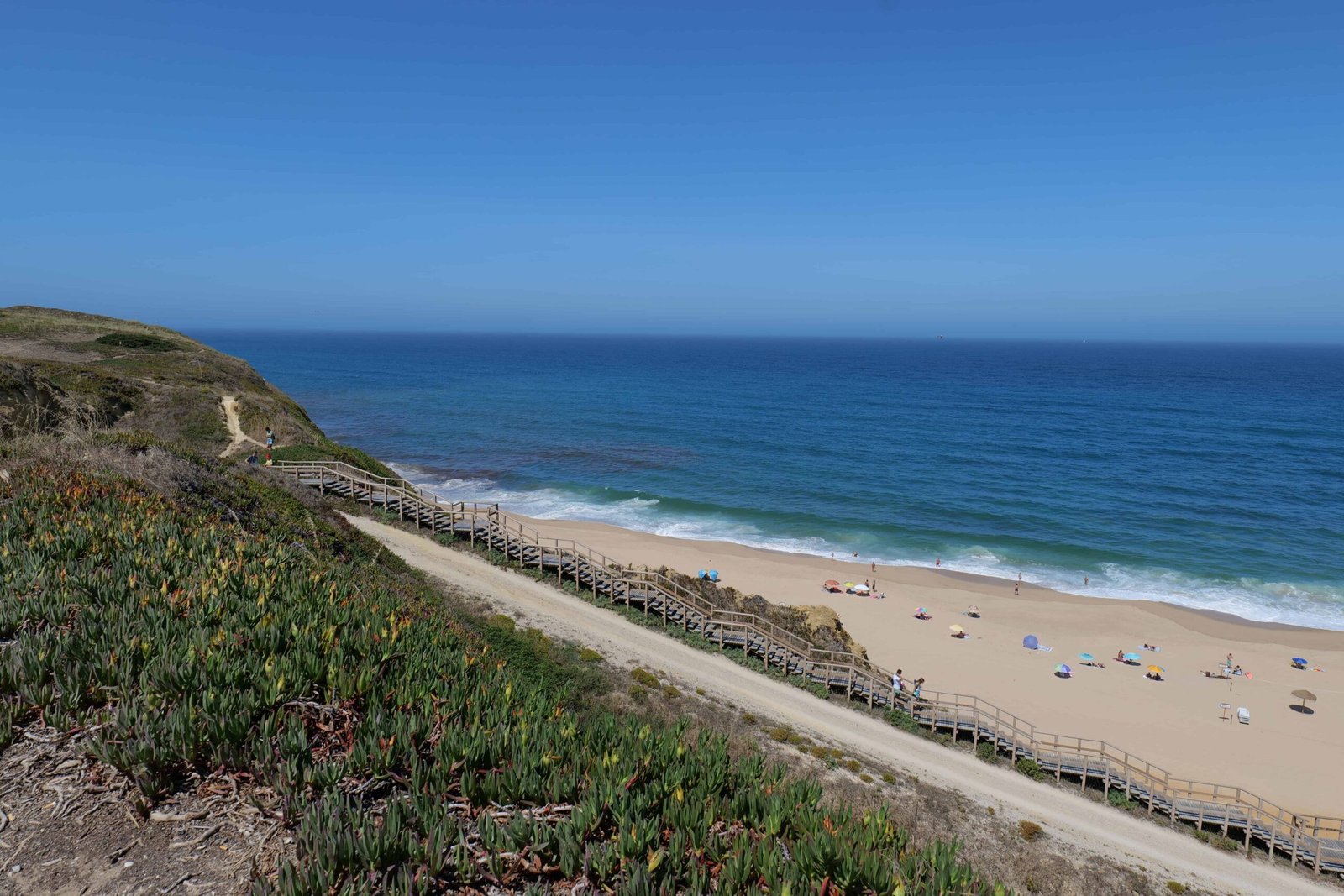
The turquoise water, dramatic cliffs, quiet beaches and winding coastal roads feel like a whole world away from the busy city centre!
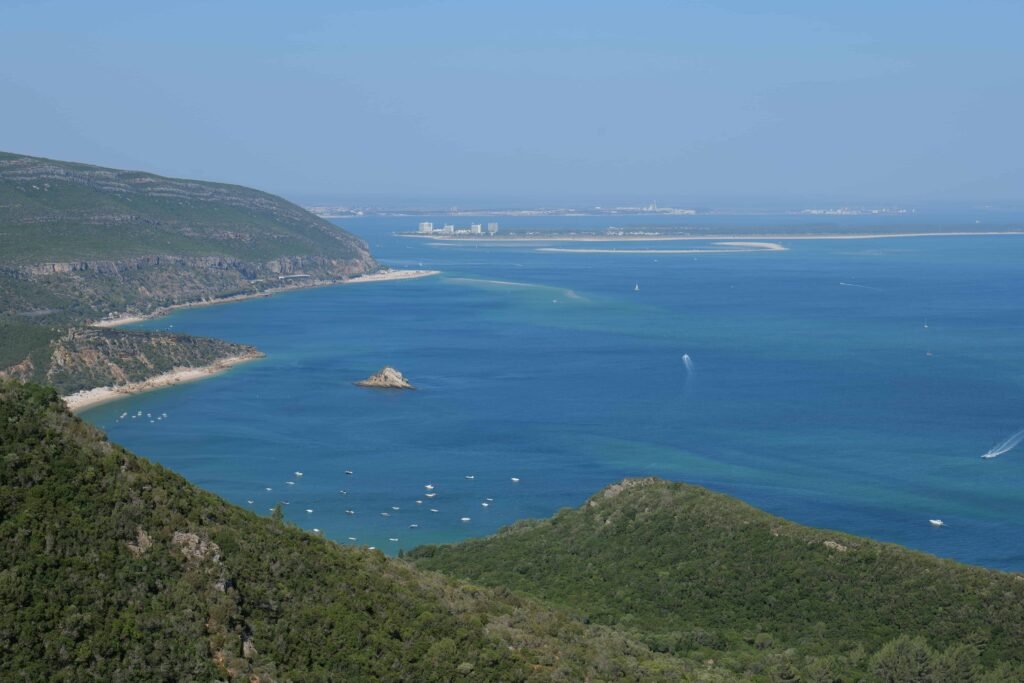
I personally visited Arrábida Natural Park on a small group day tour from Lisbon, and I generally think that’s the best way to experience it without a car.
Technically, you can reach parts of Arrábida by public transport, but realistically, you’ll miss out on the best viewpoints, beaches and stops that make it so special!
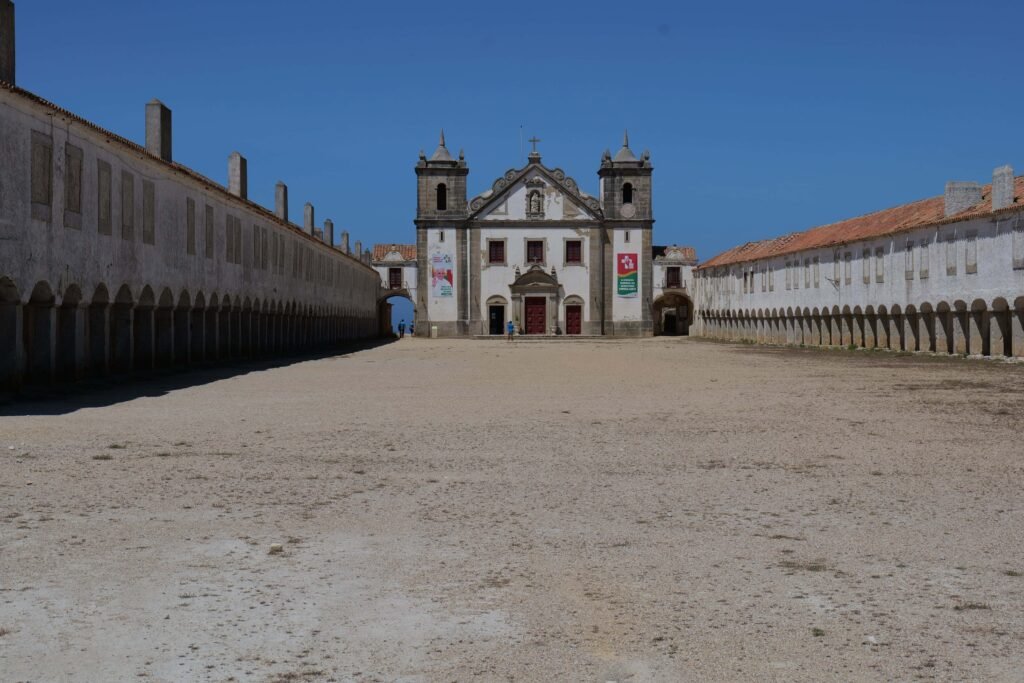
Stop 1: Santuário de Nossa Senhora do Cabo Espichel
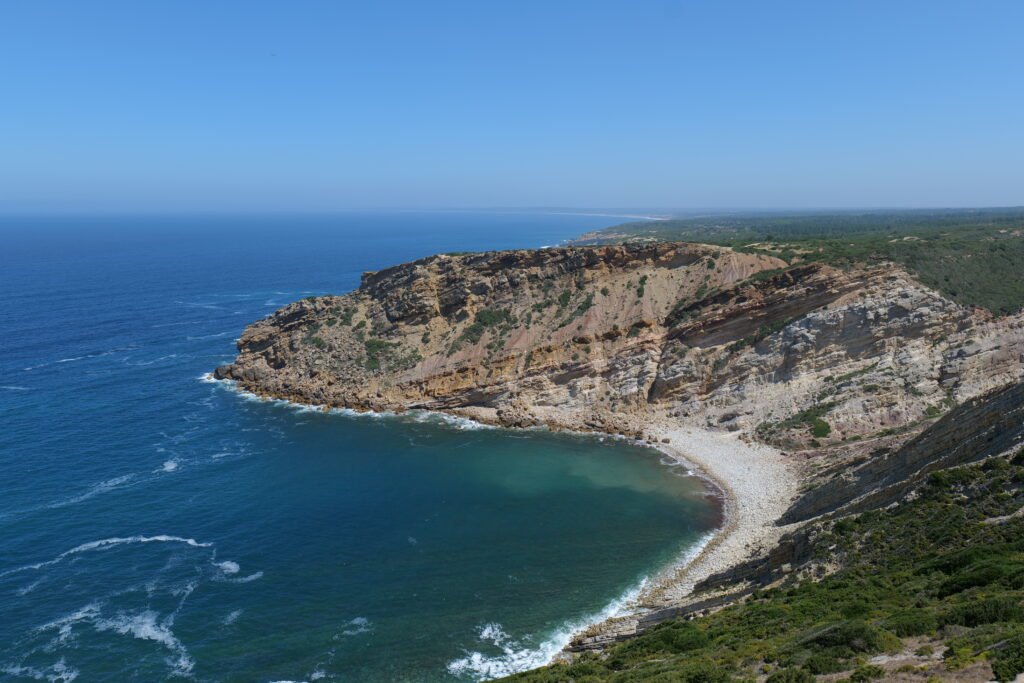
The first stop on my Arrábida tour was the incredibly dramatic Cabo Espichel, perched right on the edge of the rugged Atlantic cliffs!
The old buildings of the sanctuary form a long symmetrical courtyard leading towards the main church, which was historically used to host pilgrims travelling from across Portugal.
But what really makes this stop memorable is what’s just behind it.
Walk just a little bit further toward the cliff edge, and the land drops away to towering cliffs and the most spectacular ocean views!
Stop 2: Sesimbra + Sesimbra Castle
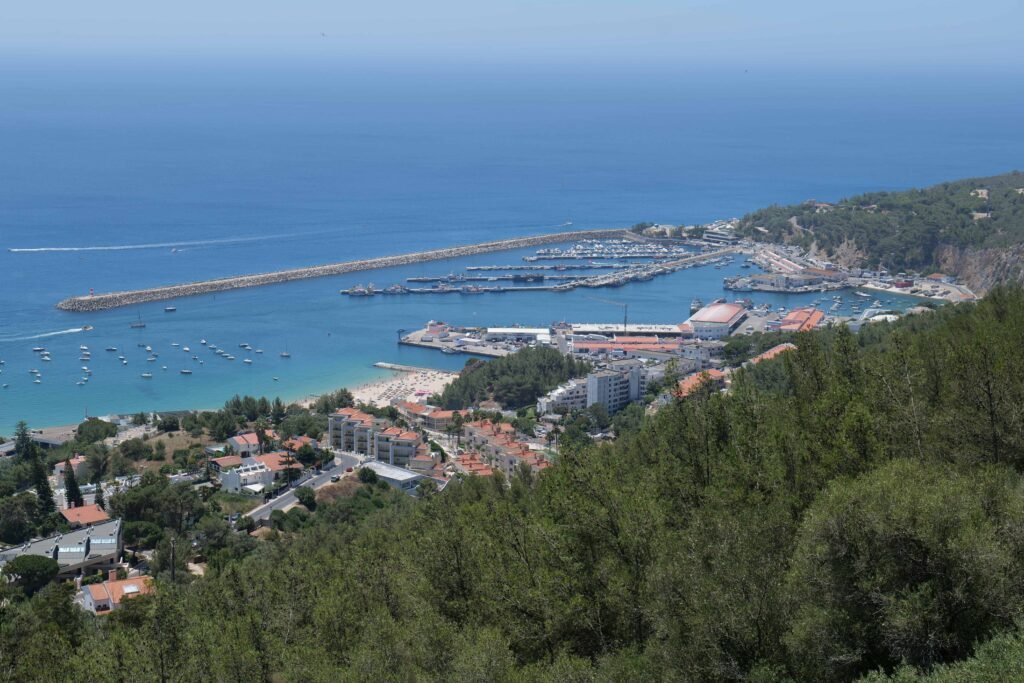
From Cabo Espichel, we next headed to the small seaside town of Sesimbra.
Sesimbra feels laid-back, quiet and relaxed (in a way that’s kinda rare from Portugal’s bigger coastal destinations now), with boats lining the harbour and a cool café culture.
But my highlight was heading up to Sesimbra Castle!
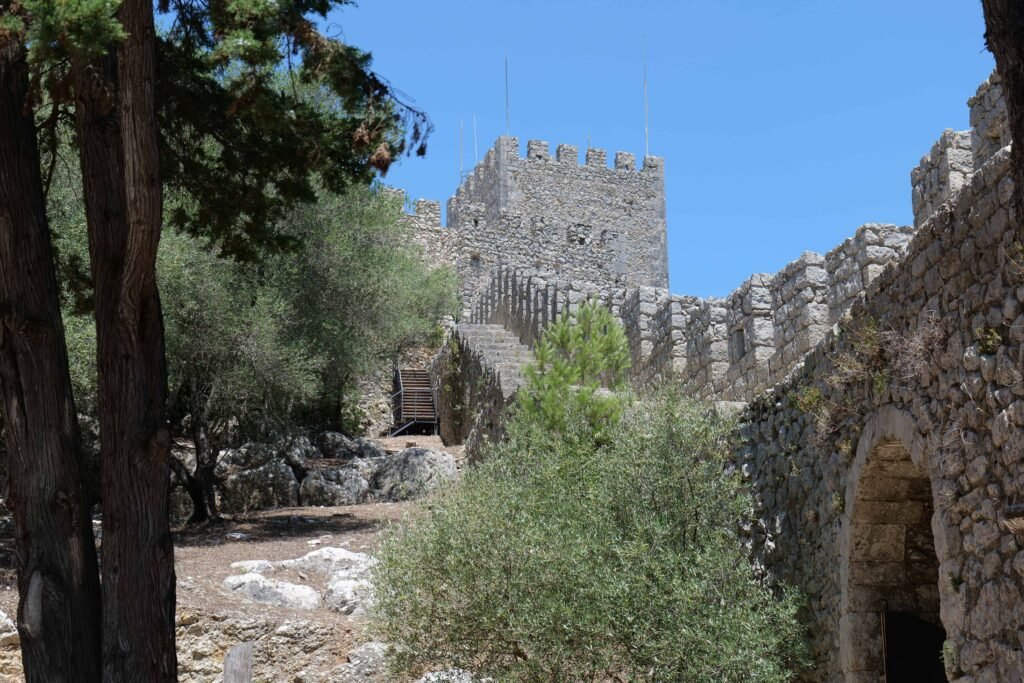
The castle sits high above the town, and the views from the top are honestly some of the best on this whole day trip.
From here, you see the spectacular curve of the cliffs meeting the sea, the fishing harbour of Sesimbra below, and the hills of Arrábida stretching behind.
Stop 3: Portinho da Arrábida
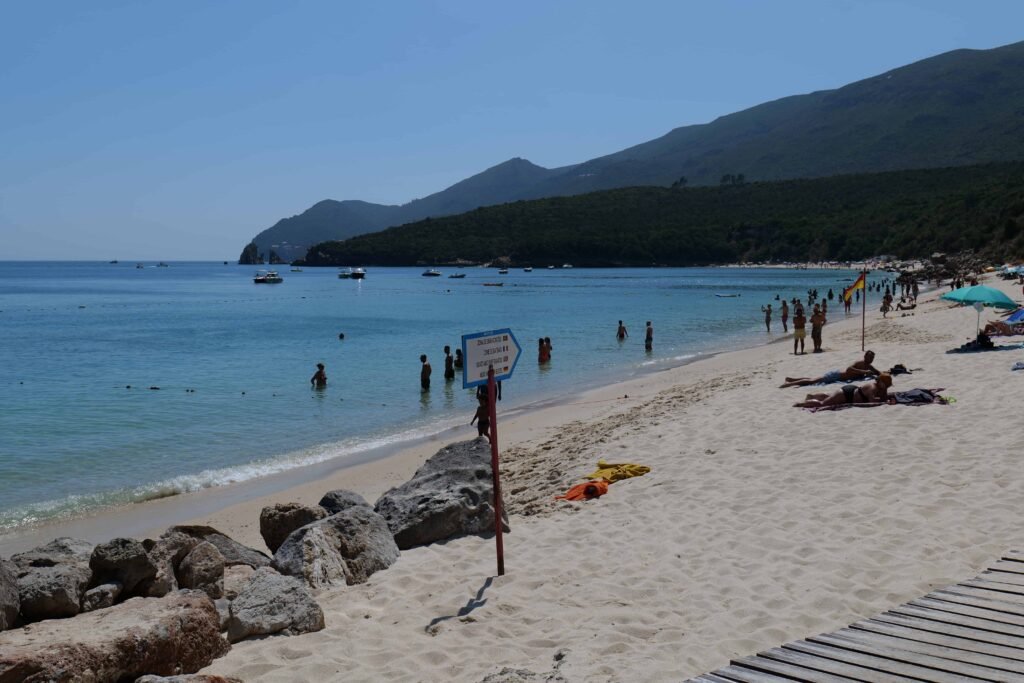
The water at Portinho da Arrábida is calm, clear, and an almost unreal shade of turquoise if you’re visiting on a clear, sunny day.
And because the beach sits sheltered beneath the limestone cliffs of the natural park, the sea is gentler here than at other beaches in Portugal – perfect for a swim!
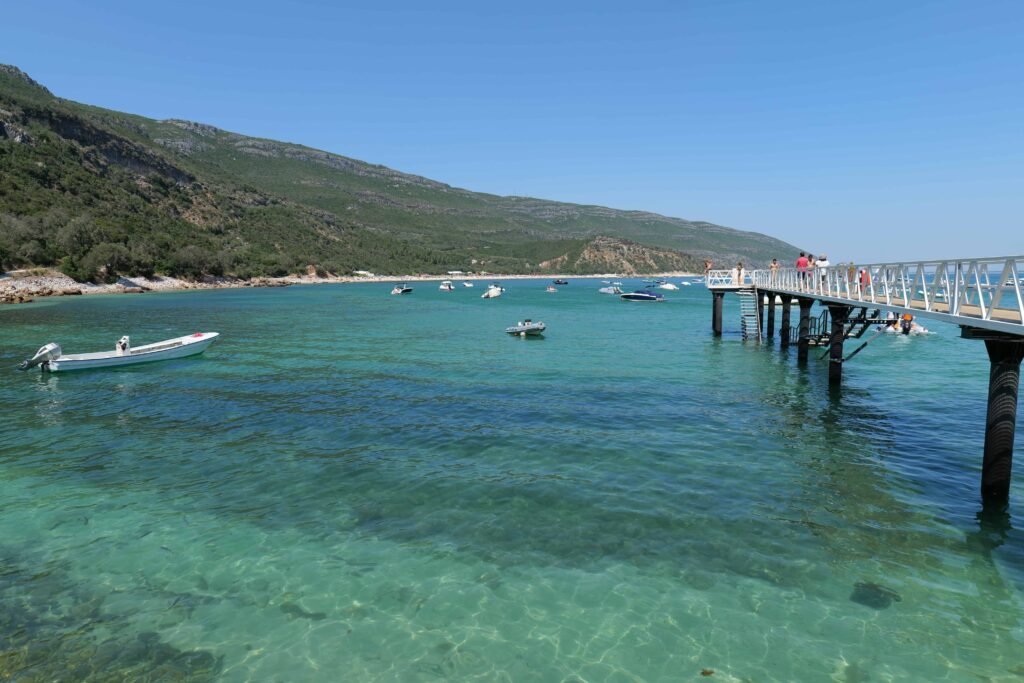
But even if you’re not planning to swim, this is the perfect spot to sunbathe on the golden sands for a while and, of course, snap yet more stunning photos.
Plus, the benefit of visiting on a guided tour is that you get priority parking, where most private vehicles can’t even get close in summer!
Stop 4: Coastal Viewpoints
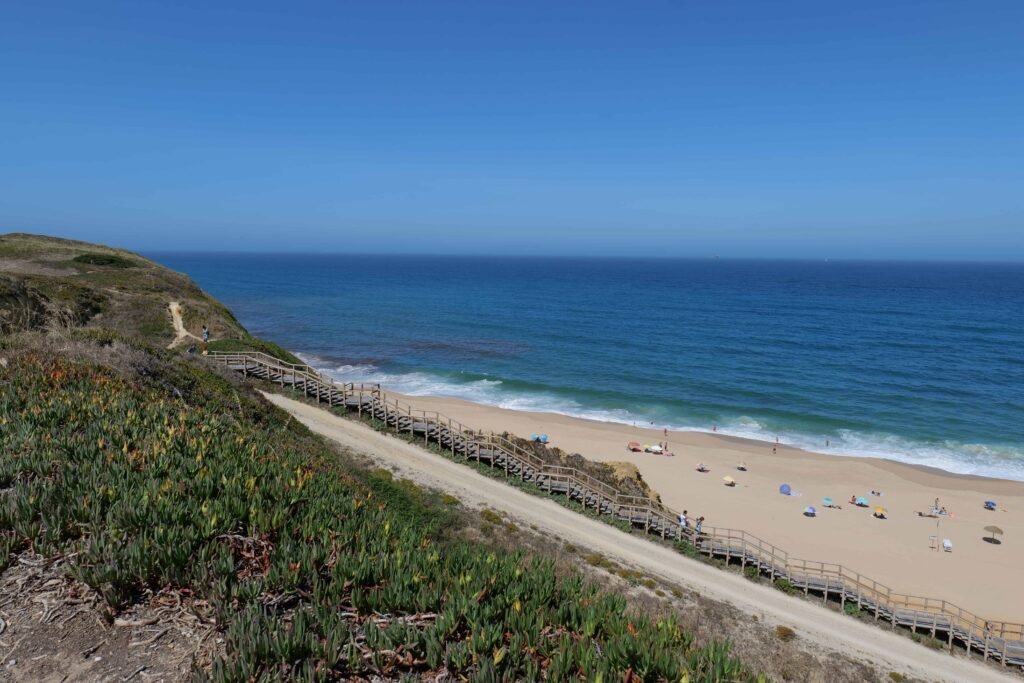
Throughout the day, you’ll also stop at a number of stunning coastal viewpoints for photos.
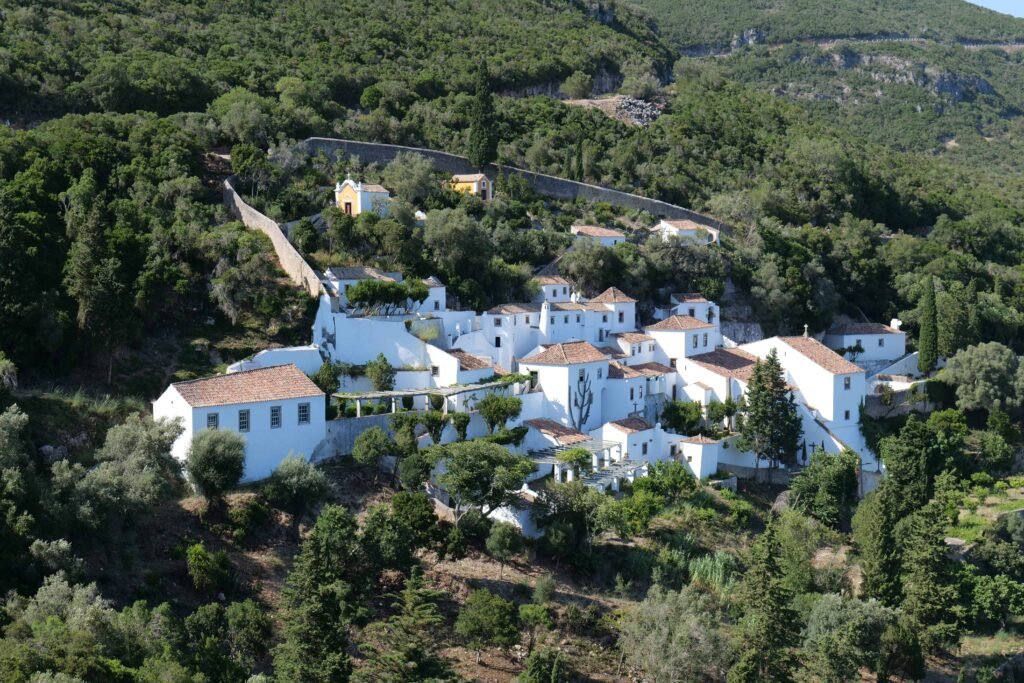
My favourites on my tour were of Meco Beach and overlooking the incredible Convent of Our Lady of Arrábida.
The winding drive through Arrábida Natural Park (sometimes even off-road!) is a huge part of what makes the experience so unforgettable!
Day 8: Évora OR Central Portugal Highlights Tour
This is another flexible day in your 10 day Portugal itinerary, and it honestly really depends on how you’re feeling by this point.
You’ve already done quite a bit, so you can either slow down or go for more sightseeing.
I’ve done both of these options, and they’re genuinely both worth it, but they offer completely different experiences – depending on what you’re looking for!
Option 1: Évora
If you want a calmer, more relaxed day, Évora is perfect!
It’s a small, historic city about 1.5 hours from Lisbon, and really easy to visit without a car:
- Take the bus (FlixBus or Rede Expressos) from Lisbon Sete Rios or Oriente – 1.5 hours
- Or take the train from Lisbon Oriente, Sete Rios or Entrecampos – 1.5 hours
And once you arrive, everything is easily walkable from both the bus and train stations, which makes it the perfect city for a Portugal itinerary without a car!
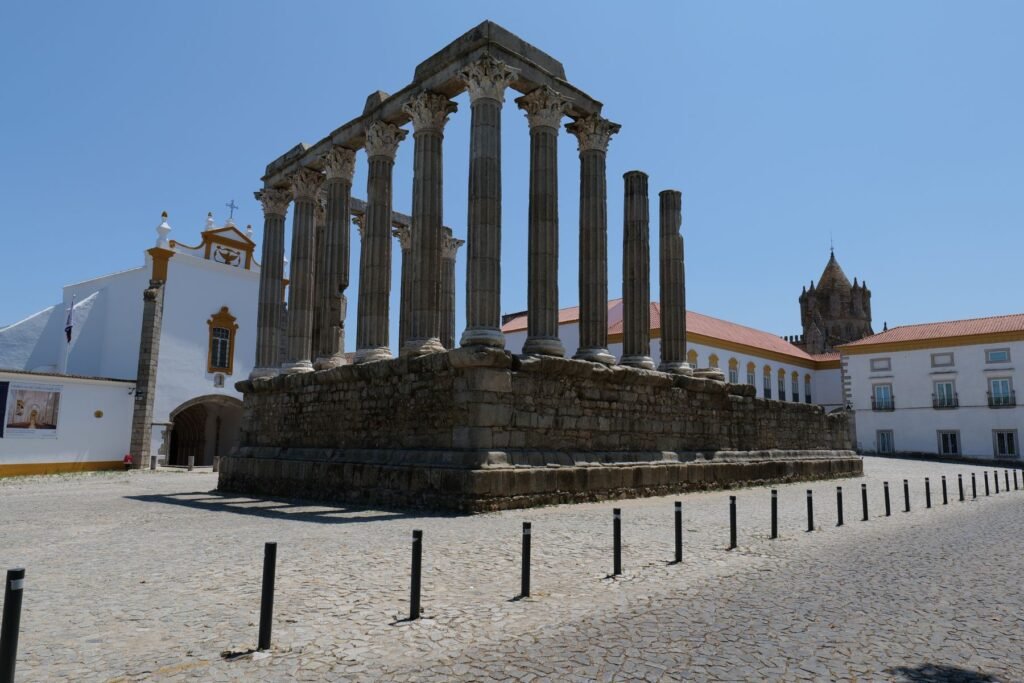
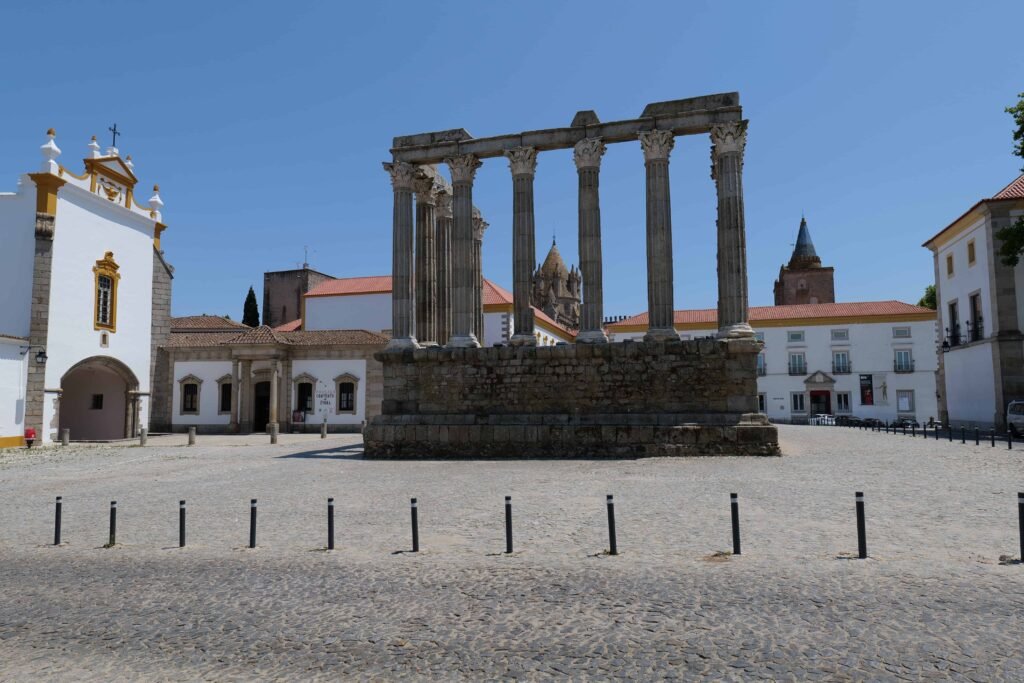
The first place to visit in Évora’s historic centre is the Roman Temple – called the Temple of Diana – and it’s a landmark that feels surreal to see outside of Rome.
I don’t know about you, but I didn’t expect to find well-preserved Roman ruins sitting quietly in the middle of a small, underrated Portuguese city!
The columns date back to the 1st century, when Évora was part of the Roman Empire.
I especially loved sitting and relaxing in the shady park, Jardim Diana, opposite (which was much-needed as I visited Évora during a heatwave!), looking out at the temple.
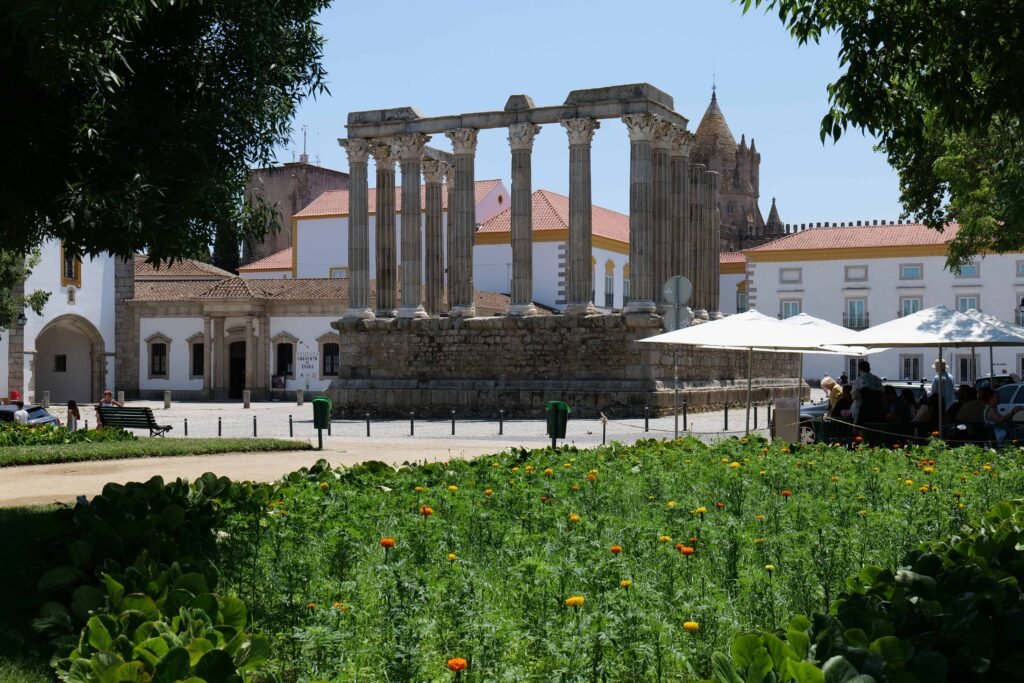
Just beside the Roman Temple, you’ll also see Évora Cathedral.
From the outside, the beautiful, whitewashed cathedral is a stunning photo opportunity next to the Temple of Diana – but you can also visit inside too!
If you climb to the top of the cathedral, you get sweeping views across the rooftops of Évora and out into the surrounding Alentejo countryside.
Unfortunately, during my visit, the cathedral was closed because of the heatwave, but it’s on my bucket list for next time!
Another one of Évora’s must-visit (and most unusual) landmarks is the Chapel of Bones – and yep, it really is exactly what it sounds like.
The walls and columns inside the chapel are decorated with thousands of real human bones, placed there by monks centuries ago as a reminder of how temporary life is.
It sounds eerie (and it is a bit!), but it’s also surprisingly powerful and well worth a visit.
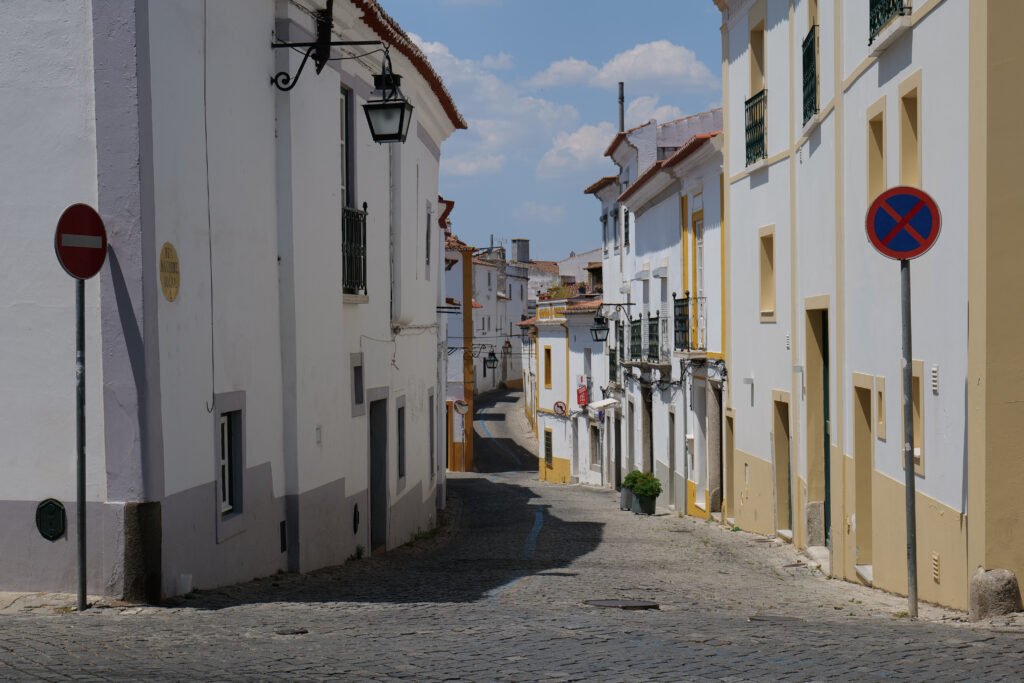
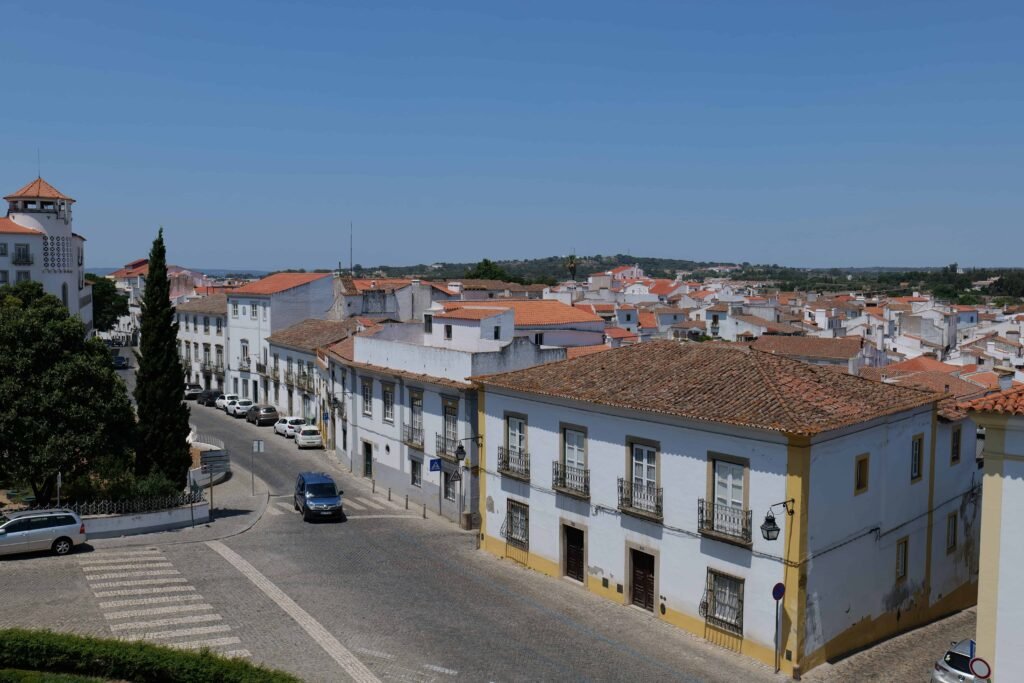
Finally, after seeing Évora’s main landmarks, the best thing you can do is simply explore the quaint, whitewashed old town at your own pace.
The quiet, peaceful historic centre is a UNESCO World Heritage Site, and it feels completely different from Lisbon’s busy streets or Porto’s steep riverfront.
I loved discovering quiet alleyways, bright pink bougainvillaea, and stunning viewpoints over the rooftops of Évora during my walk!
Option 2: Central Portugal Highlights Tour
If you’re still feeling up for sightseeing at this point in your trip and want to see more of Portugal beyond just Lisbon and the coast, I highly recommend joining a tour to explore more of Central Portugal without a car.
On my trip, I joined this small-group guided tour covering Fátima, Batalha Monastery, Nazaré, and Óbidos, and I loved that every stop felt so different from the last!
It is a fuller and busier day than visiting Évora independently, but I never felt rushed.
Stop 1: Sanctuary of Fátima
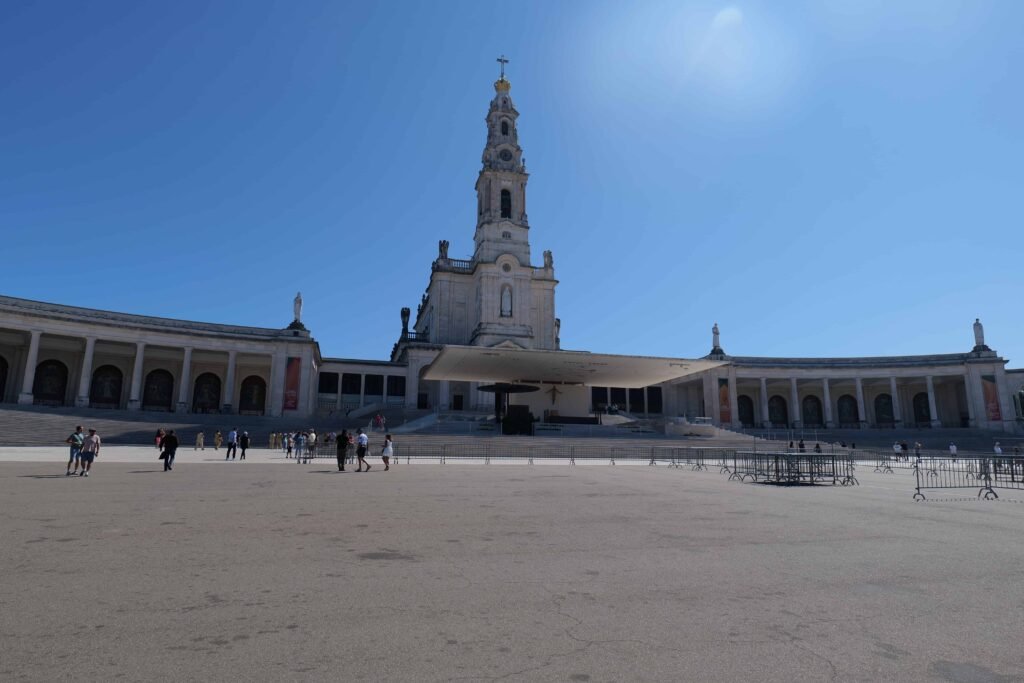
The first stop of the day on our tour was the Sanctuary of Fátima, and even if you’re not religious, it’s still incredible to visit and well worth seeing.
Fátima became internationally famous after apparitions of the Virgin Mary were reported by three shepherd children in 1917, and today it’s one of the most important Catholic pilgrimage sites anywhere in the world.

Every year, millions of pilgrims and tourists still travel here, some walking long distances across Portugal. You will see some of these pilgrims on their final journey during your visit.
The sanctuary itself looks out on a huge square larger than St. Peter’s Square in Rome, yet somehow it still feels peaceful rather than overwhelming!
Stop 2: Batalha Monastery
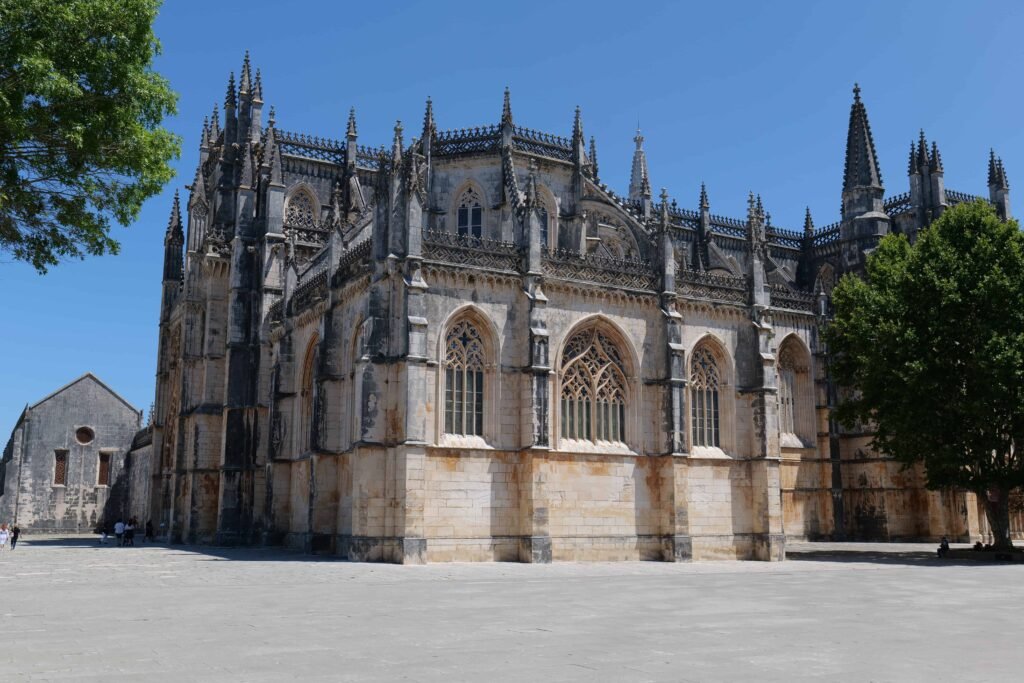
Our next stop was the incredibly impressive Batalha Monastery, and it is absolutely stunning to visit both inside and outside.
Built to commemorate Portugal’s victory in the Battle of Aljubarrota, this Gothic, medieval monastery is grand (and yet that still somehow feels like an understatement!)
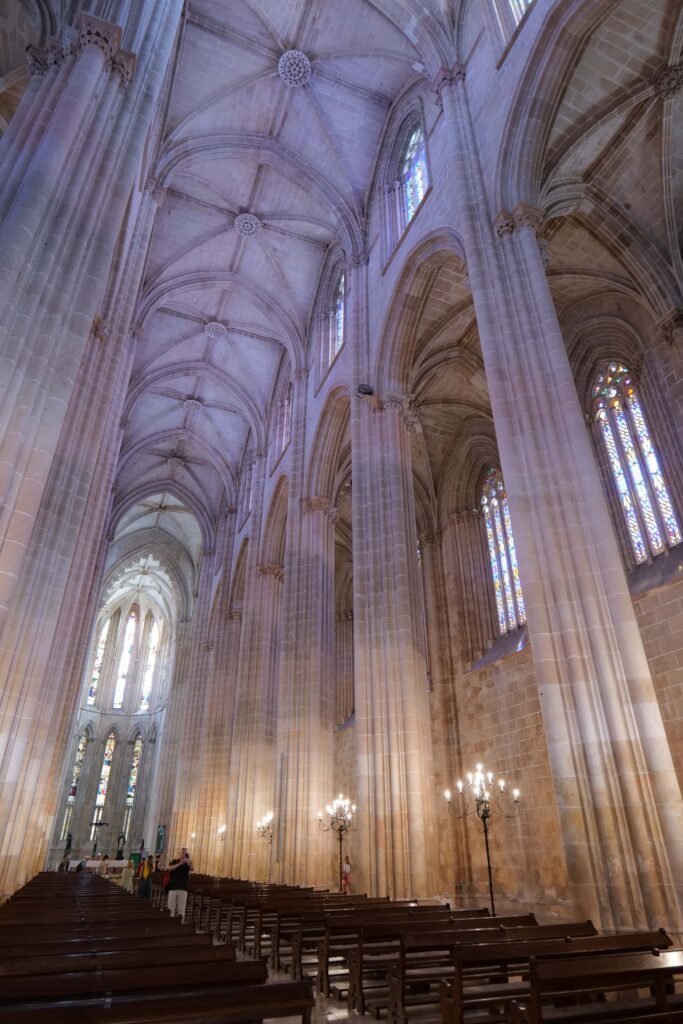
My favourite part was visiting the interior of the monastery, with its giant stone columns stretching to be almost impossibly tall, and colourful stained glass windows.
Stop 3: Nazaré
The next stop on the tour is Nazaré, and the landscape changes all over again.
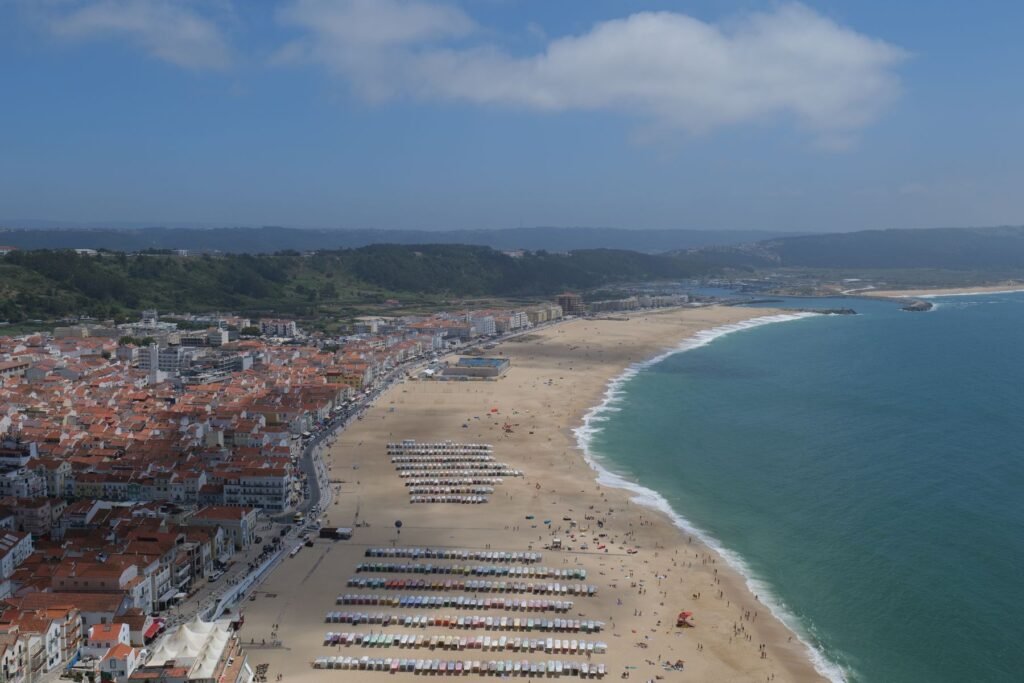
Instead of inland monasteries and historic pilgrimage towns, you’re now overlooking the dramatic and incredibly beautiful Atlantic coast!
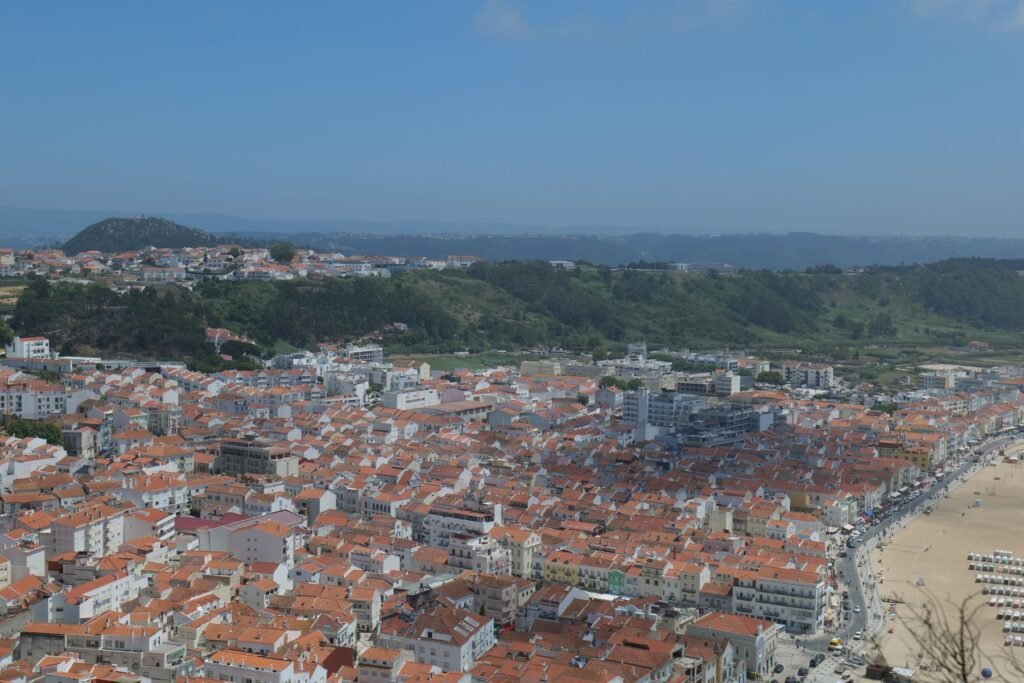
Nazaré is internationally known for its enormous winter waves, some of the biggest ever surfed anywhere in the world.
But even outside the big wave season, the coastline is still powerful and truly spectacular.
My tour headed up to the clifftop viewpoint at Sítio da Nazaré, where you can look down across the golden sandy beach and harbour below!
Stop 4: Óbidos
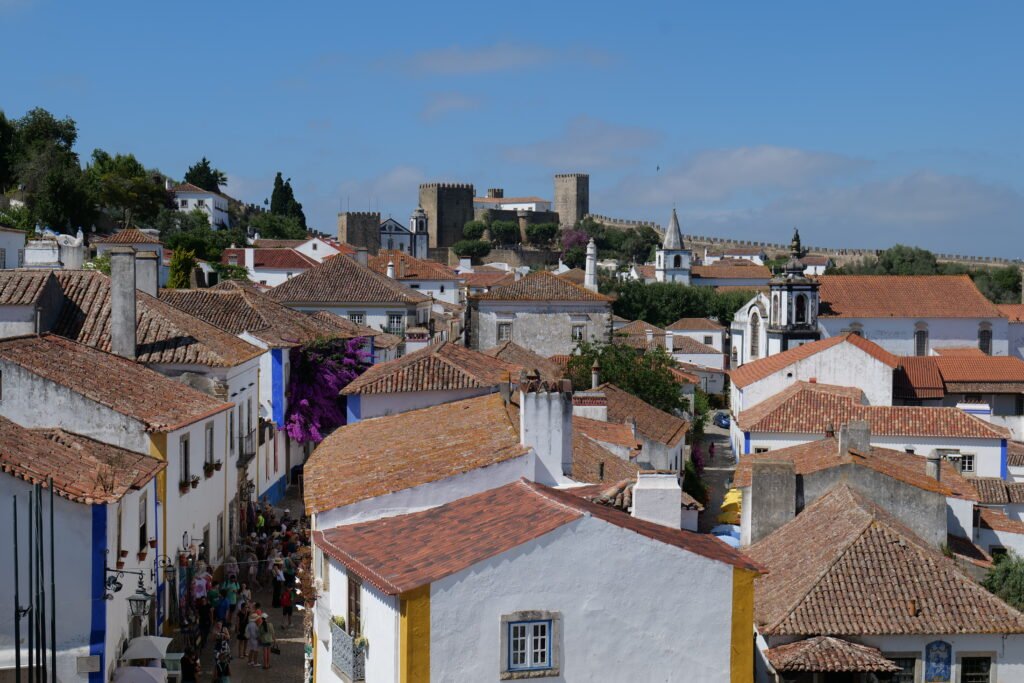
Our final stop of the day (and also my favourite stop on this tour!) is Óbidos.
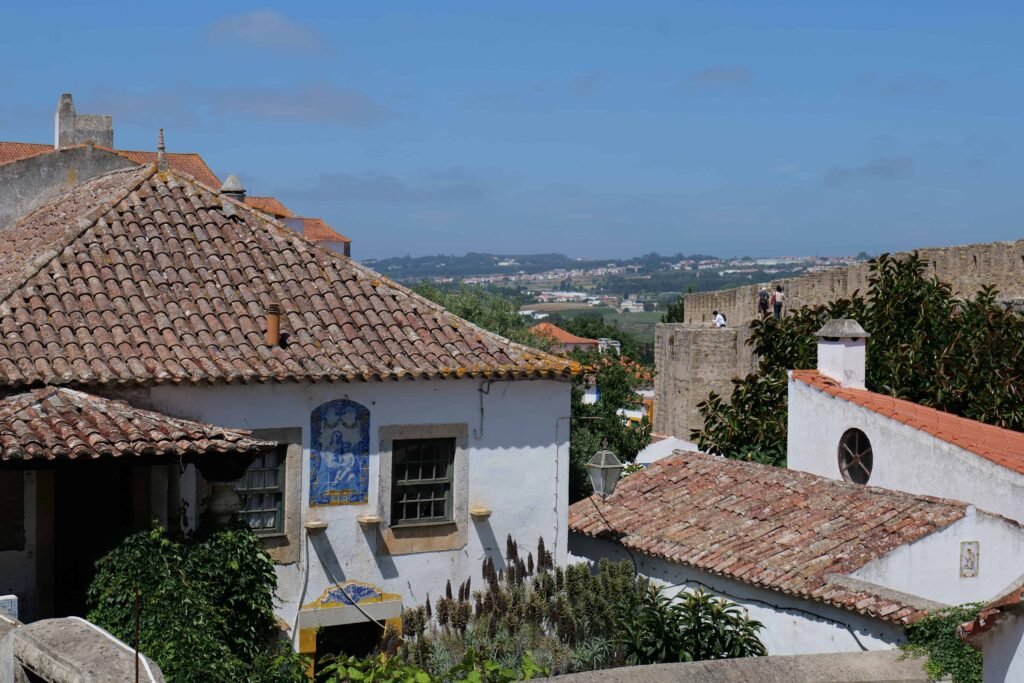
This tiny Portuguese town is seriously photogenic, located inside medieval castle walls, with narrow cobbled streets, whitewashed houses and pots bursting with flowers!
And honestly, one of the best things you can do here is wander where your feet take you!
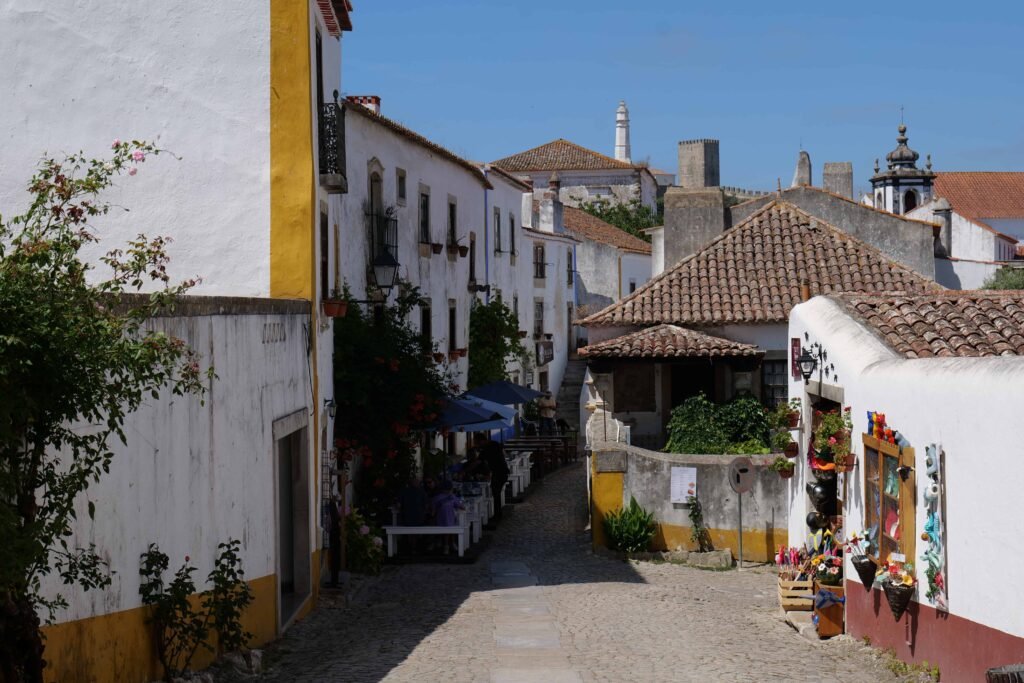
I loved following the narrow old streets uphill to Óbidos Castle, walking the old walls for the incredible views over the town and countryside, and browsing the tiny independent shops.
Oh, and you absolutely must try a small cup of Ginjinha (cherry liqueur) served in a chocolate cup for a truly local experience!
Day 9: Sintra, Pena Palace + Coast
This is probably the most famous day trip from Lisbon, and it’s absolutely worth including in your 10 days in Portugal itinerary!
But I’ve gotta be honest, planning a trip to Sintra can get very overwhelming.
As one of Portugal’s most popular tourist attractions, it’s incredibly busy (especially in summer), spread out, and then there are the logistics of getting around to consider.
You can DIY Sintra:
- Train from Lisbon Rossio or Oriente to Sintra (around 40 minutes)
- Then get the shuttle bus to Pena Palace
- And/or walk between the other historic sights in the Sintra area
But realistically, you’ll only have time to see Pena Palace and maybe a bit of Sintra town if you choose to DIY your day trip to Sintra.
So instead, I joined this amazing small group tour led by a local, and it completely transformed my experience from stressful to actually easy and enjoyable!
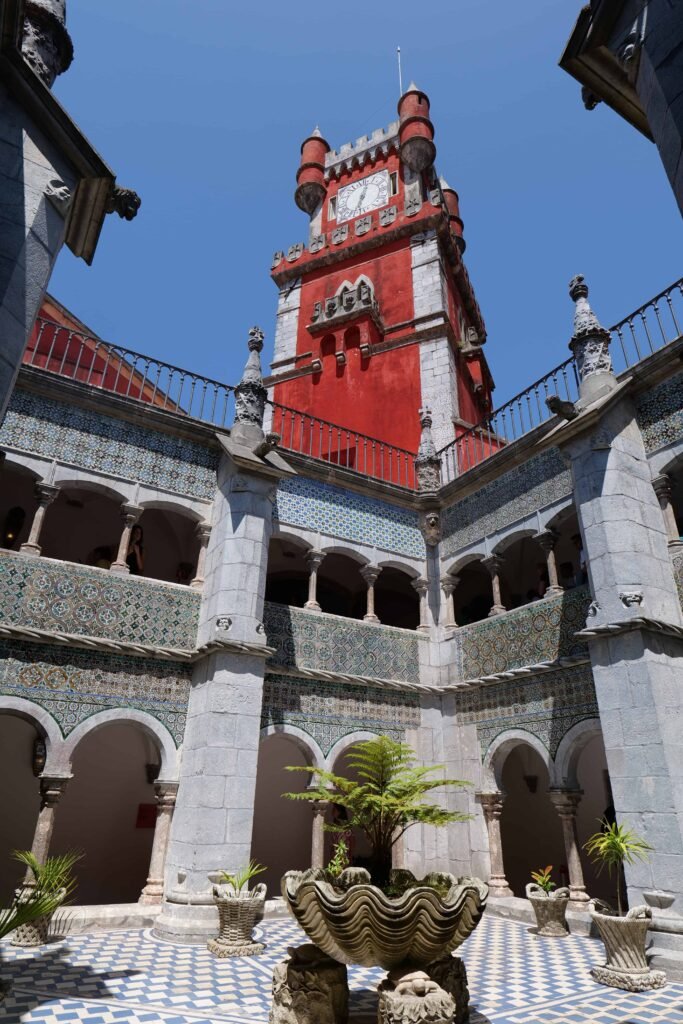
On the trip, we visited Pena Palace, the Pena Palace gardens (my favourite part!), had free time in Sintra town and enjoyed bonus stops at Cabo da Roca and Cascais.
It was a full, amazing day without me having to think through a single part of the logistics myself – and I loved that!
Stop 1: Exploring Pena Palace
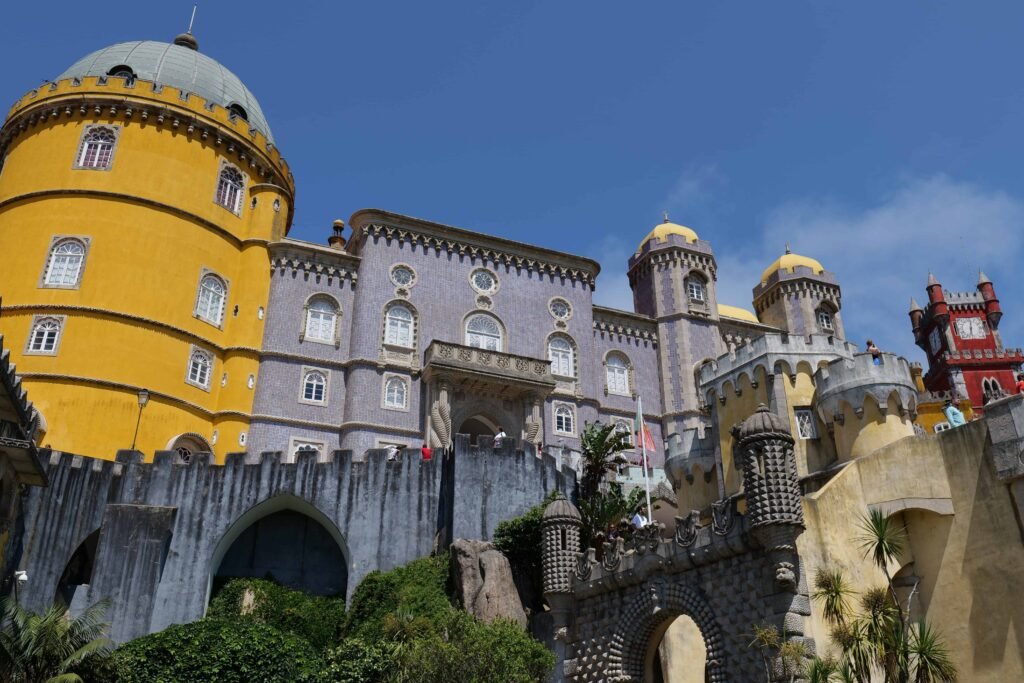
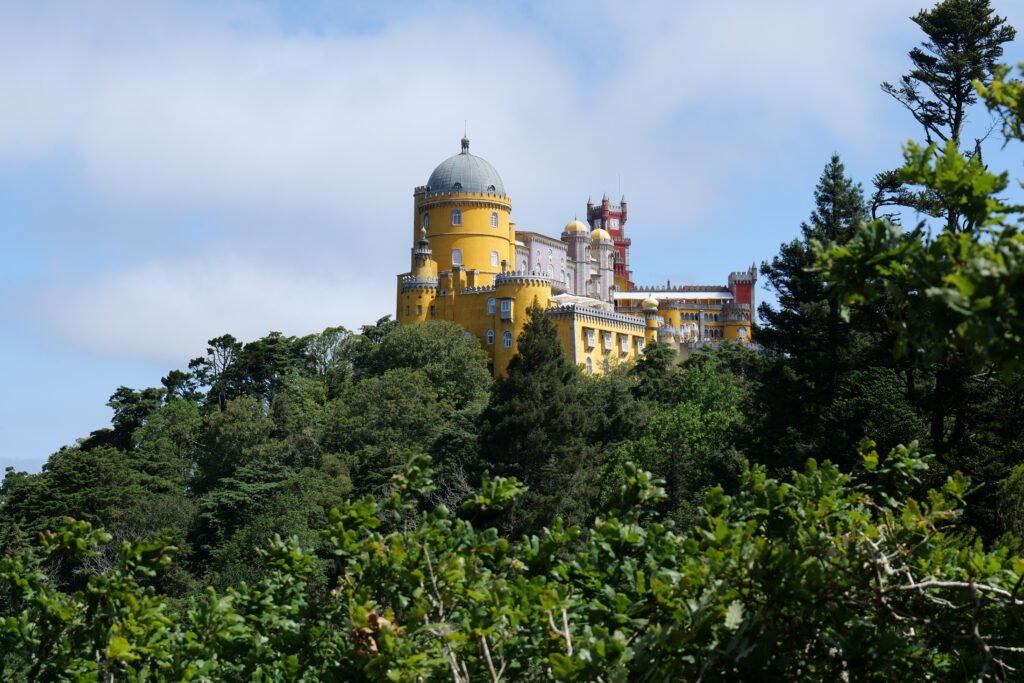
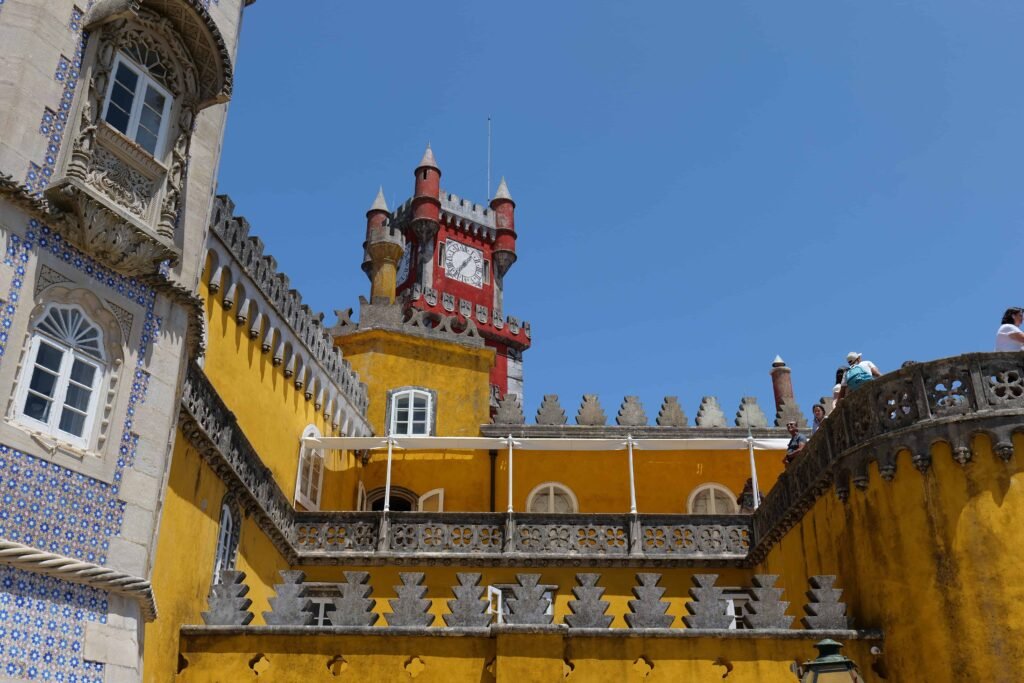
The brightly coloured Pena Palace is the reason most people visit Sintra, for good reason!
This spectacular palace sits high above the forested hills of the Sintra-Cascais Natural Park, painted entirely in bold yellows, blues and reds.
It genuinely looks like something out of a storybook!
And one of the biggest advantages of visiting on a guided tour is that timed entry and transport up the hill are all handled for you.
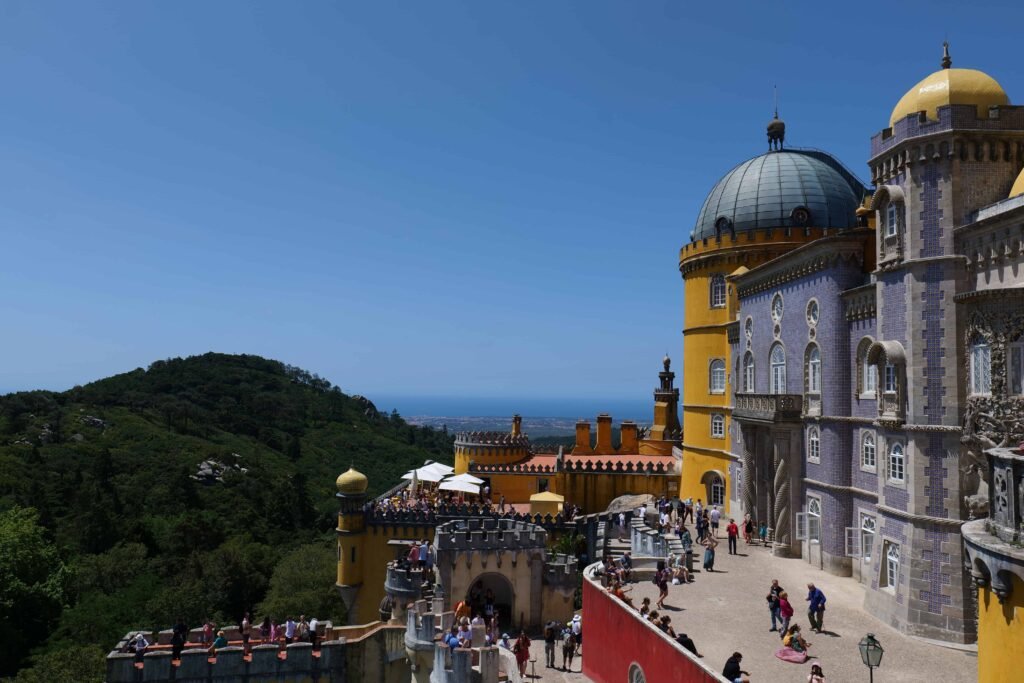
It was so nice exploring the (honestly busy and kinda overwhelming) interiors of Pena Palace with an experienced local, so I could just focus on enjoying the day.
My favourite part of exploring the palace was the view from the main terrace, overlooking the surrounding countryside!
Stop 2: Walking Through Pena Palace Gardens
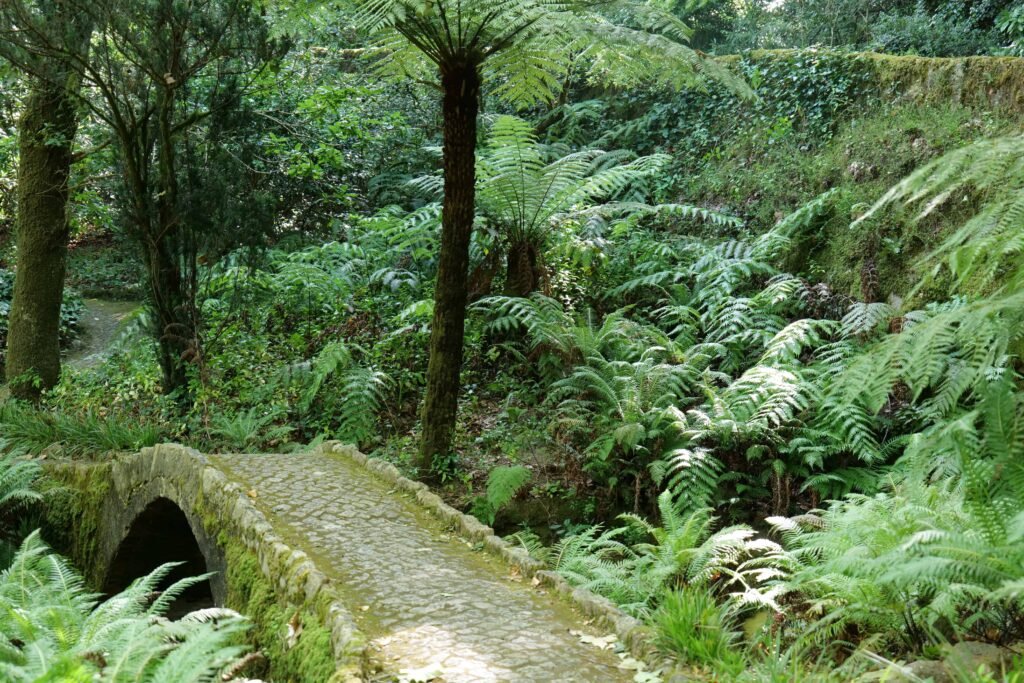
This was the surprise highlight of the day for me!
Most visitors see the colourful terraces and interiors and leave, but the gardens are where Pena Palace is at its most peaceful and beautiful.
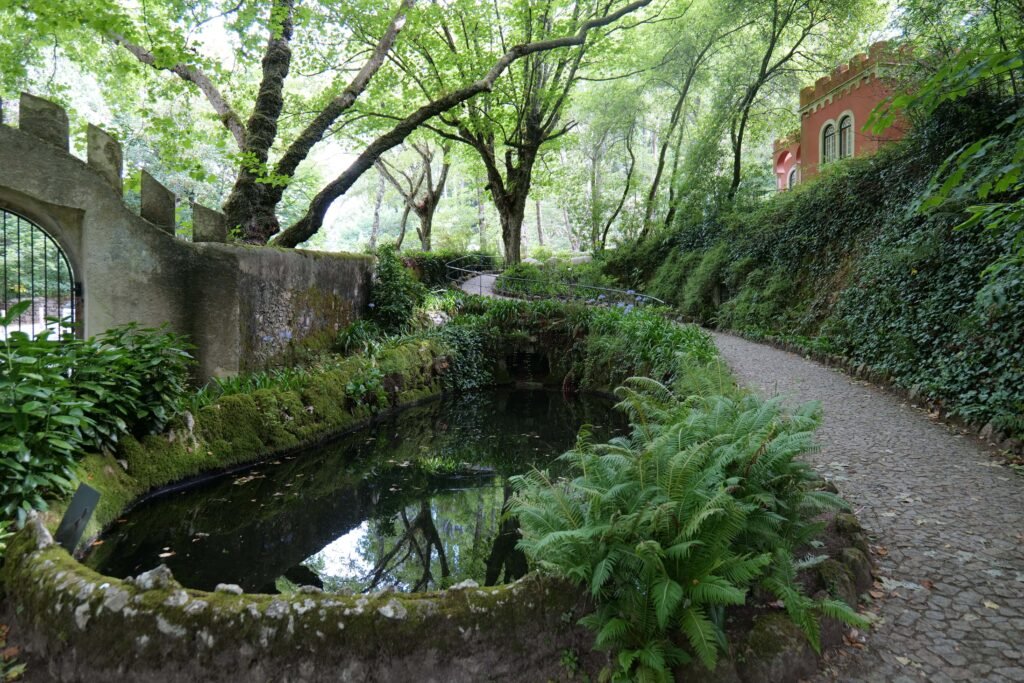
Our guide led us through the maze of beautiful forested paths to the very best lakes, follies and viewpoints tucked away between the trees.
Stop 3: Sintra’s Historic Centre
After visiting the palace, our tour included free time in Sintra town itself – the historic centre located in the valley below Pena Palace.
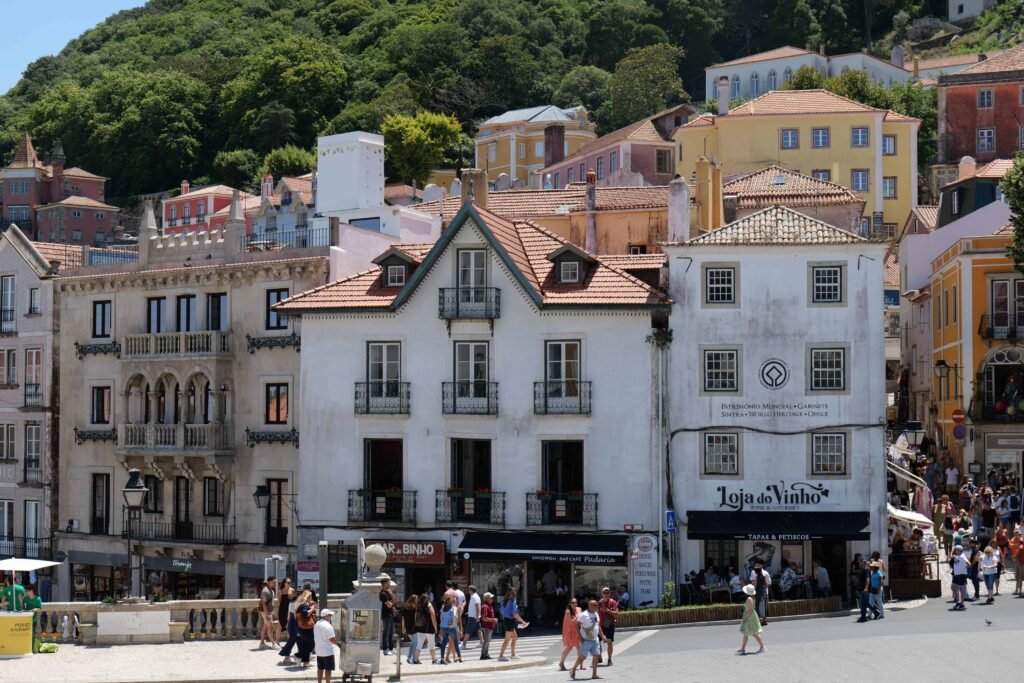
This is your perfect opportunity to grab some lunch, try a local pastry (like the delicious Travesseiros from Piriquita), or browse the many souvenir shops.
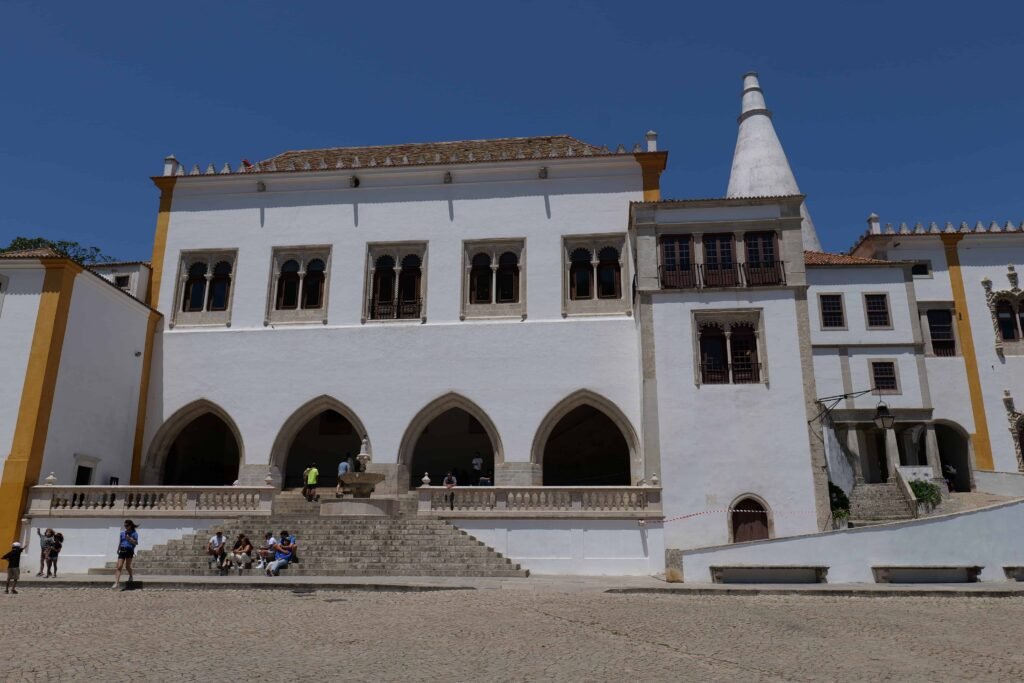
I also used my free time to visit the National Palace of Sintra.
Stop 4: Cabo da Roca
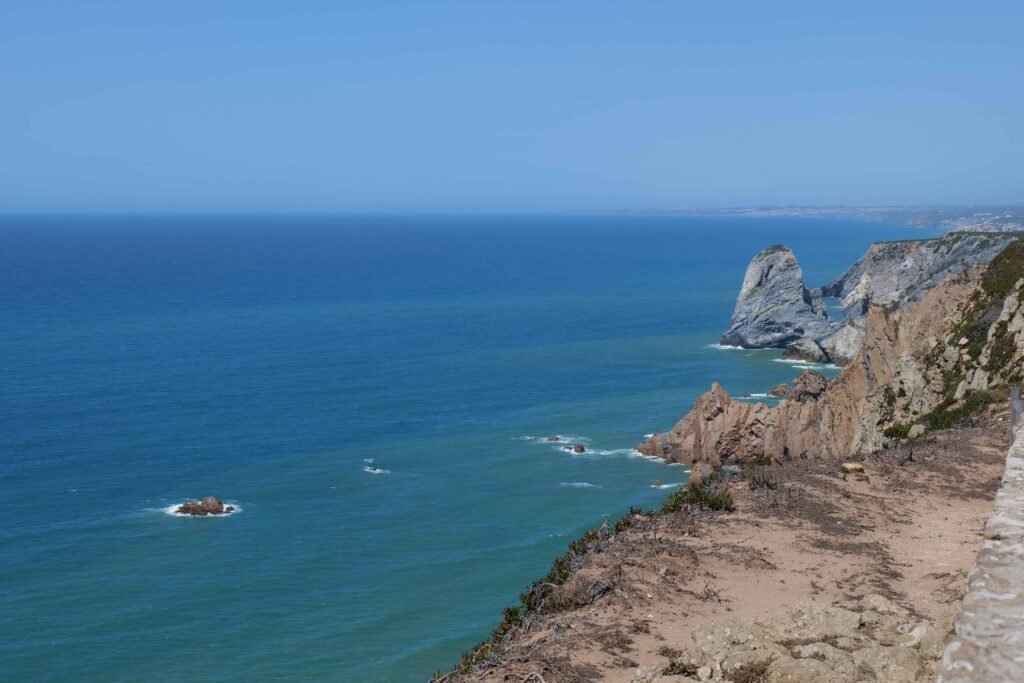
Cabo da Roca is officially the westernmost point of mainland Europe, and it’s such an unmissable photo stop.
From the edge of the rugged cliffs, you look out at the wild, expansive Atlantic – and know that there is nothing between you and North America except ocean!
It is almost always very windy at Cabo da Roca, though, so make sure you bring a layer.
Stop 5: Cascais
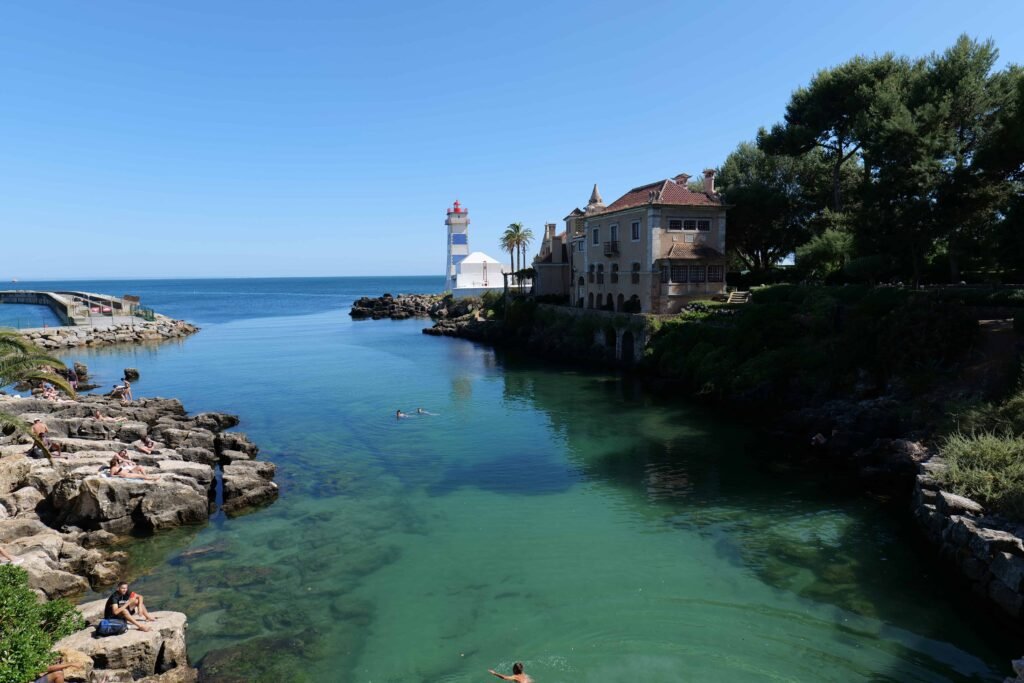
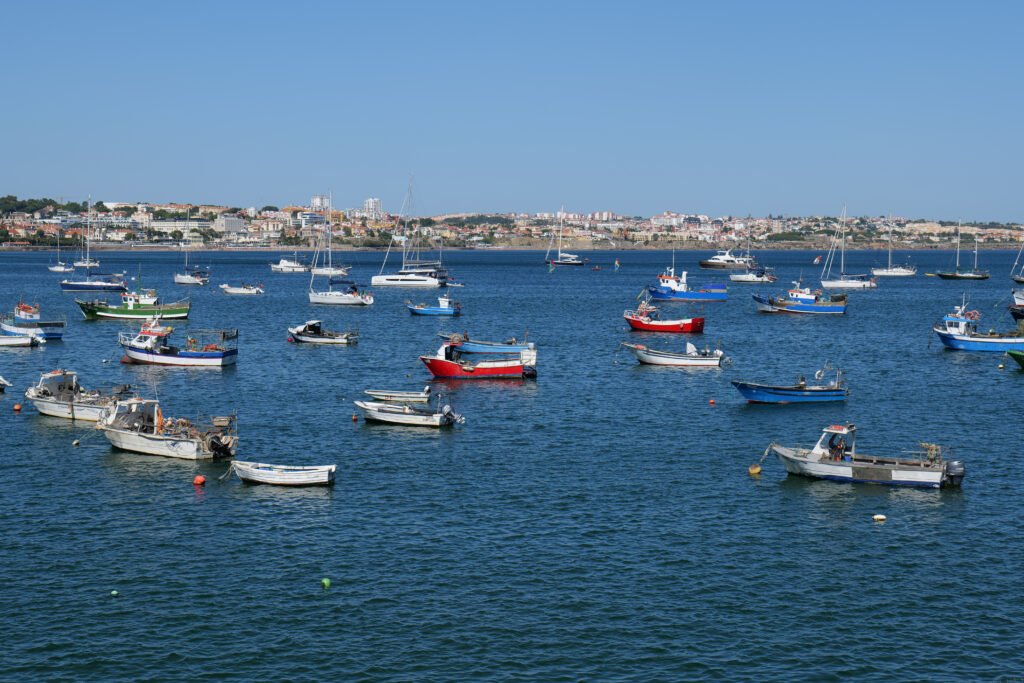
On my tour, we ended our perfect day in the small seaside town of Cascais.
And after a full day exploring the busy Pena Palace and walking through the forested gardens, it’s the perfect place to relax and reset before heading back to Lisbon!
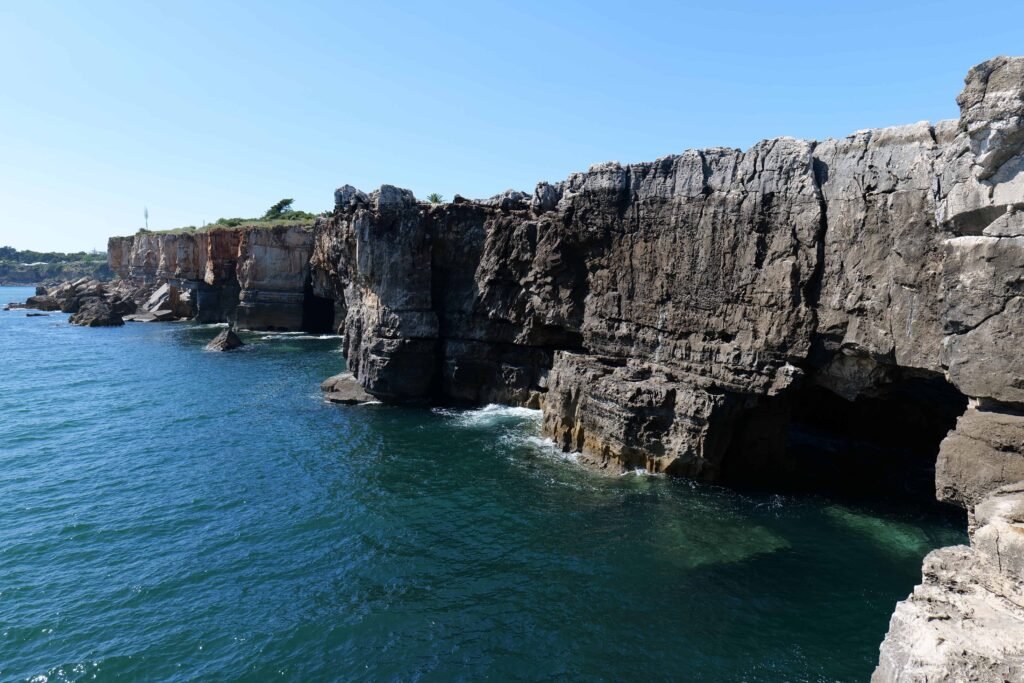
My highlight was walking along the coastal promenade to Boca do Inferno – a dramatic coastal rock formation where the waves crash into the cliffs below.
It’s not a long walk (maybe 20 minutes), and I had plenty of time free to walk there and back.
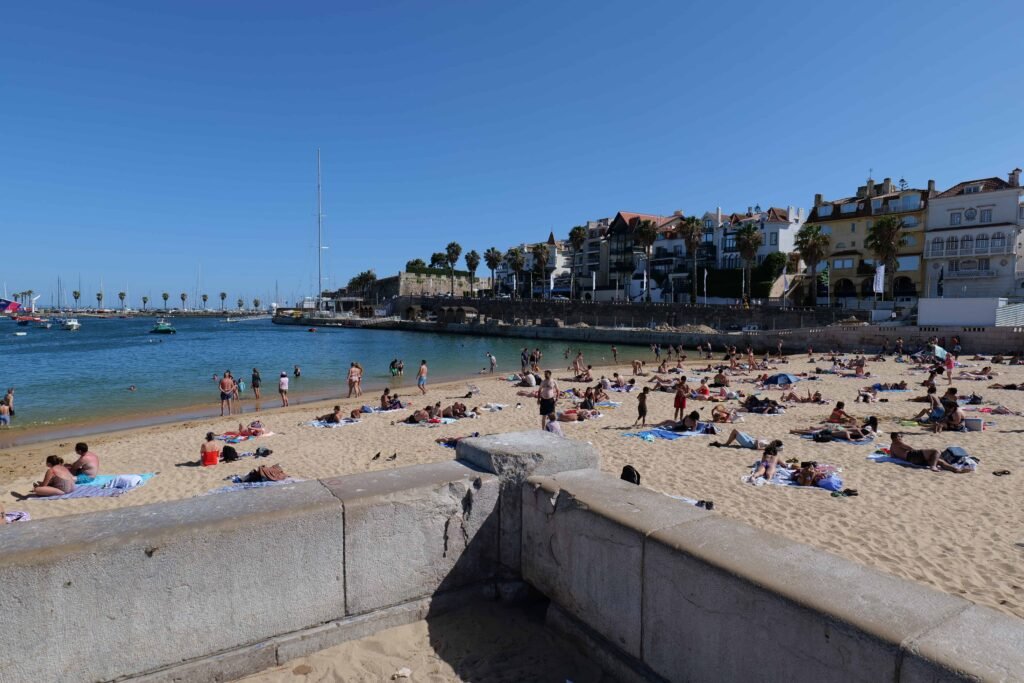
But if you don’t fancy it, you could also grab a light dinner at one of the restaurants on the marina, see the Cidadela de Cascais or even relax on one of the beaches!
My favourite beach in Cascais is Praia da Ribeira de Cascais.
Day 10: Belém + Leave Lisbon
The last day of this 10 days in Portugal itinerary is a real highlight!
If you’ve got an early flight, you’ll have to skip this day and head to the airport (or extend your trip), but if you have a little more time, definitely head to Belém on the train.
To get to Belém from Lisbon, take the train from Cais do Sodré for about 7 minutes.
I left my luggage at a Radical Storage certified location before heading to Belém on the train, so I didn’t have to carry all my bags around with me.
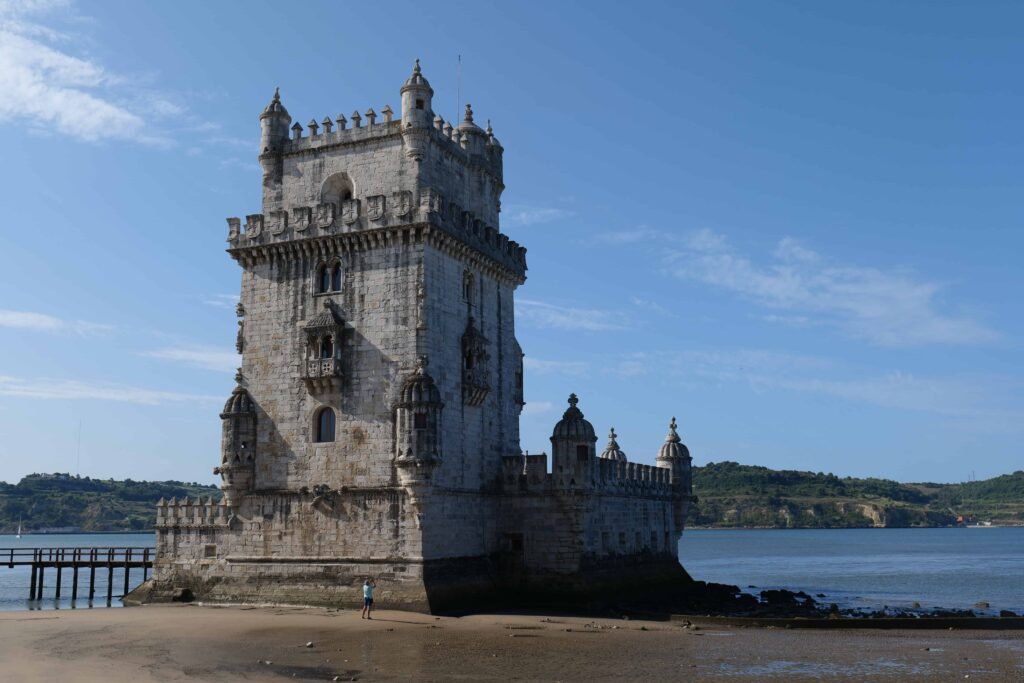
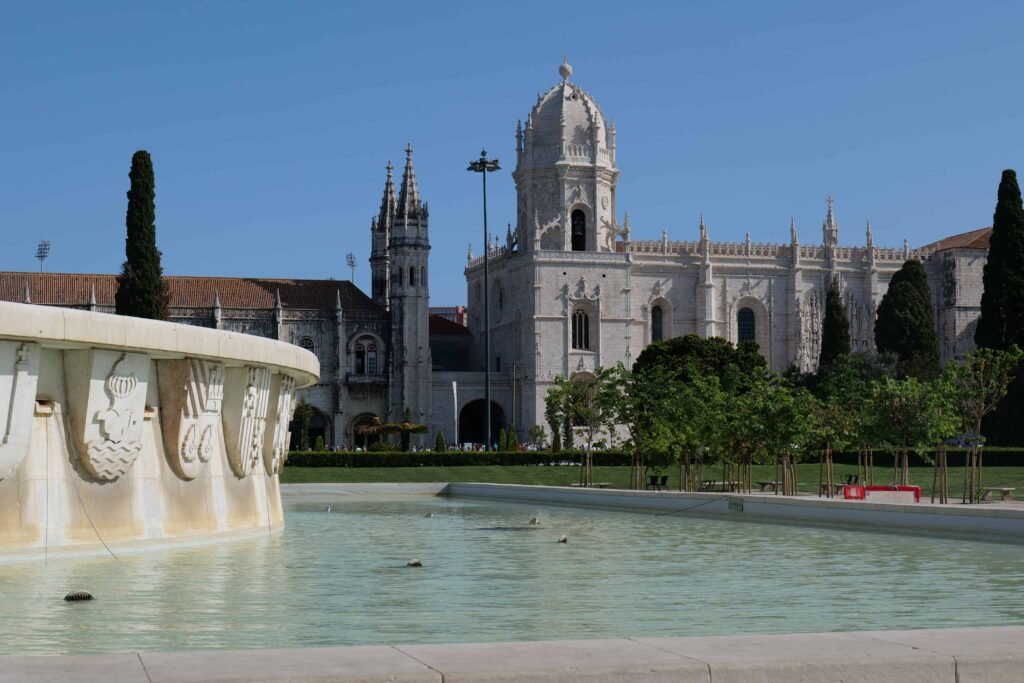
Then, once you arrive, enjoy a relaxed walk along the waterfront, seeing the impressive Belém Tower and Jerónimos Monastery.
(I personally didn’t have enough time to visit inside either monument on my visit, but it’s on my bucket list for next time.)
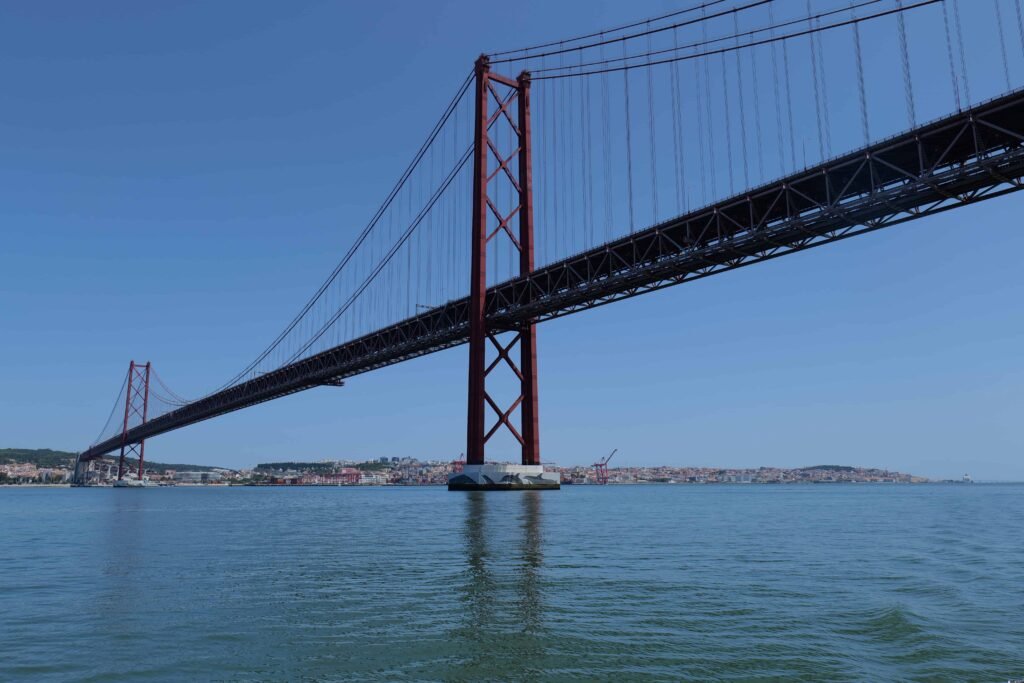
Then, for the final part of my morning in Belém, I joined a 2-hour Tagus River cruise!
Seeing the iconic, colourful Lisbon skyline from the water was such a peaceful, beautiful way to end my 10 days in Portugal.
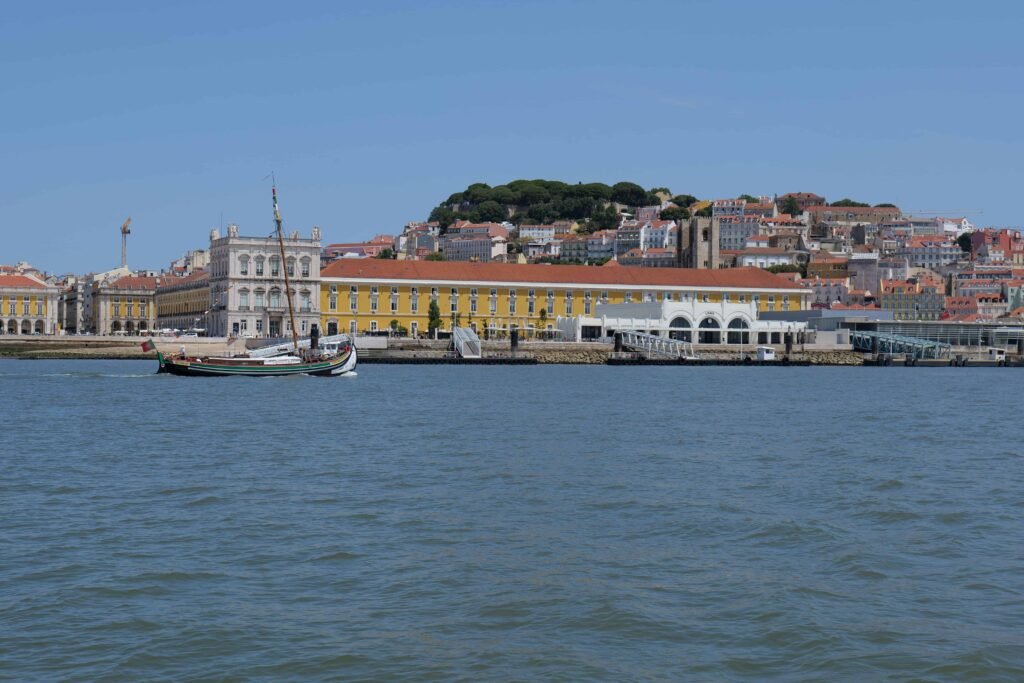
Plus, after days of walking and joining guided tours, relaxing on a beautiful yacht and watching the city drift by with zero effort was perfect and much-needed!
Is 10 Days Enough for Portugal?
Yes, for most people, 10 days in Portugal is a really good amount of time!
It’s enough to see a mix of the most iconic cities, day trips, coastline, and culture without constant hotel hopping or rushing through every stop.
In fact, I actually think ten days is one of the best lengths for a Portugal itinerary for first timers, for a balance between seeing a lot and still having an amazing, stress-free time.
You’ll of course see Porto and Lisbon, but you also go beyond the obvious, with day trips to places like Arrábida Natural Park, Braga, Évora and Amarante!
That said, is 10 days enough to see all of Portugal? Definitely not!
Portugal may look small on a map, but there are a lot of amazing places packed into it.
And if you also want to visit the Algarve, you’ll need at least an extra four days on top of this itinerary.
Why This Portugal Itinerary Works
There are so many versions of a Portugal itinerary out there that sound amazing but feel totally exhausting in practice, which is why I created my own!
When I was planning my own solo trip to Portugal, I knew I didn’t want too many hotel changes, too many long travel days, or too many quick stops with no depth.
And, having now done this itinerary, I love that you see the highlights – but without rushing!
You get Porto and Lisbon as your two bases, which keeps logistics simple. But you also don’t have to miss out on iconic day trips to see more of beautiful Portugal.
If I were recommending just one 10-day Portugal trip to someone visiting this spectacular country for the first time, this would honestly be it!
FAQs: Your Portugal Itinerary
How many days do you need in Portugal?
This is one of the most common questions I get, and honestly, 10 days in Portugal is a really good amount of time, especially for a first trip.
This gives you enough time to experience the highlights of both Porto and Lisbon properly, while still fitting in a few of the best day trips – without feeling rushed or overwhelmed.
When is the best time to visit Portugal?
Portugal genuinely works well most of the year, but if you’re following this exact 10-day Portugal trip, late spring to early summer is ideal.
I personally did this itinerary in June, and it was perfect! The weather was warm and sunny without being unbearably hot, the streets were lively but not overwhelmingly busy, and day trips (especially to the coast) were at their best.
For a Portugal itinerary for first-time visitors, I’d recommend May, June or September!
What are the best places to visit in Portugal?
For a first trip to Portugal, you want to experience a mix of the obvious cities and also the more underrated places that show completely different sides of this beautiful country!
Some of the best places to visit in Portugal (all included in this itinerary!) are Porto, Lisbon, Pena Palace, Arrábida Natural Park, Braga and Évora.
Can you see Portugal without a car?
Yes, and this entire 10 days in Portugal itinerary is designed to help you do just that!
In fact, Portugal is actually one of the easiest countries in Europe to travel without a car.
The train network connects major cities like Porto and Lisbon really well, and from there, you can use a mix of local transport and guided day trips to reach places that are harder to reach.
In fact, not having a car can even make the trip feel less stressful for me, as I didn’t need to worry about driving unfamiliar roads, finding parking or planning long road trips!
Read More About Travel in Portugal:
- The BEST 10 Days in Portugal Itinerary (Without A Car)
- 11 Best Places to Visit in Portugal for First-Timers, Ranked
- Is Porto Safe For Solo Female Travellers? Porto Safety Tips
- How to Spend 3 Days in Porto: Your Perfect Porto Itinerary
- The 7 Best Day Trips From Porto (No Car Needed!)
- 17 Best Things To Do Alone in Lisbon For Solo Travellers
- 11 Best Day Trips from Lisbon You’ll Wish You Knew Sooner
- Is Lisbon Safe For Solo Female Travellers? A Realistic Guide
- 3 Days in Lisbon, Portugal: A Perfect Solo Travel Itinerary
- 15 Things to Know Before Travelling to Portugal in 2026
- Is Portugal Safe For Solo Female Travellers? An Honest Guide
Grab Your Solo Female Travel in Europe Starter Kit:
Pin Me For Later!