

11 Best Places to Visit in Portugal for First-Timers, Ranked
Planning your first trip to Portugal and wondering what’s actually worth visiting?
When I planned my first solo trip here, I spent HOURS scrolling Google Maps and reading top 10 lists, but it only left me feeling overwhelmed.
I mean, how is this country so small and yet so hard to narrow down where I want to visit?
Lisbon and Porto felt like obvious must-sees. Then there was Sintra. The Algarve. And all of the hidden gems in between.
And that’s how most of us end up overplanning (and spending half our trip on trains!)
Portugal is one of my favourite countries in Europe for solo female travel, not just because it’s beautiful, but because when you know where to visit, it’s super easy to explore.
But you don’t need to see everything to have an incredible first trip.
So here are the best places to visit in Portugal for first-timers, ranked based on my own solo travels, that are genuinely worth building your itinerary around!
11. Coimbra
Coimbra might not be the first place you think of for the best places to visit in Portugal for first-timers, but honestly, that’s exactly why I liked it!
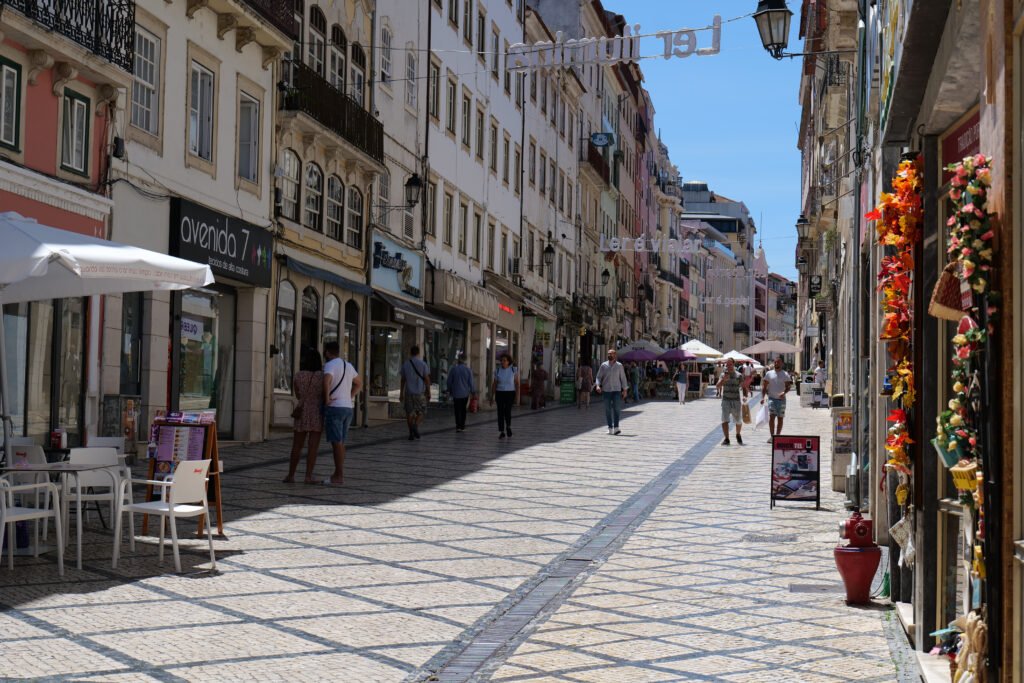
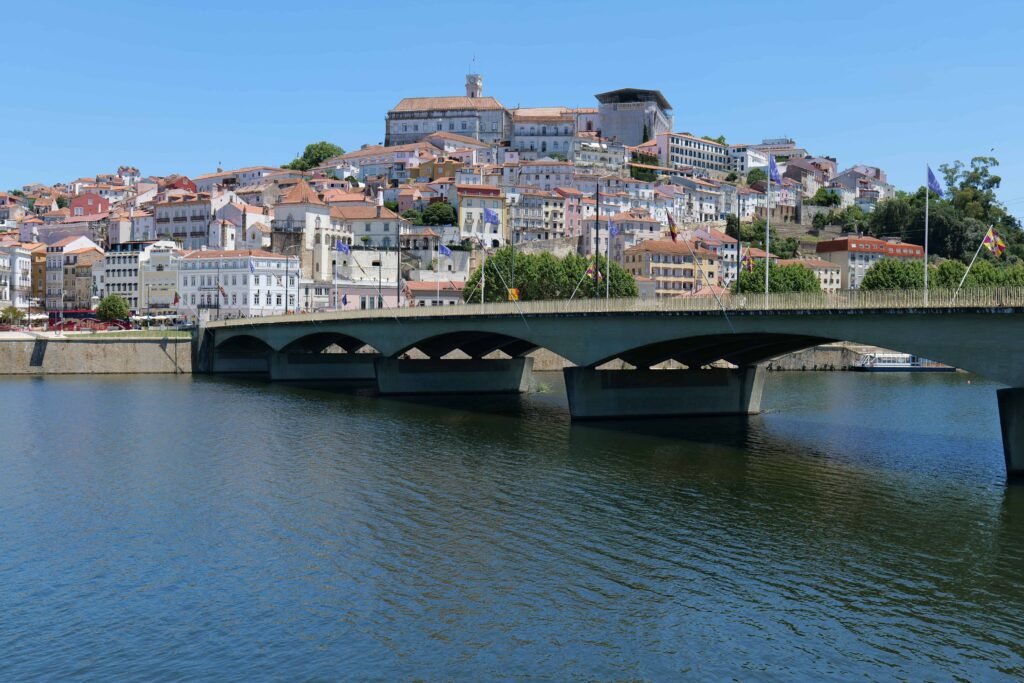
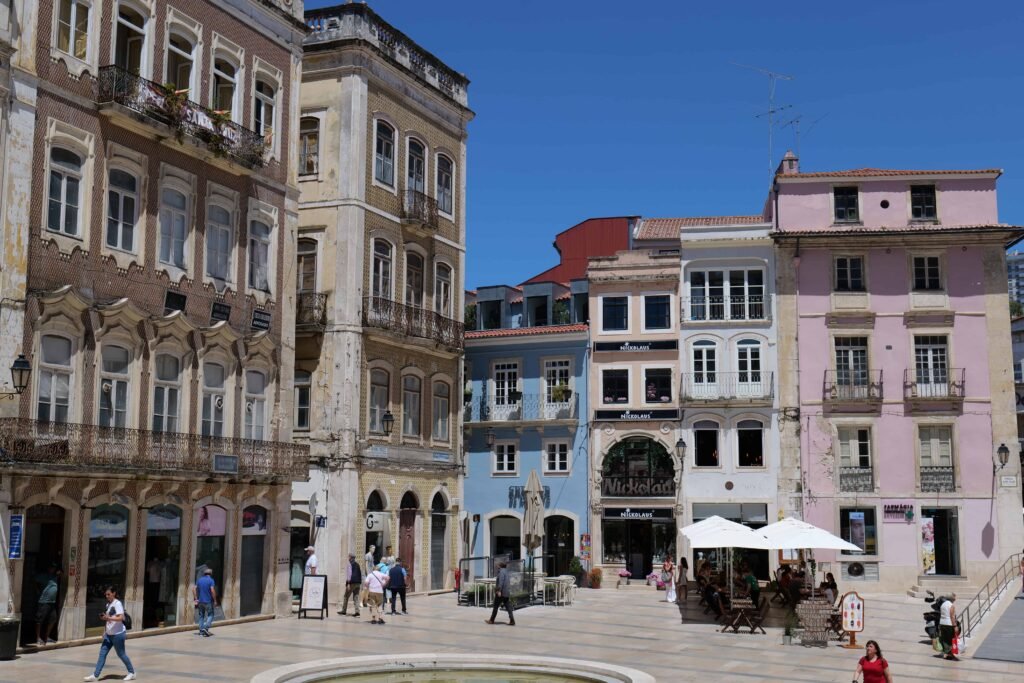
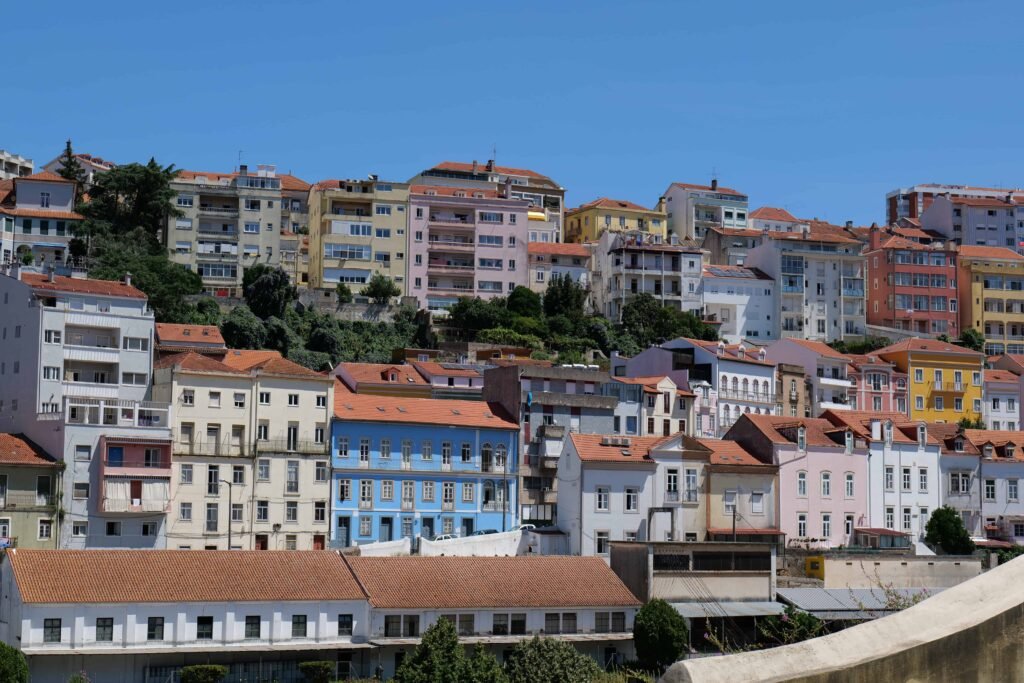
Centuries-old university buildings and a grand cathedral are located in the old town, perched high above the Mondego River, with cobbled streets, panoramic views, and the Joanina Library that genuinely feels straight out of a fantasy novel.
And all of this without the overwhelming tourist crowds you’ll find in Lisbon or Porto!

When I visited Coimbra solo, I most loved its unique contrast, which felt totally different to anywhere else I visited on my Portugal itinerary.
It has a fascinating history and a charming, cobbled old town, but is also buzzing with students, which keeps the atmosphere fun and alive!
I also love that Coimbra is so walkable, so you don’t have to stress about public transport once you arrive.
Just remember to wear comfy, sturdy shoes and bring plenty of water if you want to explore the old town – the hill up to the top is no joke, especially in summer!
Planning Your Visit to Coimbra
Top things to do in Coimbra
- Visit the stunning Joanina Library – one of the most beautiful libraries in the world!
- Explore the peaceful courtyards of the University of Coimbra campus.
- Take a walk through and relax in the Botanical Gardens.
- See a live Fado show with a glass of local Port Wine – Coimbra has its own unique Fado tradition, performed by local students!
- Walk by the Mondego River (it’s flat, which is so nice after exploring the old town!)
How long to spend in Coimbra
1 or 2 nights (or even a day trip) is enough to see the highlights in Coimbra.
If you’re travelling around Portugal, I recommend at least one night, so you’re not rushing. I love CBR Boutique Hotel, which has stunning views over the Mondego River!
If you’re tight on time (with less than 5 days in Portugal), I recommend a day trip from Lisbon or Porto instead.
How to get to Coimbra
By car: Around 2 hours from Lisbon and 1.5 hours from Porto. Parking is available, but it’s limited, and the streets are narrow. Try Parking Convent San Francisco for free parking.
By train: Around 1.5 to 2 hours from Lisbon and 1 to 1.5 hours from Porto. Trains are easy, but the station is a 30-minute walk along the river to the old town. If you have luggage or mobility issues, I recommend a quick taxi rather than walking uphill.
By bus: Coimbra is served by Flixbus, ALSA and Rede Expressos. Around 2 hours from Lisbon and 1.5 hours from Porto. The bus also drops you 30-minutes from the old town. If you have luggage or mobility issues, I recommend a quick taxi rather than walking uphill.
By tour: A guided tour is a great way to explore Coimbra if you prefer a structured itinerary and the knowledge of a local guide! This full-day, small-group tour from Porto includes a guided tour of the city and university, plus a visit and boat trip in nearby Aveiro. You can also take this full-day tour with the same itinerary, but from Lisbon.
Katie’s Top Tip: If you’re already planning to visit Lisbon and Porto, Coimbra is perfect to break up the journey. I stopped here between the two cities, explored for a few hours, then continued on. It made what would’ve been a dull travel day so much more fun!
10. Arrábida Natural Park
Arrábida Natural Park is one of the most beautiful places in mainland Portugal – and yet so many first-timers completely overlook it!
If you’re picturing jagged cliffs, pine-covered hills, white sandy beaches, and shimmering turquoise waters, that’s exactly what you’ll find here.
And the best part? It’s actually less than an hour from Lisbon!
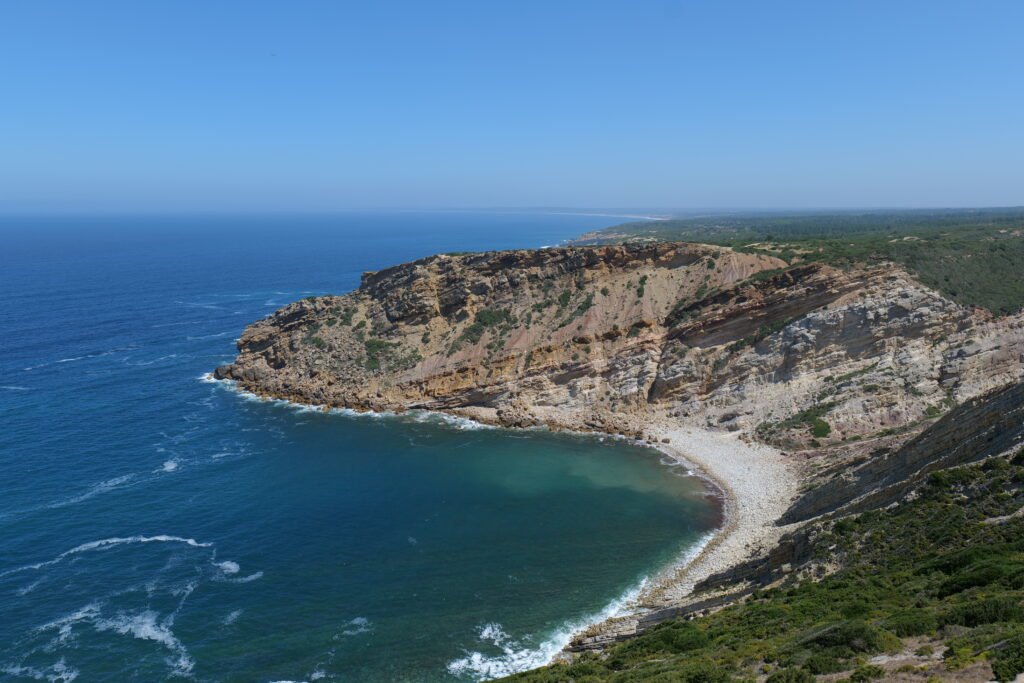
This makes it a perfect escape from the busyness of Portugal’s capital. Plus, despite being a favourite with locals, it still feels like a secret for tourists!
Who says you can’t enjoy a city break AND a beach getaway in the same trip?!
I know I definitely fell hard for Arrábida Natural Park during my own solo trip to Portugal!

The landscape feels wild and unspoiled, but also incredibly calm. And there’s a peacefulness to Arrábida that’s really hard to explain unless you’ve been there.
If you love nature, scenic drives, swimming, and getting off the beaten path in a country, Arrábida is an absolute must-visit!
Planning Your Visit to Arrábida Natural Park
For most first-time visitors, Arrábida works best as a day trip from Lisbon.
Top things to do in Arrábida Natural Park
- Swim or sunbathe at Meco Beach, one of the most beautiful in the area!
- Hike or cycle along the coastal trails for panoramic views.
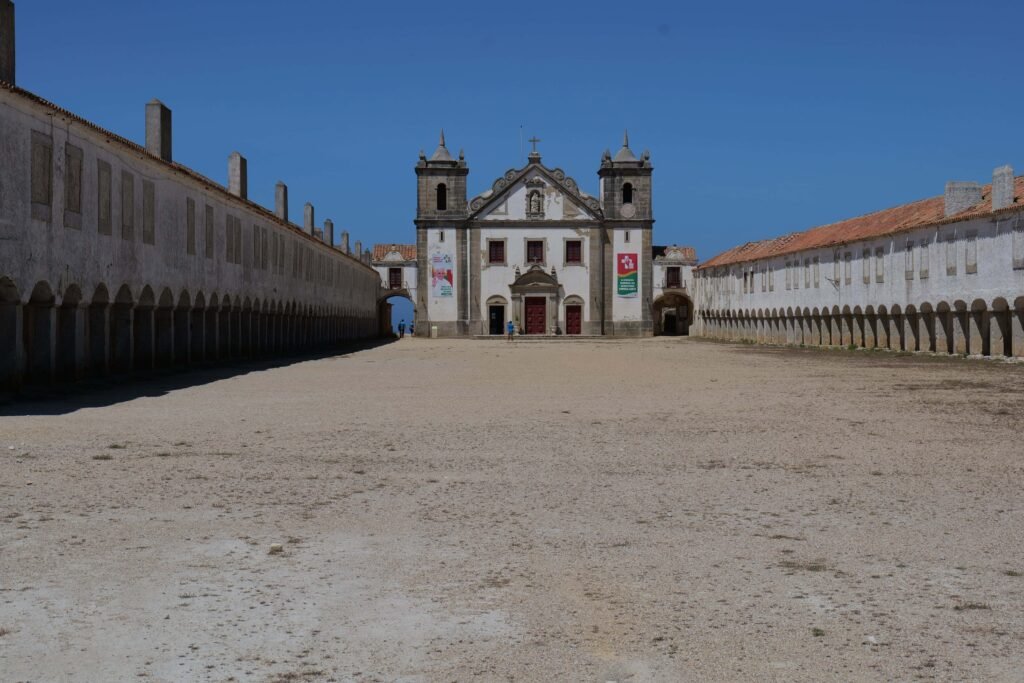
- Visit Santuário de Nossa Senhora do Cabo Espichel, an old monastery perched on the cliffs with spectacular sea views!
- Explore the caves and marine life on a guided kayak or snorkelling tour.
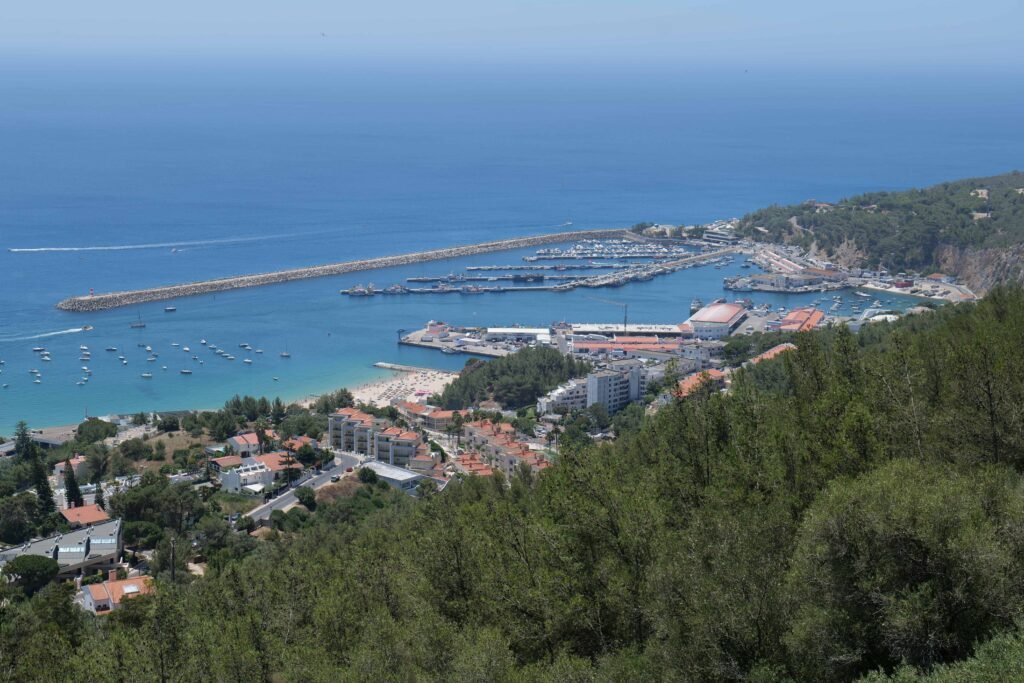
- Stop by Sesimbra or Setubal for fresh seafood and a buzzing harbour.
How to get to Arrábida Natural Park
By car: This is the easiest and most flexible option. Arrábida is a 50-minute drive from Lisbon. Parking is available, but spaces fill quickly in summer, so arrive early. And some protected areas limit vehicle access, so you can only get close with a tour.
By bus: You can take a bus from Lisbon to Setúbal with Rede Expressos in 45 minutes. From Setúbal, join a tour like this dolphin watching boat trip or this sightseeing and wine tour.
By tour: If you don’t want to rent a car, a day tour from Lisbon is the best way to see all the best spots! I joined this small-group tour, which stopped at highlights including Cabo Espichel, Sesimbra and Portinho da Arrabida. It was an amazing experience and I 100% recommend it!
Katie’s Top Tip: Bring snacks, water and comfy shoes. There aren’t many facilities in the park, and the best spots involve a bit of a walk, but it’s so worth it! Also, if you’re visiting in peak summer, go early. This is a local favourite!
9. Cascais
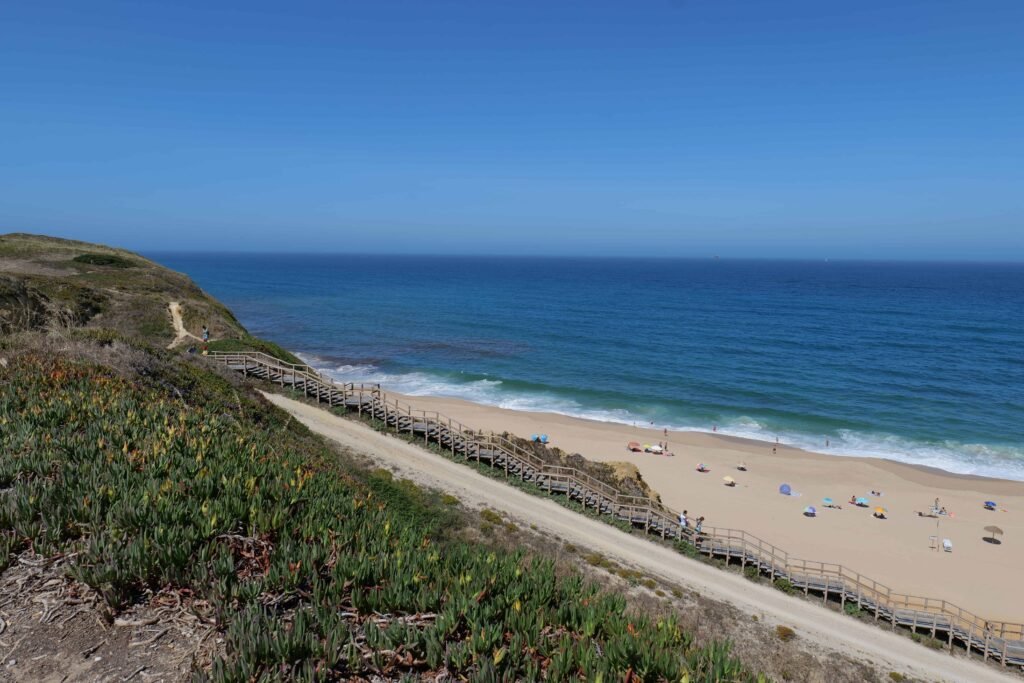
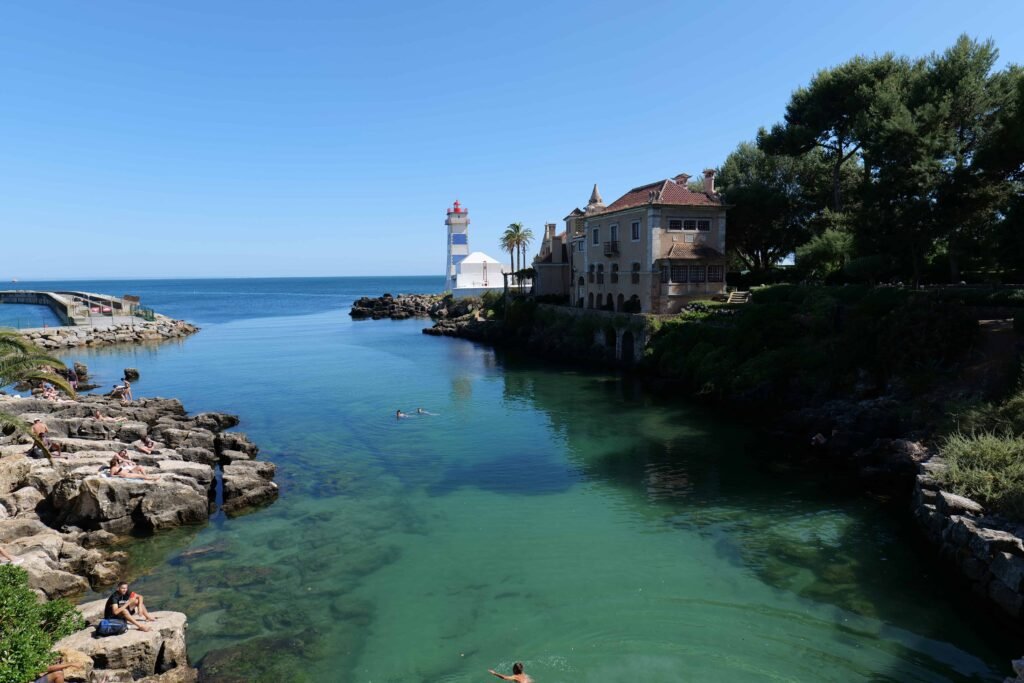
Cascais is a chic little coastal town with golden beaches, tiled streets, and just the right amount of glamour!
Safe, friendly and exceptionally beautiful, it’s one of the best places to visit in Portugal for first-timers, especially if you want a relaxed seaside base that’s still super close to Lisbon.
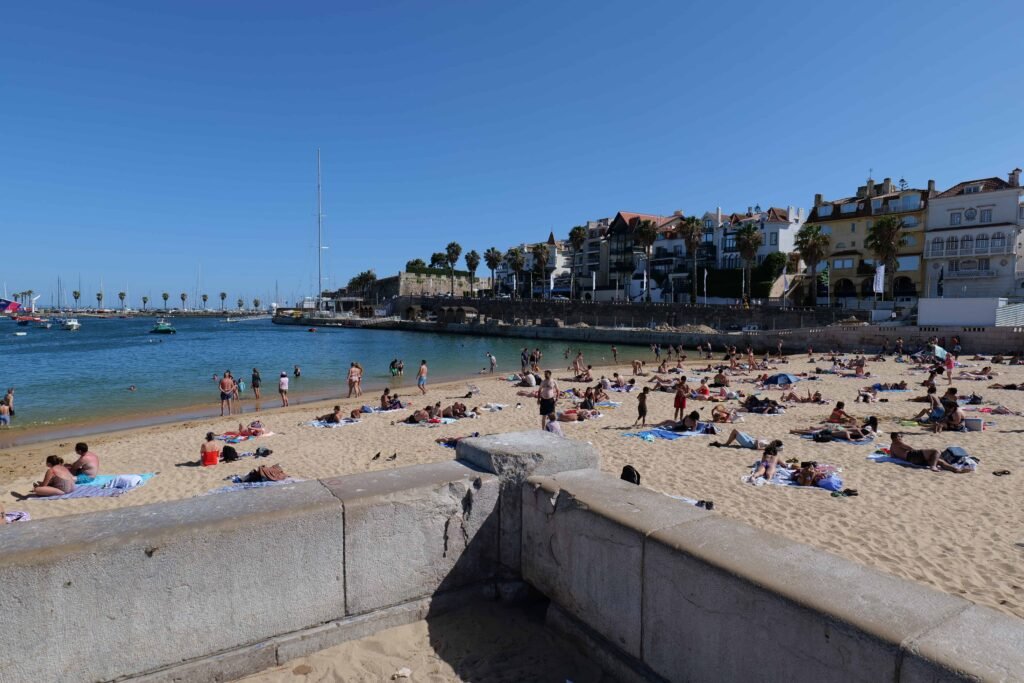
But what I loved most about Cascais is how walkable it is.
You can explore the charming backstreets in one moment, before heading back to the beach to sunbathe or swim with just a few steps.
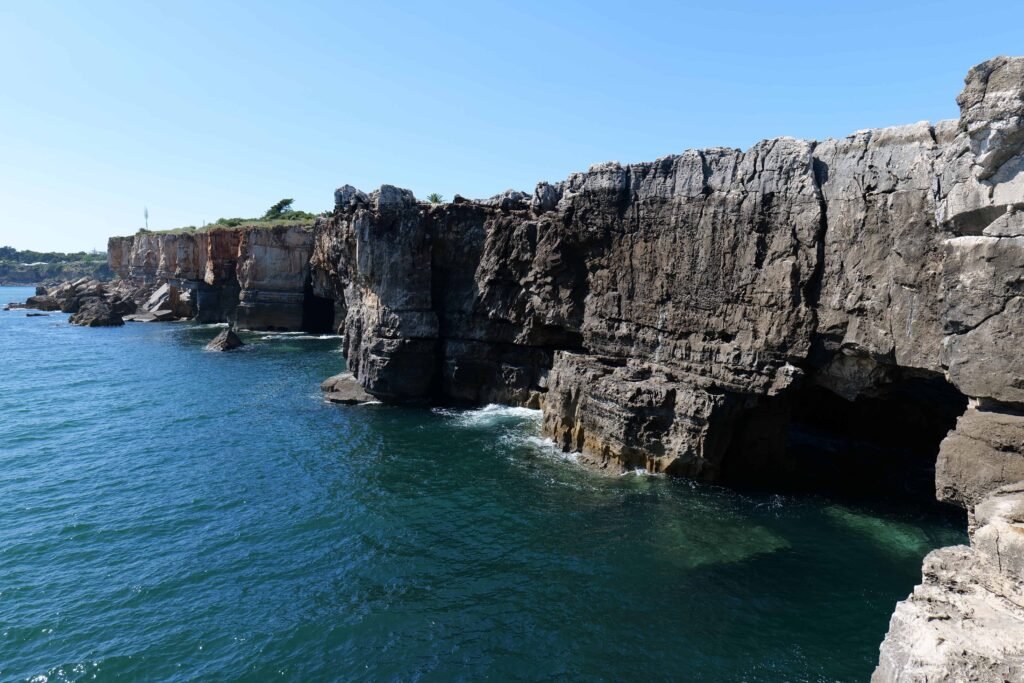
In Cascais, you can sunbathe, shop, grab a cocktail, marvel at the cliffs of Boca do Inferno – or all of the above!
So if you love a mix of beaches and sightseeing, Cascais is the perfect getaway from Lisbon.
Planning Your Visit to Cascais
Top things to do in Cascais
- Sunbathe or swim at Praia da Rainha or Praia da Ribeira de Cascais
- Walk or cycle the coastal path to the spectacular Boca do Inferno
- Get lost in the small but charming old centre of Cascais
- Browse (or go on a shopping spree!) in the independent shops
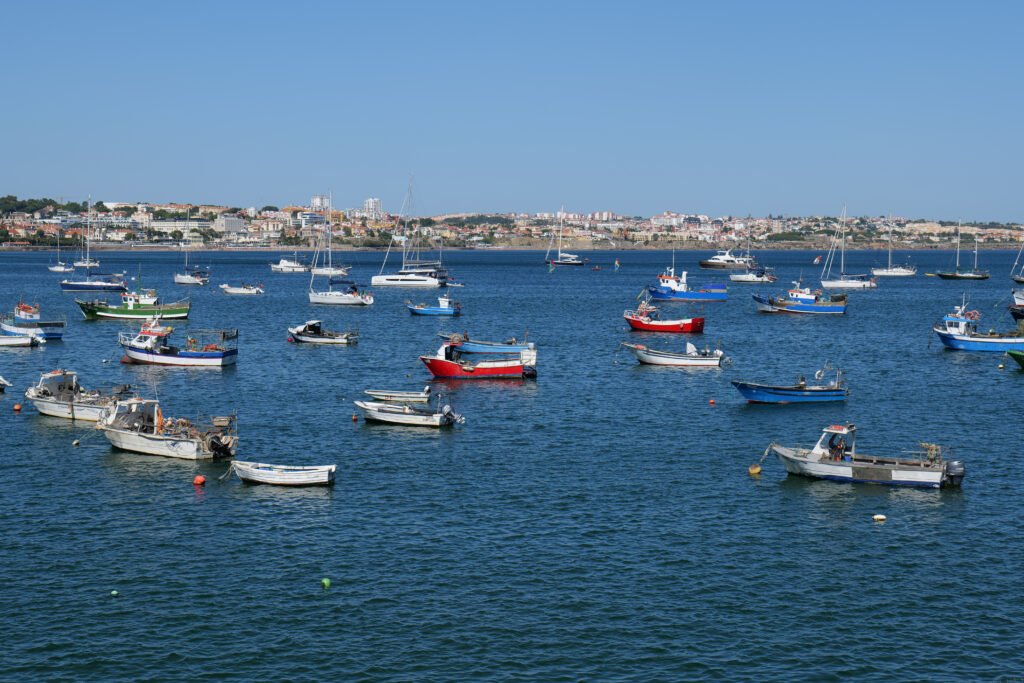
- Watch the boats at Cascais Marina
How long to spend in Cascais
A day trip is enough to see the highlights in Cascais, but if you want to enjoy a proper relaxing beach getaway, consider staying at least a few nights (or more!)
For a longer stay, I recommend Hotel Baia, which has stunning beachfront views!
How to get to Cascais
By car: It’s about a 35-minute drive from Lisbon to Cascais. Parking in the centre can be tricky to find in peak season, but there are paid spaces around the marina and station.
By train: This is the most popular option. The direct train from Lisbon Cais do Sodre to Cascais takes about 40 minutes, runs every 20 minutes, and has gorgeous coastal views. The train does get busy, but it’s so much easier than finding space to park, and there’s no advance ticket booking needed. Hello, spontaneous beach day!
By tour: Most Lisbon day tours include Cascais, combined with a visit to Sintra. I joined this small group, full-day Sintra tour during my trip to Portugal and can’t recommend it enough! As well as having free time to explore Cascais, you also visit Cabo da Roca and discover the secret spots in over-touristy Pena Palace, thanks to your amazing local guide!
Katie’s Top Tip: Stay overnight if you can. While most tourists visit Cascais as a day trip (or even as a brief stop on a tour), it’s so much more magical in the mornings and evenings when day trippers leave!
8. Porto
Porto is Lisbon’s moodier, more artistic sibling – and I mean that in the best way.
It’s one of the reasons I love Porto so much!
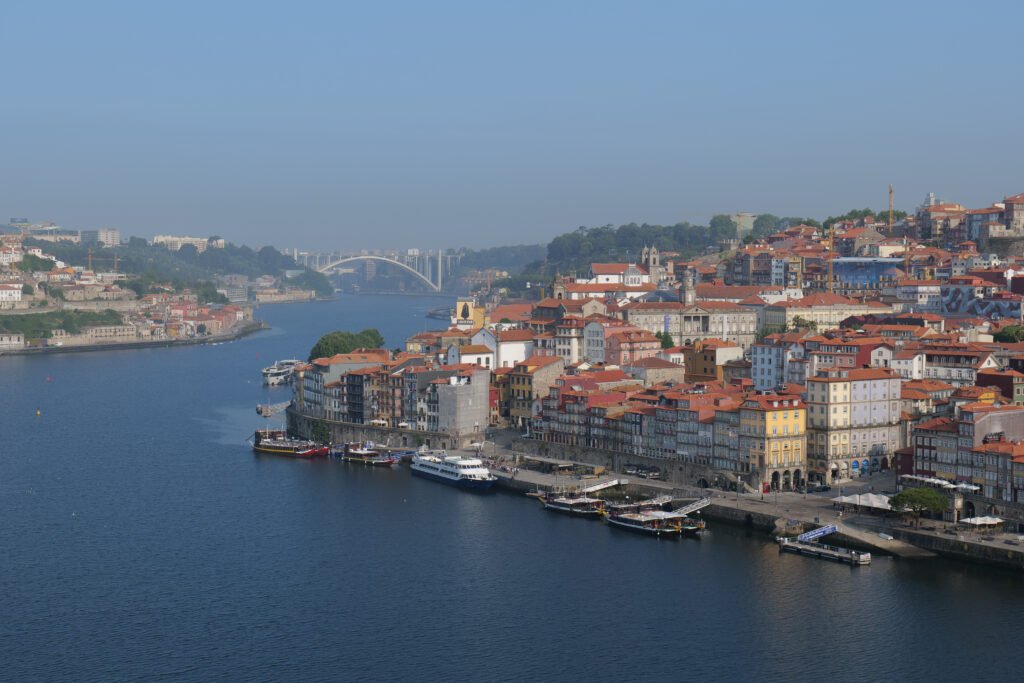
With fascinating, hilly streets to explore, azulejo-tiled buildings to marvel at and, of course, the iconic River Douro, it’s without doubt one of the top cities to visit in Portugal.

But what made me fall in love with Porto even more as a solo female traveller was how compact and friendly it felt, despite being a busy city.
I wandered Ribeira’s colourful riverside, sipped Port wine in a traditional bar, and watched the sunset from the Dom Luís I Bridge, without ever feeling overwhelmed.
I always felt totally at ease in Porto, exploring on my own, even when I was deliberately getting lost in the quaint backstreets!

Planning Your Visit to Porto
Top things to do in Porto
- Take a Douro River boat cruise under the famous six bridges
- Walk (or take a cable car) across the Dom Luis I Bridge for spectacular views
- Explore the Ribeira district’s cafés, bars and colourful buildings
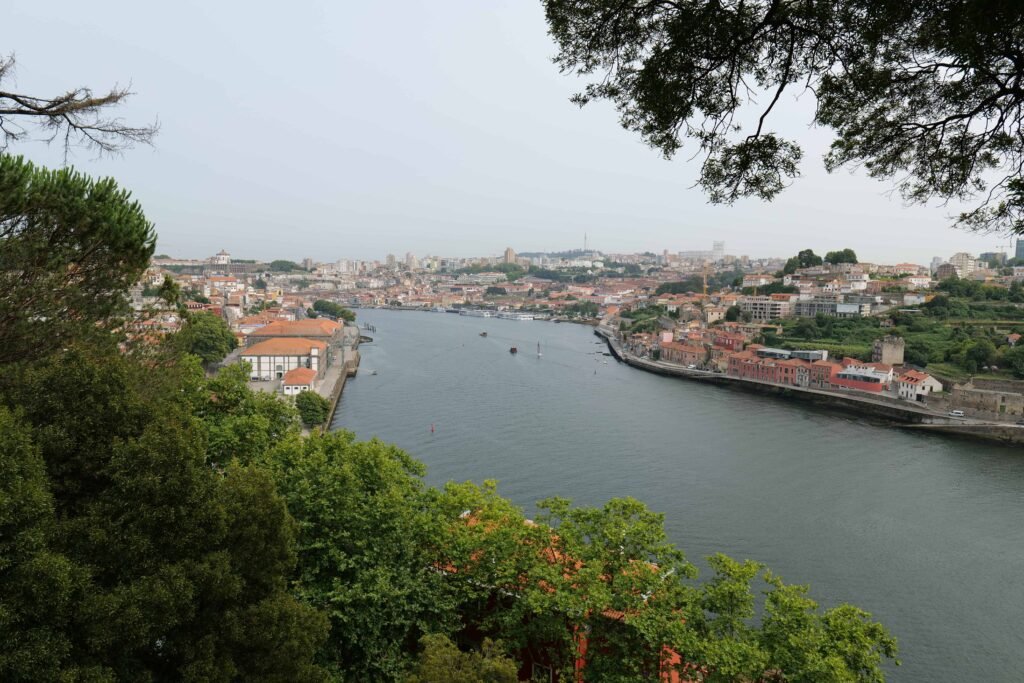
- Admire the city from above in the Crystal Palace Gardens
- Visit São Bento train station for the tiles alone (or to catch a train, if you want!)
How long to spend in Porto
You definitely want to plan a longer trip to see the highlights of Porto! I personally stayed for six days to see the best of the city and its most popular day trips.
For your stay, I recommend Casa Zogbi hotel, in the heart of Porto’s famous Ribeira district.

How to get to Porto
By plane: Porto has an international airport that is well-connected to countries across Europe and beyond.
By car: It’s a simple drive of around 3 hours from Lisbon. But parking in Porto is limited, and the roads are hilly. So if you’re not confident navigating city streets, it’s best to park outside the centre and take the metro in.
By train: From Lisbon, the high-speed train takes around 3 hours to reach Porto.
By bus: Buses to and from Porto are served by ALSA, Flixbus and Rede Expressos. The bus from Lisbon to Porto takes around 3.5 hours.
By tour: There are guided day tours from Lisbon to Porto, but to be honest, this is a city that’s best experienced in its own right. Stay overnight (for at least a few days) if you can. But if a tour from Lisbon is your only option, this full-day tour combines the highlights of Porto, Obidos and Nazare with a local guide.
Katie’s Top Tip: Cross over the Dom Luís I Bridge to the Gaia side to watch the sunset – you’ll get the best panoramic view of the old town and the river!
7. Pena Palace (Sintra)
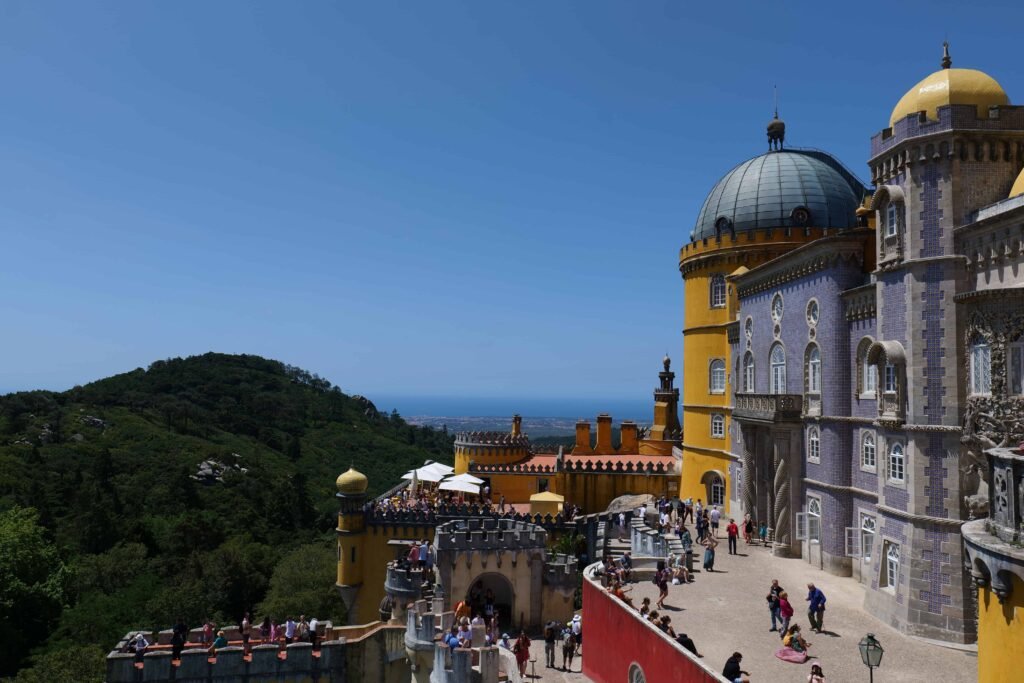
Perched high in the hills, the colourful, Romanticist Pena Palace is one of Portugal’s most famous tourist attractions.
And yes, that does mean it’s busy, but there is a good reason everyone comes here!
With its bold reds, yellows and intricate tilework, it feels like stepping onto the set of a movie. And its stunning façade alone makes it an essential stop on any Sintra day trip!

The palace does get very crowded. And I mean VERY crowded!
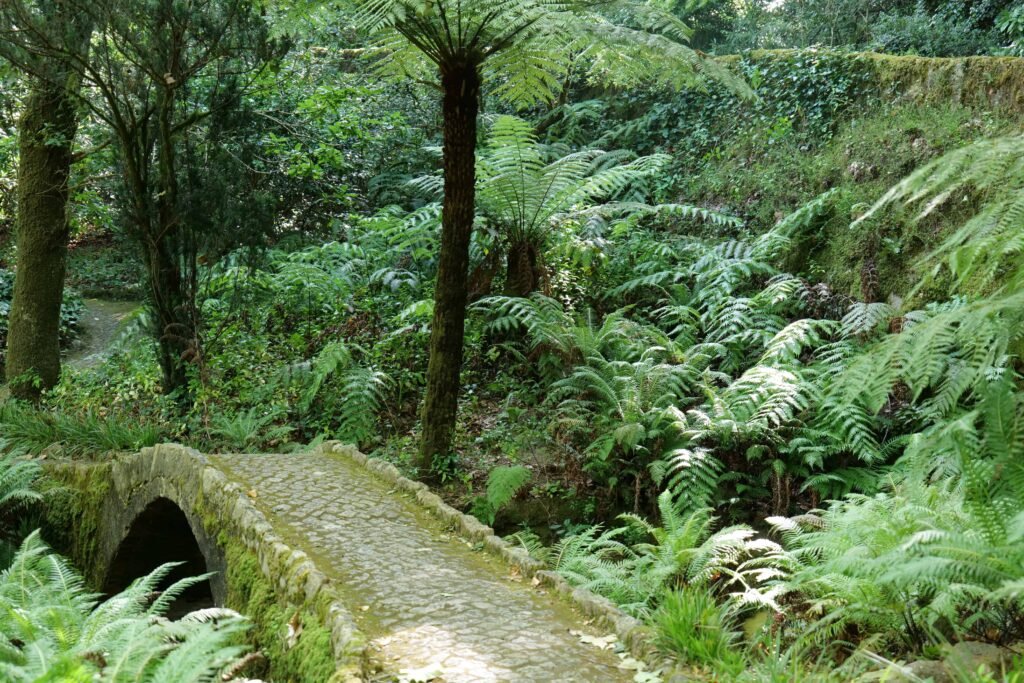
But that’s okay, because the stunning (and underrated) gardens are where the magic is at. In fact, maybe I should rename this one ‘Pena Palace Gardens’ instead of ‘Pena Palace’?!
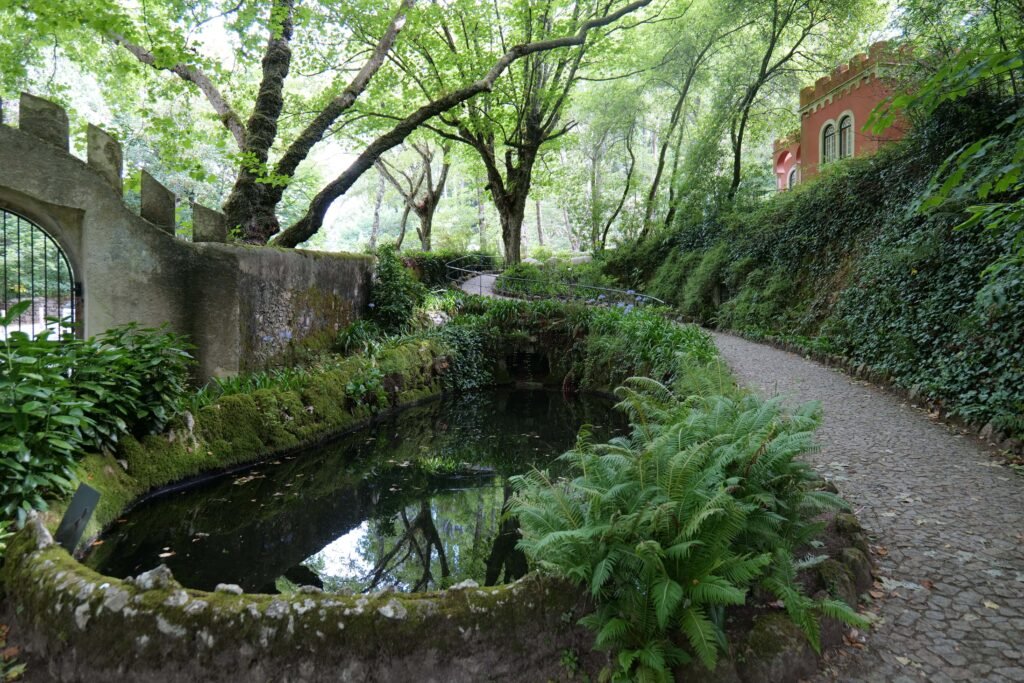
The gardens are home to winding forest paths, secret lakes and a viewpoint called Cruz Alta.
This viewpoint is tucked deep in the park and, in my opinion, offers one of the best views in the entire country. This was definitely my favourite part of my visit!

Planning Your Visit to Pena Palace
For most first-time visitors, Pena Palace and Sintra work best as a day trip from Lisbon.
Top things to do at Pena Palace
- Walk the fairytale palace terraces and admire the colourful architecture
- Visit the surrounding Parque da Pena gardens (please don’t skip this!)
- Hike to Cruz Alta viewpoint for that secret panoramic shot
- Explore the nearby Moorish Castle ruins
- Visit charming Sintra town
How to get to Pena Palace
By car: Sintra is 35 minutes from Lisbon, but parking in the town is limited. You’ll need to park down in Sintra and take a shuttle bus to the palace.
By train: The direct train from Lisbon to Sintra takes around 35 minutes. From there, you again need to catch the regular shuttle bus to the palace.
By tour: This is the easiest option if you want a stress-free day! This small group tour is the one I picked because it includes a guided walk of the stunning gardens (and that underrated viewpoint), plus entry and a guided tour in Pena Palace, free time in Sintra, a visit to Cabo da Roca, and time to explore Cascais!
Katie’s Top Tip: If you’re not doing a tour, book your Pena Palace tickets online at least 3 days in advance to save money.
6. Amarante
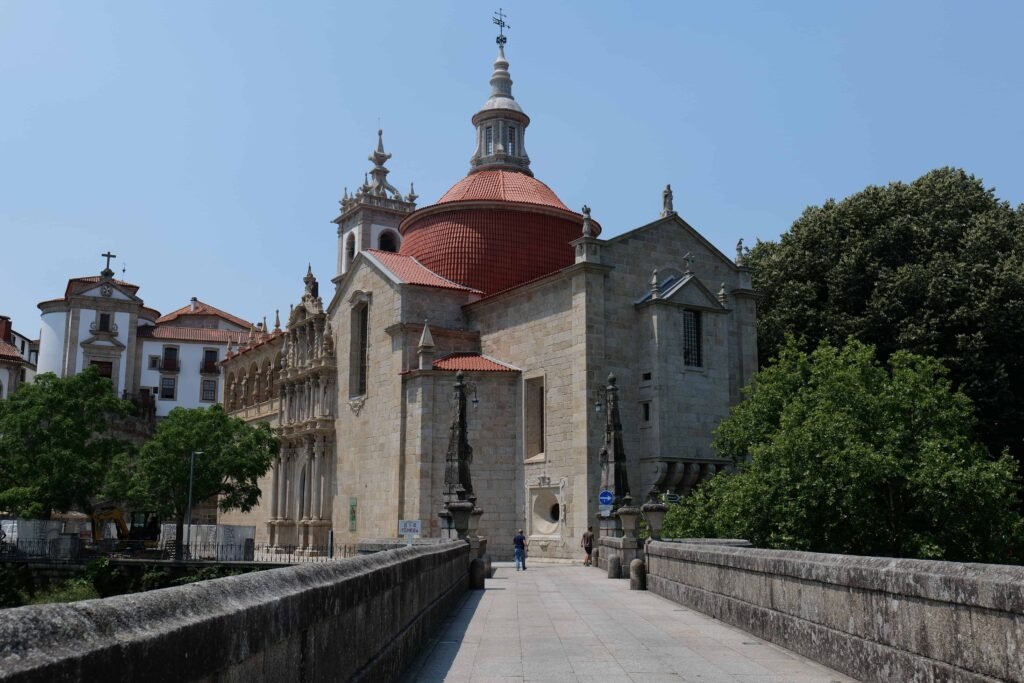
Amarante is one of the best small towns in Portugal that often flies under the tourist radar – and that’s exactly what makes it so special and gives it a spot on this list!
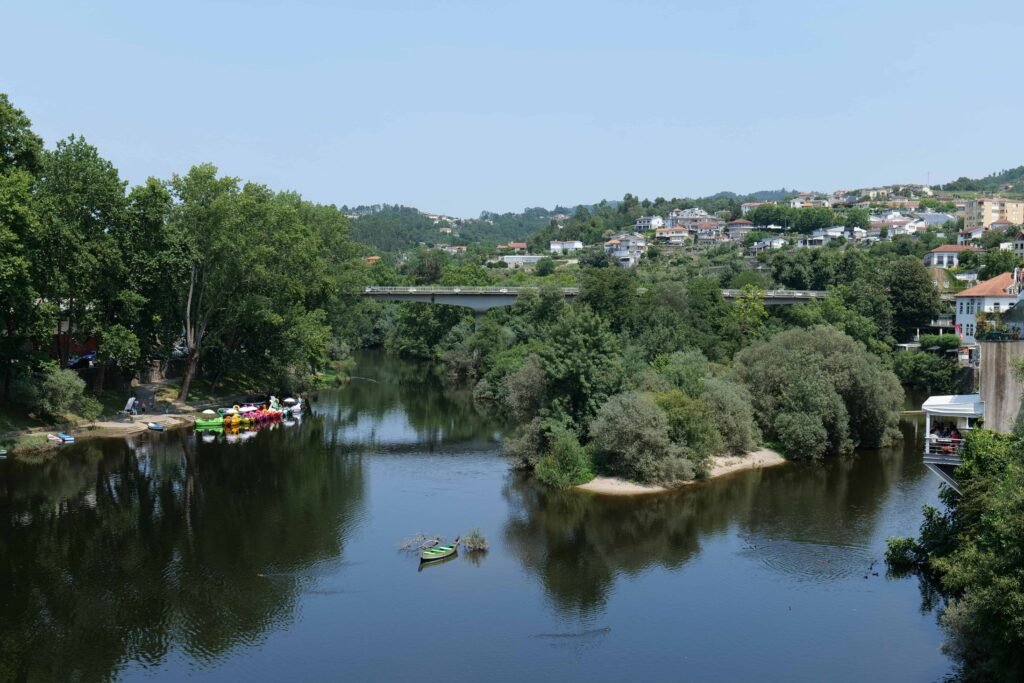
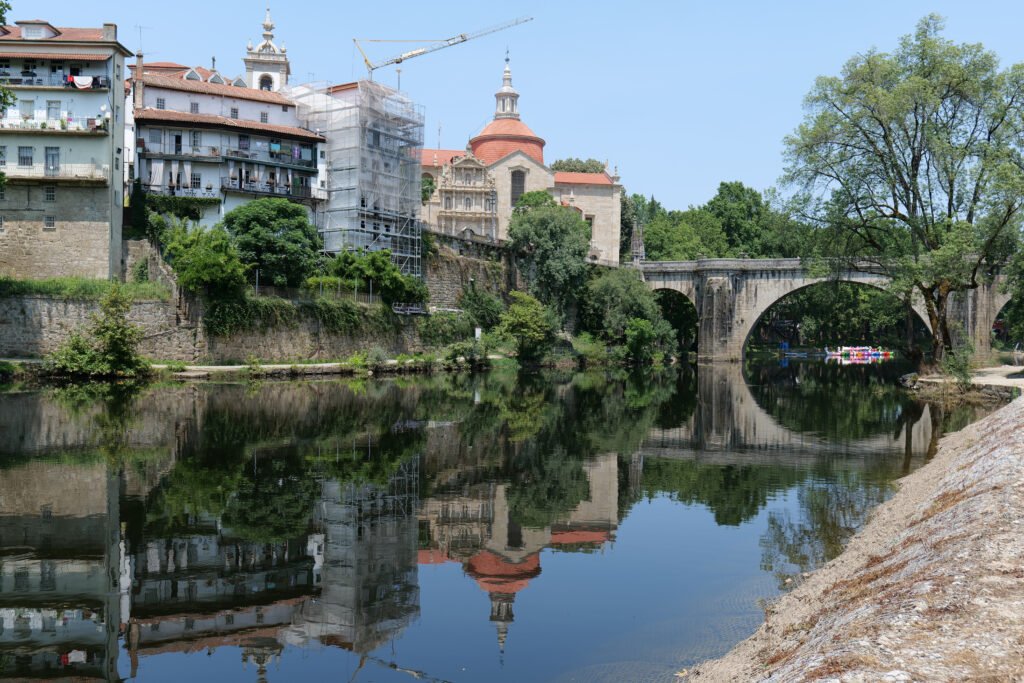
With its iconic arched bridge, beautiful river and quaint church, Amarante has an old-world charm that has been completely unspoilt by mass tourism.
It’s small, yes, but well worth a visit during your trip to Portugal.
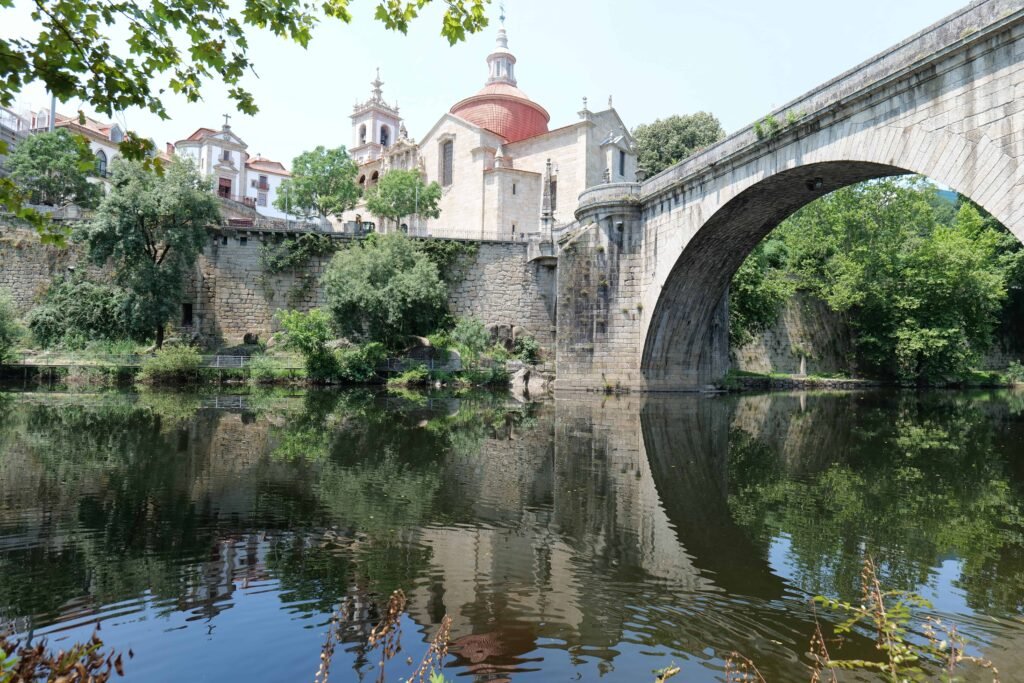
What I love most about Amarante is its slowness (perfect for escaping busy city life in Porto!)
I spent a good chunk of my day trip just sitting by the river, watching the water and reading, and just felt so peaceful.
Plus, for my fellow solo female travellers, Amarante feels very safe despite being a small, more traditional town, so it’s well worth adding to your list of places to see in Portugal!
Planning Your Visit to Amarante
Top things to do in Amarante
- Cross Ponte de São Gonçalo, the town’s postcard-perfect bridge
- Visit the São Gonçalo Church
- Explore the picturesque streets of the old town
- Rent a bike or walk along the Tamega River
- Or just sit and relax by the Tamega River, like I did!
How long to spend in Amarante
Most visitors explore Amarante in one day (or even half a day) from Porto.
But if you do want to stay longer for an off-the-beaten-path (and affordable!) getaway, I recommend Covelo Rooms and Suites, which have beautiful views over the Tamega River!
How to get to Amarante
By car: Driving to Amarante takes around 50 minutes from Porto. Parking is generally easy outside of the old town, near the bus station.
By bus: Rede Expressos buses run every 90 minutes from Porto and take 35 minutes.
By tour: If you want to spend time in Amarante, the bus or car is your best option. But if you’re happy to just take a few photos, then a lot of tours pass through en route to the Douro Valley. This small group tour includes a short break in Amarante before wine tasting and a boat trip!
Katie’s Top Tip: If you love photography, visit Amarante for golden hour. You’ll get the bridge and riverside mostly to yourself, and the light is just magical at this time of day!
5. Guimarães
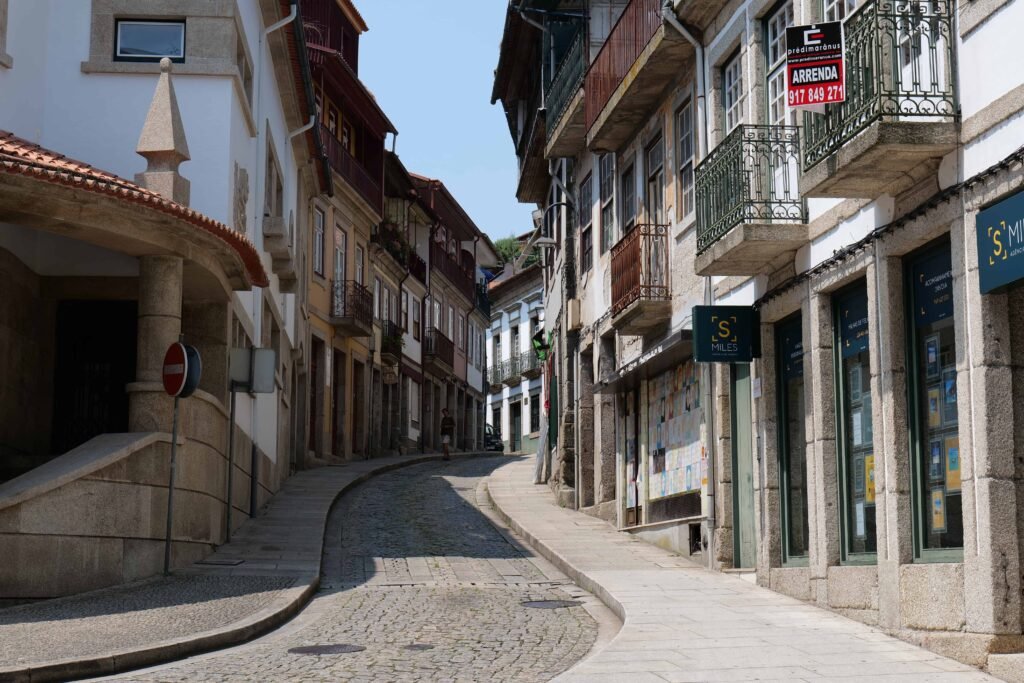
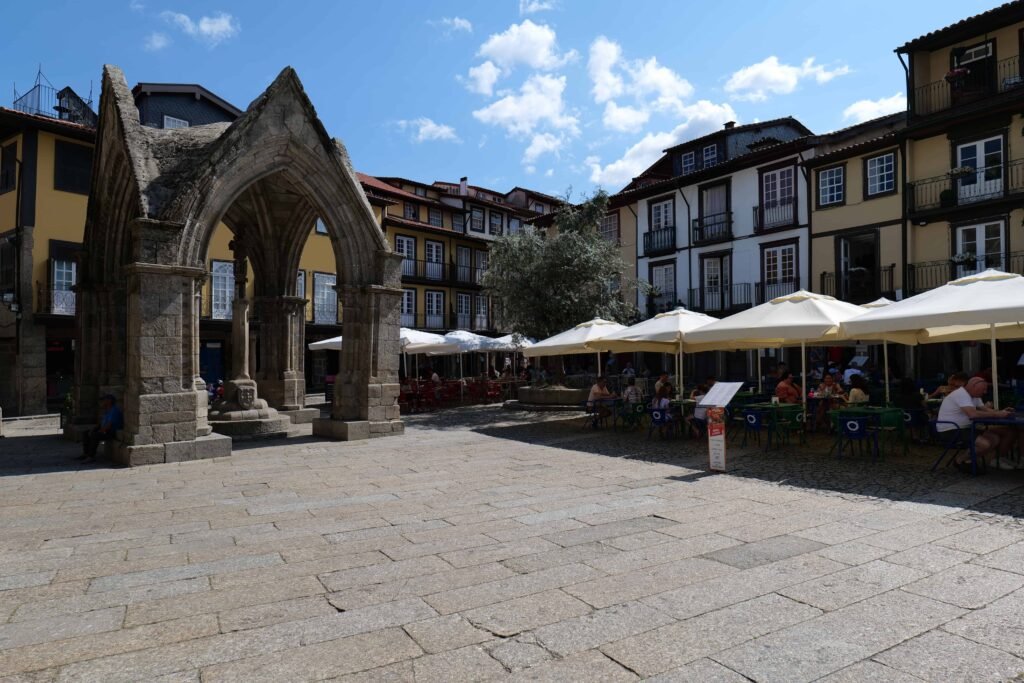
If you want to feel like you’ve stepped back in time to Medieval Portugal, the charming city of Guimarães is the place to head!
Often called the birthplace of Portugal, this UNESCO World Heritage-listed city has cobbled streets, a grand castle and a fascinating history to learn about.

And all of this makes it one of the top cities to visit in Portugal if you want a combination of history, culture and stunning photography opportunities.
I love that the city maintains its medieval, old-world atmosphere, but without feeling like a theme park. It’s real and raw and local and lived in, which just adds to its charm.
Plus, the way the town has been so carefully and thoughtfully preserved is just incredible to see!

Planning Your Visit to Guimarães
Top things to do in Guimarães
- Explore the beautiful, medieval Guimarães Castle
- Visit the ornate Palace of the Dukes of Braganza
- Wander the medieval streets of the old town
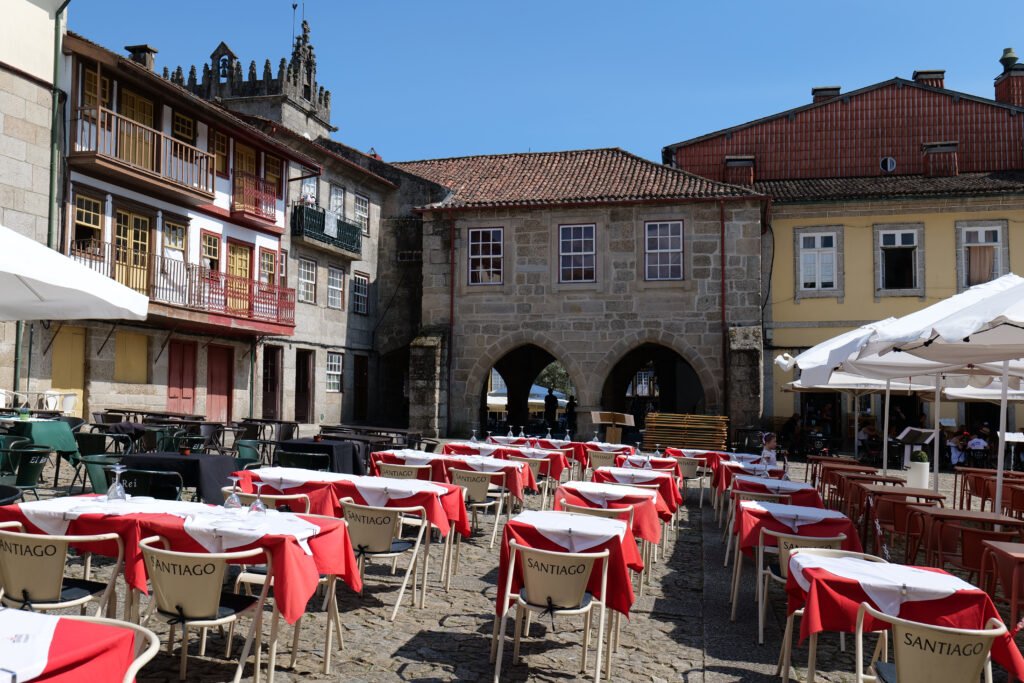
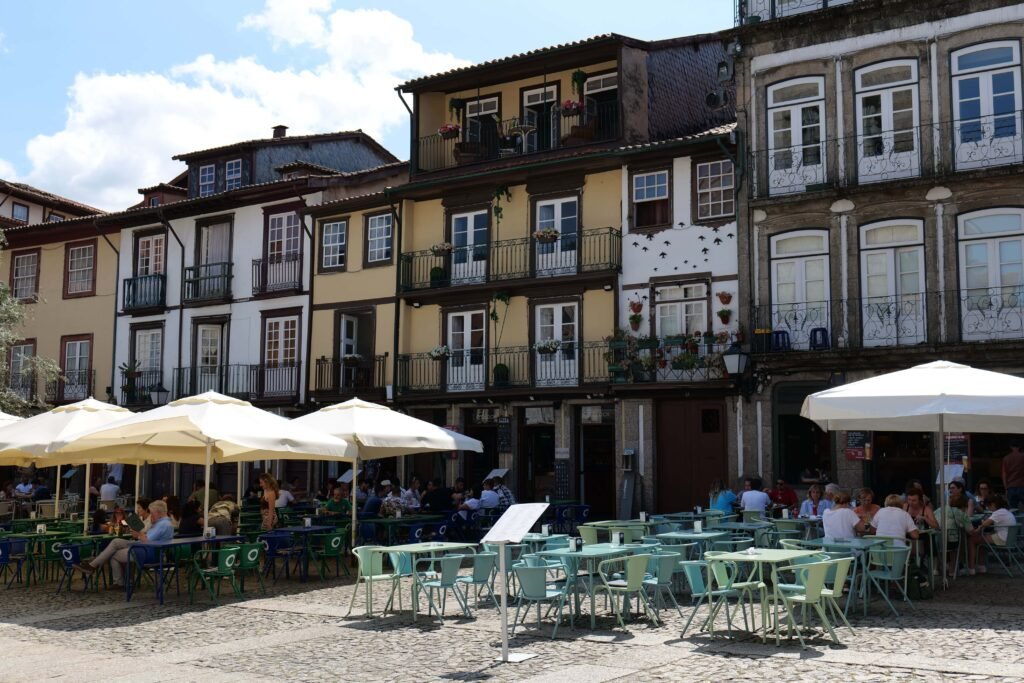
- Relax in Largo da Oliveira square
- Join a local-led walking tour to get to know the city’s fascinating history
How long to spend in Guimarães
Most visitors explore Guimarães on a day trip from Porto, or combined with other nearby attractions like Braga and Bom Jesus do Monte in a guided day tour.
But to experience Guimarães at its quietest and most authentic, without the crowds of daytrippers, I definitely recommend staying overnight for at least a few days!
For a hotel, I recommend EMAJ Guimarães Boutique Hotel, right in the heart of the old town.
How to get to Guimarães
By car: The drive to Guimaraes takes around 45 minutes from Porto, and plenty of parking is available near Guimarães castle.
By bus: Rede Expressos from Porto, which takes around 45/50 minutes. The bus drops you at Guimarães bus station, which is a 15-minute walk from the centre.
By tour: Many day tours from Porto combine Guimarães with nearby Braga and the Sanctuary of Bom Jesus do Monte. I took this full-day tour, which included free time at the sanctuary, in beautiful Braga, at Guimarães castle, and in Guimarães historical centre itself!
Katie’s Top Tip: Make time to sit in Largo da Oliveira square and take in the beautiful old city buildings. The square is also the perfect spot to grab an ice cream or coffee from one of the small nearby cafes!
4. Obidos
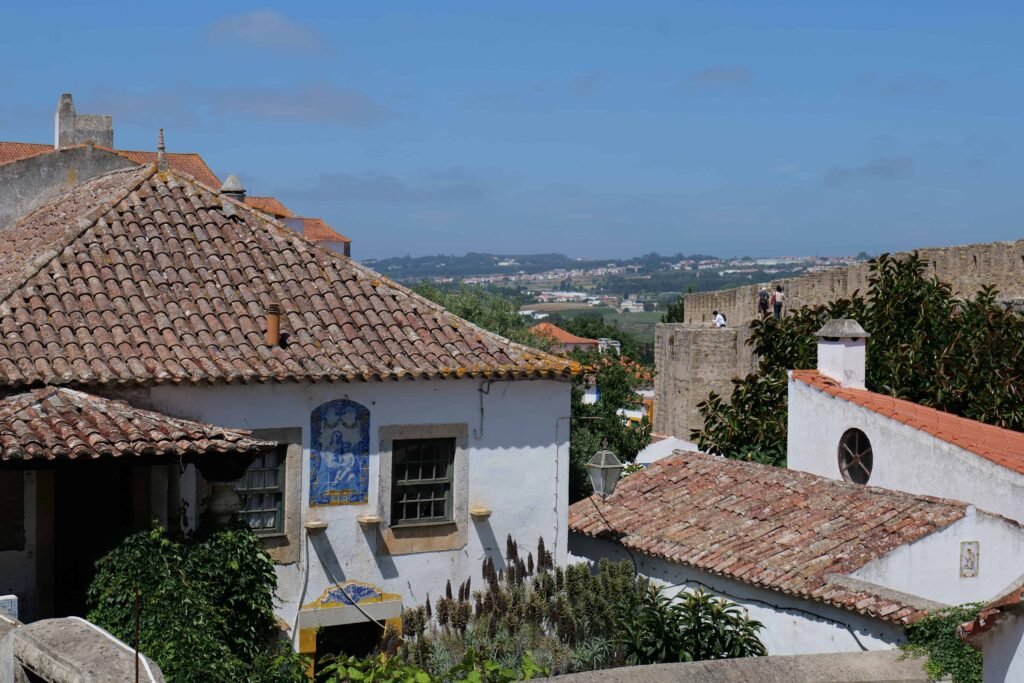
Obidos is a charming, walled hilltop old town, filled with whitewashed houses, flower boxes bursting with colour, and small winding alleys.
And it may be tiny (and busy in summer), but it is 100% worth the time on your itinerary!
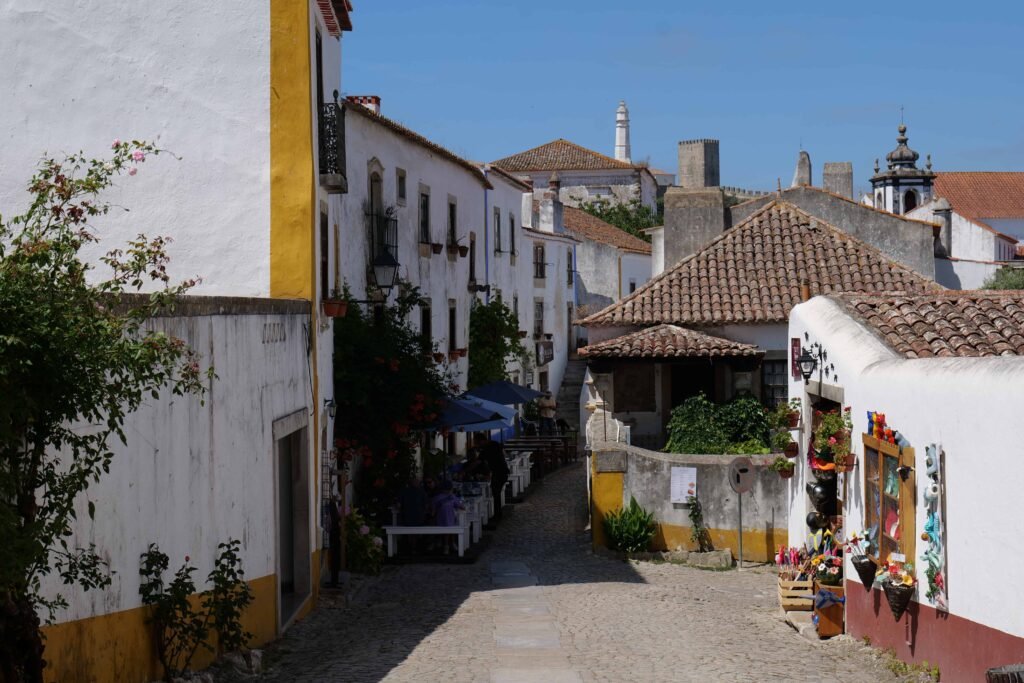
The beauty and charm of Obidos is truly in the small details – the traditional tiles, secret courtyards, and the scent of ginja (a traditional cherry liqueur) wherever you walk.
But what made Obidos so special to me was that it feels so well preserved – and not just for tourists, but for the locals that call the area home.
I only visited for a couple of hours on my solo trip to Portugal, but I wish I could’ve spent a lot longer. And I know I definitely will next time I visit!
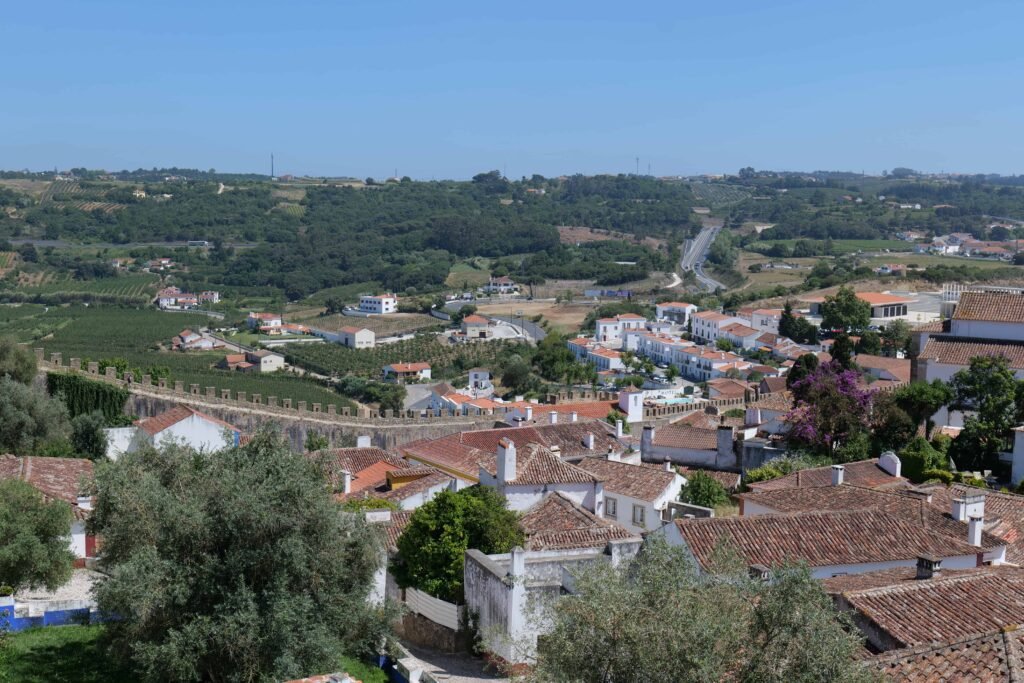
So whether you’re walking the full length of the castle walls or sipping cherry liqueur from a chocolate cup, it’s one of the best places to visit in Portugal if you want old-world charm.
Planning Your Visit to Obidos
Top things to do in Obidos
- Walk the castle walls for incredible countryside and old town views
- Take a walking tour with a local to discover secret spots in Obidos
- Drink cherry liqueur from a chocolate cup in a tiny local bar
- Allow yourself to get lost for a while in the narrow streets of the old town
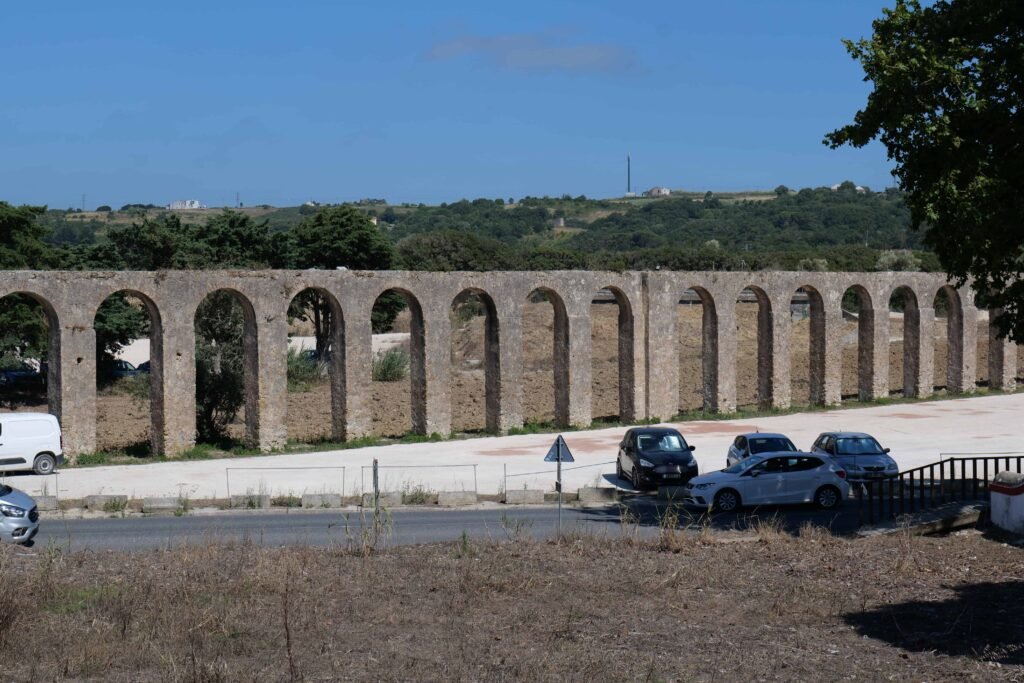
- Marvel at the majestic Obidos aqueduct, as it cuts through the countryside

How long to spend in Obidos
Most visitors explore Obidos on a guided day trip from Lisbon, combined with nearby Nazare, Fatima and Batalha Monastery. This is because Obidos is not easy to get to independently unless you have a car.
But if you do have a car, I highly recommend staying overnight at Casa Senhoras Rainhas, to see Obidos at its most local and authentic, without the tourist crowds!
How to get to Obidos
By car: Driving to Obidos takes 1 hour from Lisbon. There is a car park just outside the walled old town, which is easy and convenient, but it does get busy during peak season.
By public transport: It is not ideal to travel from Lisbon to Obidos via public transport as the route is long and involves multiple changes.
By tour: Obidos is a popular day trip from Lisbon, often combined with nearby Nazare, Fatima and Batalha Monastery. I joined this small group, full-day guided tour, which includes all of those stops, with free time to explore Obidos in the late afternoon (when it’s quieter because a lot of the other tourists have left!)
Katie’s Top Tip: Stay overnight in Obidos if you can. The town empties out after the day-trippers leave, and you get the place (almost) to yourself. This is for sure on my Portugal bucket list!
3. Lisbon
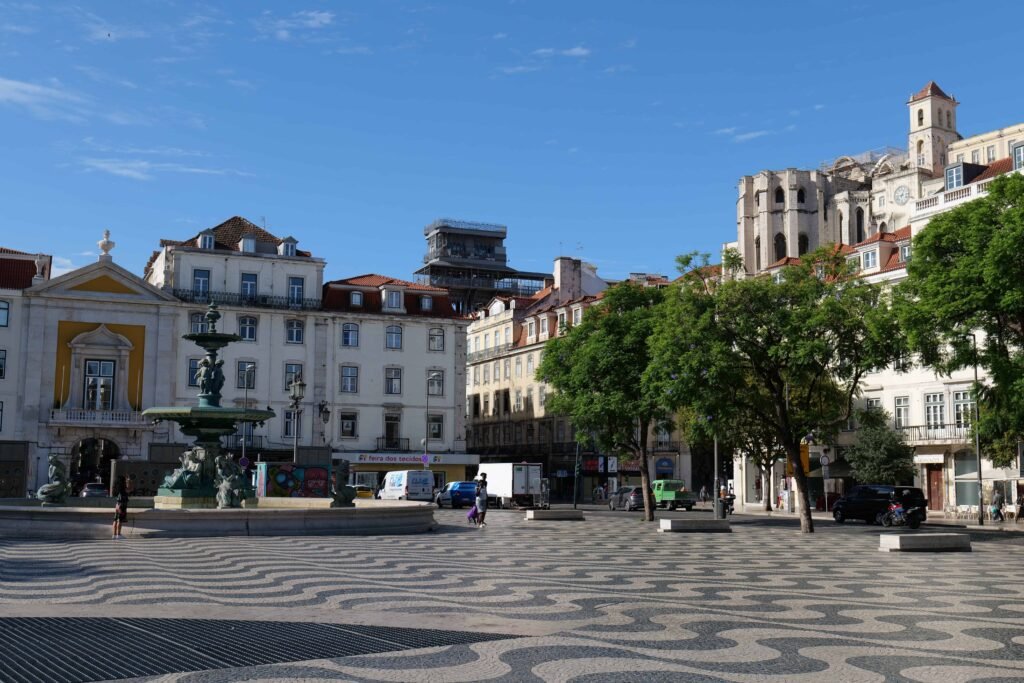
With its iconic sunshine-yellow trams, old-town style streets, tiled buildings and breathtaking hilltop views, Portugal’s capital is packed with personality and charm!
Yes, it’s popular. And yes, it will be busy during your trip.
But it’s also one of the best places to visit in Portugal for first-timers because it offers a little bit of everything: food, history, nightlife, views, art, culture, the sea and, my personal favourite… pasteis de nata. Lots of them!
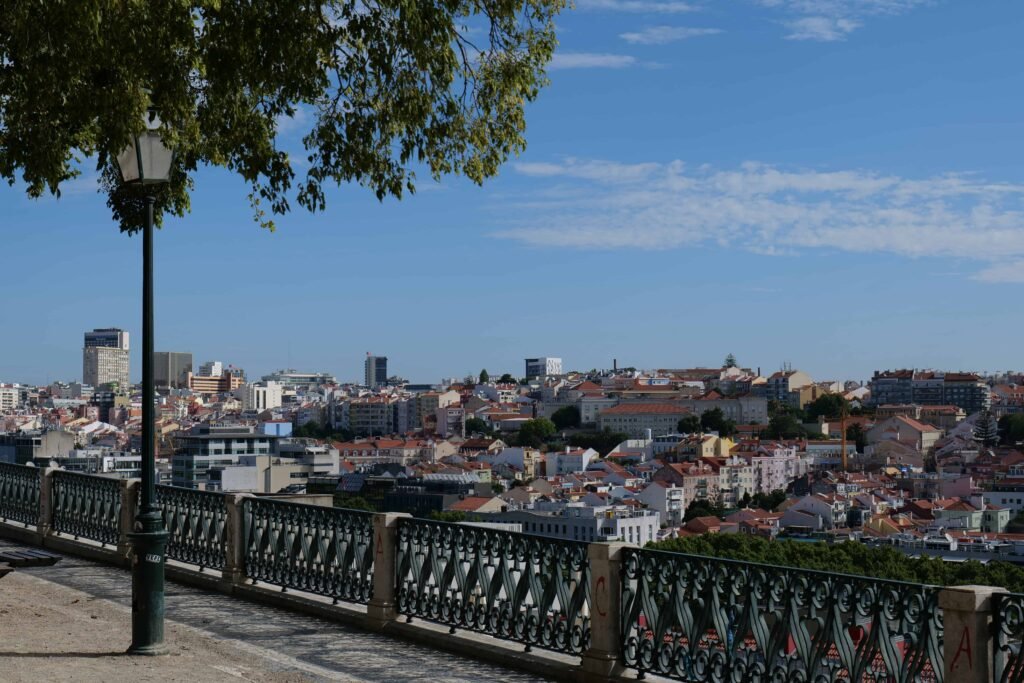
What I love most about Lisbon (aside from the pasteis de nata!) is that it’s a truly beautiful city without trying too hard.
You don’t need to have a perfect, fully planned itinerary to enjoy your time here.
Just wandering through the Alfama district or grabbing a €2 vinho verde at one of the many (free) miradouros is more than enough!
Planning Your Visit to Lisbon
Top things to do in Lisbon
- Ride the iconic Tram 28 through the city’s most beautiful old neighbourhoods
- Watch the sunset at the Miradouro de Santa Catarina
- Explore the Alfama District on foot
- Wander down to the riverfront and see the Arco da Rua Augusta
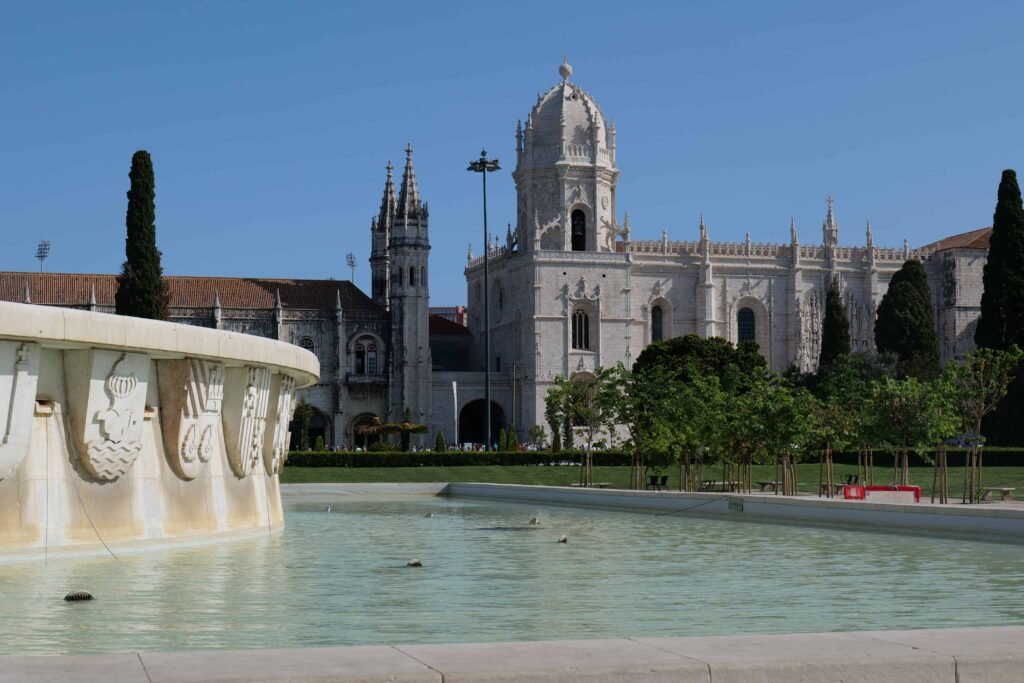
- Visit the nearby Belem Tower and Jeronimos Monastery

How long to spend in Lisbon
You definitely want to plan a longer trip to see the highlights of Lisbon! I personally stayed for a week to see the best of the city and its most popular day trips.
For your stay, I recommend Hotel Moon & Sun Lisboa, in the heart of historic Lisbon.
How to get to Lisbon
By plane: Lisbon has an international airport that is well-connected to countries across Europe and beyond. The airport is just 20 minutes by metro or taxi from the city.
By car: Lisbon is well-connected by major roadways, but traffic and parking are a nightmare in the capital, so I would recommend you avoid driving if possible.
By train: There are lots of direct trains to Lisbon from Porto, Coimbra, Faro, and other Portuguese cities. For example, it takes 3 hours from Porto or 3.5 hours from Faro.
By bus: The bus is a great budget option if you’re travelling from other major cities in Portugal. Most routes are run by Rede Expressos, ALSA or Flixbus. For example, it takes 3.5 hours from Porto or 3.5 hours from Faro.
By tour: Lisbon is often the base for tours rather than the destination, but you can join a private transfer tour from Porto to Lisbon with stops in beautiful towns like Obidos, Aveiro and Nazare along the way!
Katie’s Top Tip: Use the city’s many escalators to save your legs after a long day and take you straight to some of the best viewpoints in the city with zero effort.

2. Evora
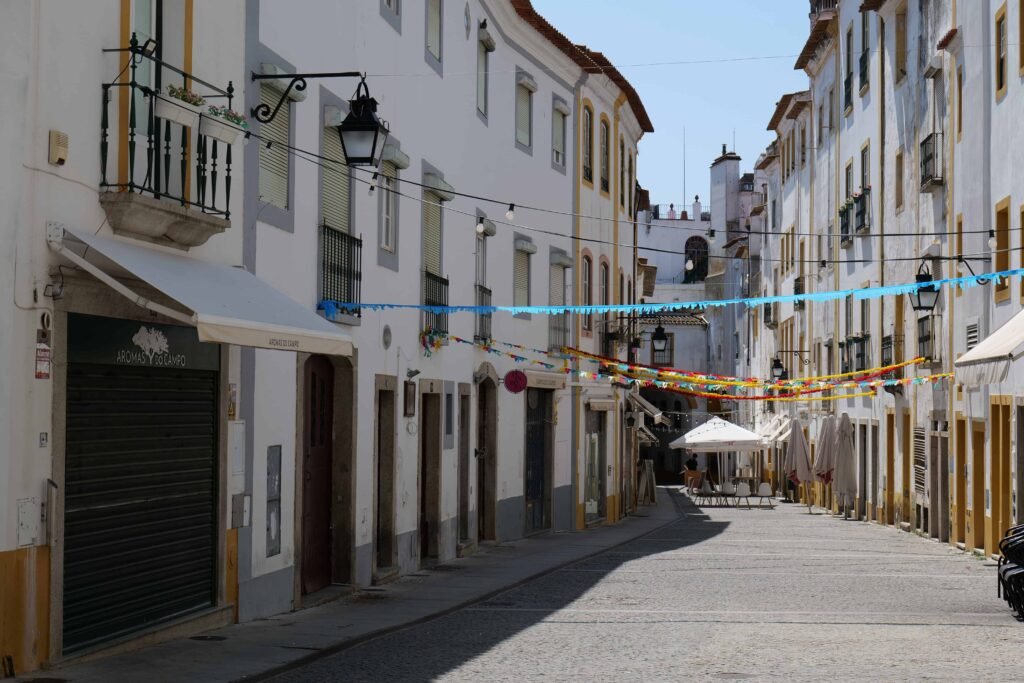
UNESCO-listed Evora is one of the best cities in Portugal if you want a mix of history, sunshine and space to enjoy your surroundings without constant tourist crowds.
The city is home to Roman temples, whitewashed houses, medieval walls, orange trees, and spectacular viewpoints over the surrounding countryside.

And while Evora might not be as well-known as Lisbon or Porto, or even some of the other places on this list, that’s exactly why it’s so worth visiting!
The vibe in Evora is slow and relaxed.
I wandered the sunny streets and sat under the trees in Jardim Diana and felt so calm and peaceful – despite being in a city during a Portugal heatwave!
You’re surrounded by centuries of history, but nothing feels overwhelming or crowded.

Highlights like the Templo Romano and the Capela dos Ossos (yes, that does mean the Chapel of Bones!) are well worth visiting in their own right during your trip.
But the real joy in Evora is allowing yourself to get lost in the old town without a plan.
Grab a coffee in a small square, read under the trees in the local park, choose some delicious fresh fruit from a local grocer or simply wander the streets of the old town.
Whatever you choose to do in Evora, spontaneity and slowing down is key to making the most of your visit!
Planning Your Visit to Evora
Top things to do in Evora
- Visit the fascinating Capela dos Ossos (Chapel of Bones)
- Stand among the ancient pillars of the Roman Temple of Evora
- Marvel at the beauty of Evora Cathedral
- Sit under the trees and relax in Jardim Diana
- Spend time wandering the old town streets without a plan

How long to spend in Evora
A lot of visitors explore Evora on a day trip from Lisbon. But if you want to experience this underrated UNESCO city without the crowds, definitely stay for a night or two!
I highly recommend the historic Pousada Convento de Evora, right next to the beautiful Templo Romano and Jardim Diana in the heart of the city centre.

How to get to Evora
By car: Evora is around 1.5 hours from Lisbon by car, plus you also have the freedom to explore the nearby wineries and countryside.
By bus: Regular Rede Expressos buses run from Lisbon and take around 1.5 hours. The bus station in Evora is around a 20-minute walk from Jardim Diana.
By tour: A guided tour is great if you want to learn about the history of Evora without having to worry about planning your own transport! This full-day tour includes a visit to picturesque Monsaraz, wine tasting, and plenty of time in Evora, including a guided tour and entry to the Chapel of Bones.
Katie’s Top Tip: Don’t rush your time in Evora or even spend a night if you can. This is when the town empties out, and you can enjoy a much more local vibe!

1. Braga – My Favourite Place in Portugal for First-Timers
If you’re looking for somewhere that ticks all the boxes – walkable, beautiful, full of culture and history, safe, not completely overrun by tourists – Braga is the place for you!
Located in the north of Portugal, it’s often overlooked in favour of nearby Porto, but I genuinely think it’s one of the best places to visit in Portugal for first-timers.
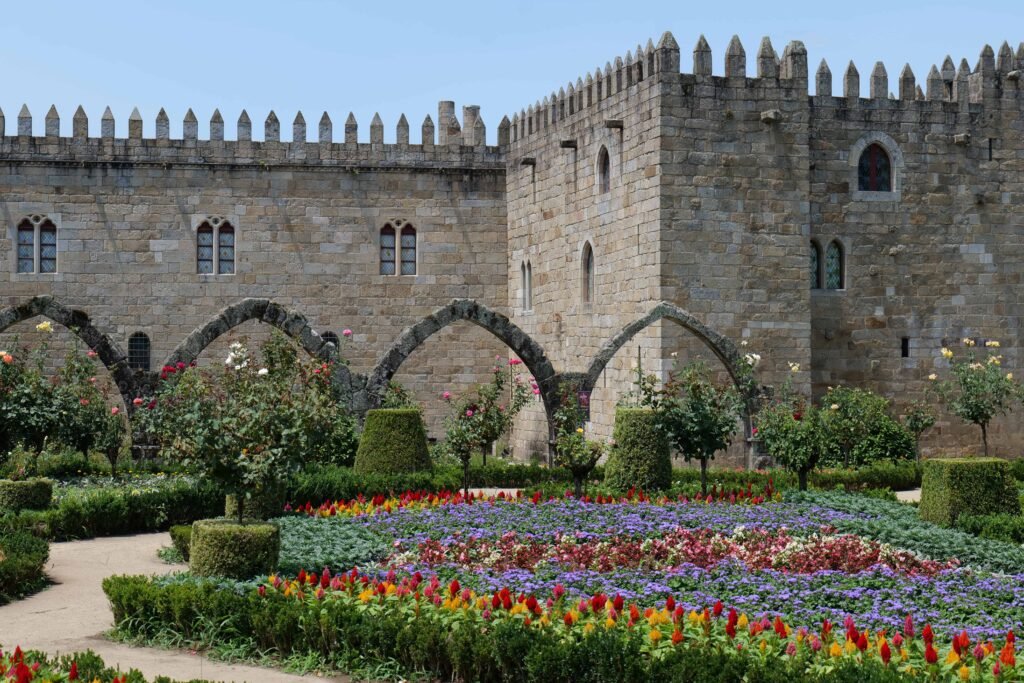
Braga has heaps of charm, history, amazing food and just the right amount of city buzz without being chaotic or overwhelming.
But what makes Braga so special to me is that it feels peaceful (for a city, at least!) and also like you’ve been let in on a bit of a secret, despite it being a popular tour spot.

From the grandeur of Bom Jesus do Monte to the leafy cafe-lined squares and gorgeous churches, you’ll keep visiting and always find something new to marvel at!
Braga is also surprisingly stylish, with a young local energy thanks to its university, balanced perfectly with centuries of tradition throughout its historic centre.
Basically, it’s got heart and soul. And not enough places have that nowadays!

Planning Your Visit to Braga
Top things to do in Braga
- Climb (or take the funicular!) to Bom Jesus do Monte for epic views
- Visit Braga Cathedral, which is actually Portugal’s oldest cathedral
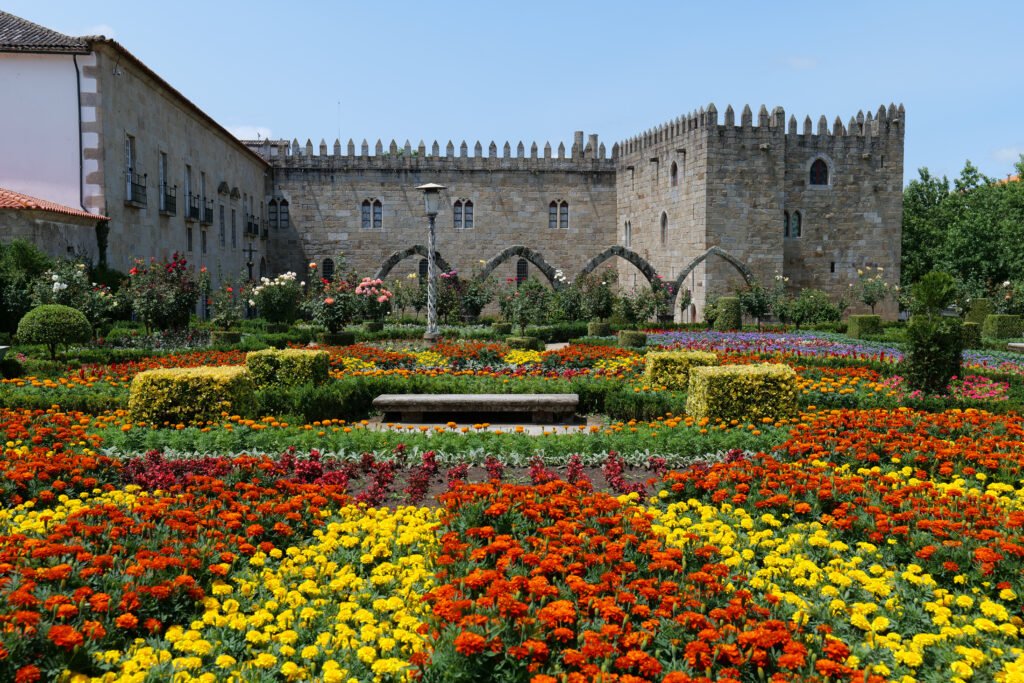
- If you’re visiting Braga in the summer, don’t miss the spectacular display of flowers in the Santa Barbara Garden
- Wander the city streets to discover hidden gems in Braga
- Check out Raio Palace, one of the most stunning tiled buildings in Portugal
How long to spend in Braga
A lot of visitors explore Evora on a day trip from Lisbon, combined with visits to Guimarães and Bom Jesus do Monte. But I highly recommend staying longer in Braga!
I recommend you base yourself at Burgus Tribute & Design Hotel, in the old town and close to Braga Cathedral.

How to get to Braga
By car: The drive to Braga takes around 45 minutes from Porto. It’s an easy drive, and there’s plenty of central parking.
By train: Direct trains from Porto take around 40 minutes. The train station is an 11-minute walk from the cathedral.
By bus: Buses are also frequent from Porto with Rede Expressos, and take around 45 minutes non-stop. The bus station is a 13-minute walk from the cathedral.
By tour: A lot of day tours from Porto combine Braga and Guimarães, which is great if you’re short on time. I took this full-day tour, which includes a visit to Bom Jesus do Monte, plenty of free time in Braga, and a visit to medieval Guimarães.
Katie’s Top Tip: Bom Jesus do Monte is beautiful at any time, but keep in mind that the earlier or later you visit, the quieter it will be. This is especially important to know if you’re visiting as a religious experience or for some peaceful reflection.

Where to Skip in Portugal
So, there you have it! My list of the best places to visit in Portugal for first-timers – and you might be surprised to know that Aveiro didn’t make that list.
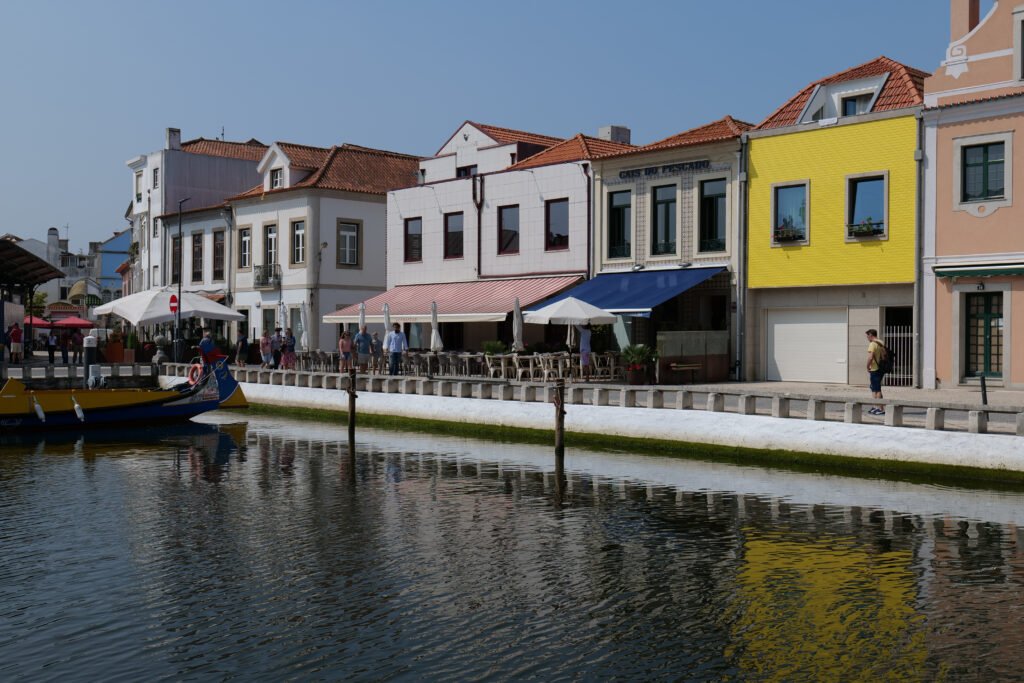
Aveiro is often called the Venice of Portugal, and while that does sound dreamy (and I had high hopes for my visit!), I’ll be honest: it didn’t live up to the hype for me.
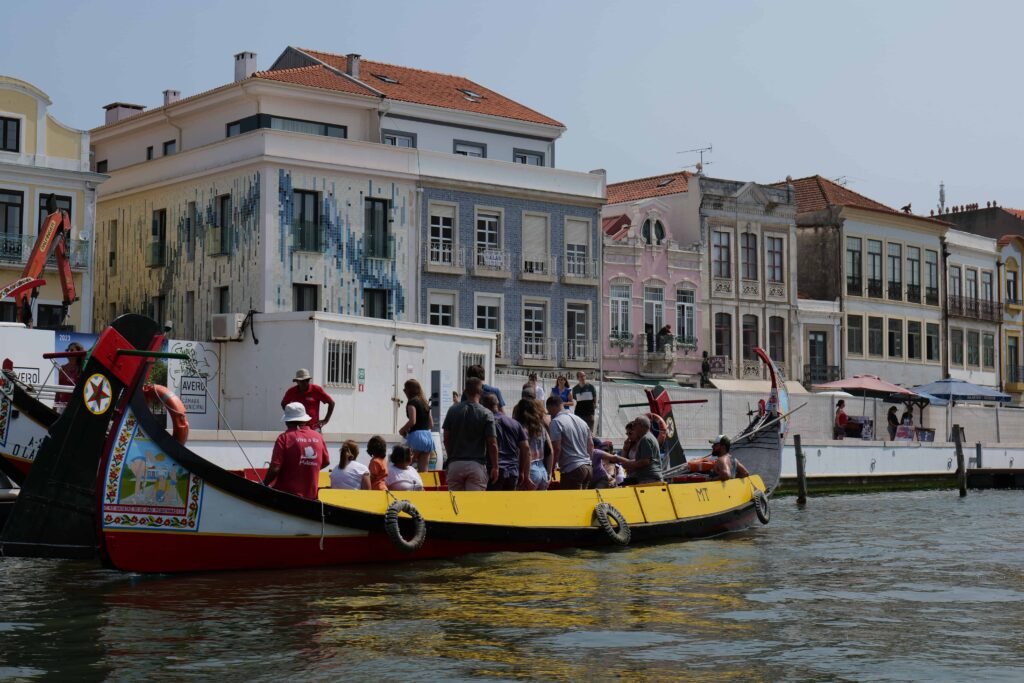
Yes, the candy-striped houses in Costa Nova are adorable, and the traditional moliceiro boats are colourful and fun for a quick photo.
But away from those typically touristy spots, I found the buildings a little faded, with boat trips that took you along a main road instead of anywhere beautiful.
It definitely didn’t tug at my heart the way places like Evora, Amarante or Braga did.
So, if you’re passing through or have a spare half day in your Portugal itinerary, it’s worth popping by for a wander. Just don’t expect the same magic you’ll find in Venice!
Katie’s Top Tip: If Aveiro’s been high on your list, go in with realistic expectations – Venice is big shoes to fill, after all!
P.S. In the interests of fairness and transparency, when I visited, Aveiro’s waterfront was undergoing building works. So who knows, I might have felt differently about the place if I had visited at another time!
Portugal Travel FAQ
What are the best places to visit in Portugal in summer?
Summer in Portugal means long, sunny days, sunbathing, and lots of tourists and locals out enjoying the sunshine.
If you’re visiting in July or August, stick to places with either a breeze or beach access. The Algarve is the classic (and busiest) choice, but I also love Cascais and Nazare for a quieter seaside feel.
Lisbon and Porto are also great in summer but get very hot, so plan your city exploring early in the day, then siesta or head to a beach in the afternoons.
Just be warned: this is high season in Portugal, so expect crowds pretty much everywhere. If you want something a bit calmer, consider the north (Braga, Douro Valley), which is cooler and a bit less hectic.
What are the best places to visit in Portugal in spring?
Spring might just be my favourite season to visit Portugal!
The days are warm but not usually unbearably hot, flowers are blooming, and the mass of tourists hasn’t quite arrived yet.
It’s the perfect season for exploring places like Sintra, Evora and the Douro Valley, in particular, with its vineyards and rolling hills.
Spring is also a great time for city breaks, as comfortable temperatures mean you can walk all day without melting! Plus, flights and accommodation are cheaper than in summer.
What are the best places to visit in Portugal in winter?
Winter in Portugal is a lot milder than most of Europe, which makes it a great option if you’re needing winter sunshine without the crowds.
The Algarve is more peaceful at this time of year and great for coastal walks, even if it’s too cool to swim.
Lisbon, Porto and Coimbra also work well as city breaks in winter, offering culture, history and plenty of indoor activities if it rains.
What are the best places to visit in Portugal in autumn?
Autumn in Portugal is deeply underrated, which is why it’s a close second to spring for being my favourite season!
The summer crowds leave, the weather stays warm well into October, and the natural landscapes in the north glow with autumn colours.
Braga, the Douro Valley and Sintra are especially stunning under autumn light, and it’s also a great season for wine tasting, hiking and road trips!
What are the best cities to visit in Portugal for first-timers?
For your first trip to Portugal, it’s hard to go wrong with any of the big three: Lisbon, Porto and Braga.
Lisbon has postcard-worthy trams and history in abundance, Porto charms with riverside views and port wine, and Braga offers a slower pace while still being full of culture.
These cities are all walkable, solo traveller-friendly and packed with things to do to make your trip unforgettable!
Plus, they also make great bases for day trips. From Lisbon, you’ve got Sintra, Cascais, Arrabida Natural Park and Evora. From Porto, you can reach Guimaraes, the Douro Valley, Coimbra and Amarante.
What are the best small towns to visit in Portugal for first-timers?
For first-time visitors searching for a more authentic Portugal, I especially recommend Amarante, Obidos and Nazare.
All three towns are walkable, absolutely stunning and packed with their own unique history.
Plus, they’re also very safe and often way more affordable to stay in than the big cities!
What are the must-see tourist sights in Portugal?
Some tourist sights are worth the hype – and Portugal’s got a few!
The top must-sees include Pena Palace in Sintra, Belem Tower and Jeronimos Monastery in Lisbon, Dom Luis I Bridge in Porto, and the epic staircase of Bom Jesus do Monte in Braga.
But also know that the real beauty in these towns and cities is found beyond the famous, Instagrammable spots.
Perhaps it’s a quiet backstreet church, a sleepy riverside trail or a tiled alleyway you stumble upon while exploring. The tourist sights give you a guide to follow. But the in-between discoveries are always the best!
So, What Are the Best Places to Visit in Portugal?
Portugal is one of those countries that offers visitors a little bit of everything – from buzzy cities to peaceful small towns, dramatic coastlines to quaint churches, and incredible food along the way.
So whether you’re visiting Portugal for a few days, a week or a month, whether you’re travelling solo or with a group, I guarantee you will fall in love with Portugal, over and over again, during your trip.
As a solo female traveller, I’ve always felt safe and truly at home in this beautiful country.
And I hope that this guide has helped you narrow down the very best places to visit in Portugal for first-timers – without the fluff, pressure or FOMO.
There’s none of that here – you do you!
Now, go book your flights and add one (or all) of these destinations to your dream Portugal itinerary!
Planning a trip to Portugal? You might want to check out these posts next:
- The BEST 10 Days in Portugal Itinerary (Without A Car)
- Is Portugal Safe For Solo Female Travellers? An Honest Guide
- 15 Things to Know Before Travelling to Portugal in 2026
Want a little extra support planning your next solo trip?
Explore my FREE Solo Female Travel Resource Library – a growing collection of tools designed to help you feel prepared, confident, and genuinely excited about travelling on your own – even if anxiety has been holding you back.
Inside, you’ll find:
- 7 Days To Your First Solo Trip (Even If You’re Anxious) Email Course
- The Ultimate Solo Female Travel in Europe Starter Kit
- An exclusive invite to my private Facebook community
- Plus checklists, templates, mini‑guides, and new resources added regularly
Click here to access the full resource library! 💛

Pin Me For Later!


Share These Best Places to Visit in Portugal for First-Timers:


9 Comments