
The ULTIMATE Iceland Winter Packing List For Women (2026)
Packing for Iceland in winter sounds pretty simple, until you take a look at the forecast and realise you’re dealing with wind, rain, snow and ice – often all in the very same day.
And that’s why I’ve put together this ultimate Iceland winter packing list for women!
By the end of this post, you’ll know exactly what to pack, what you can safely leave behind, and how to stay warm and dry – without overpacking.
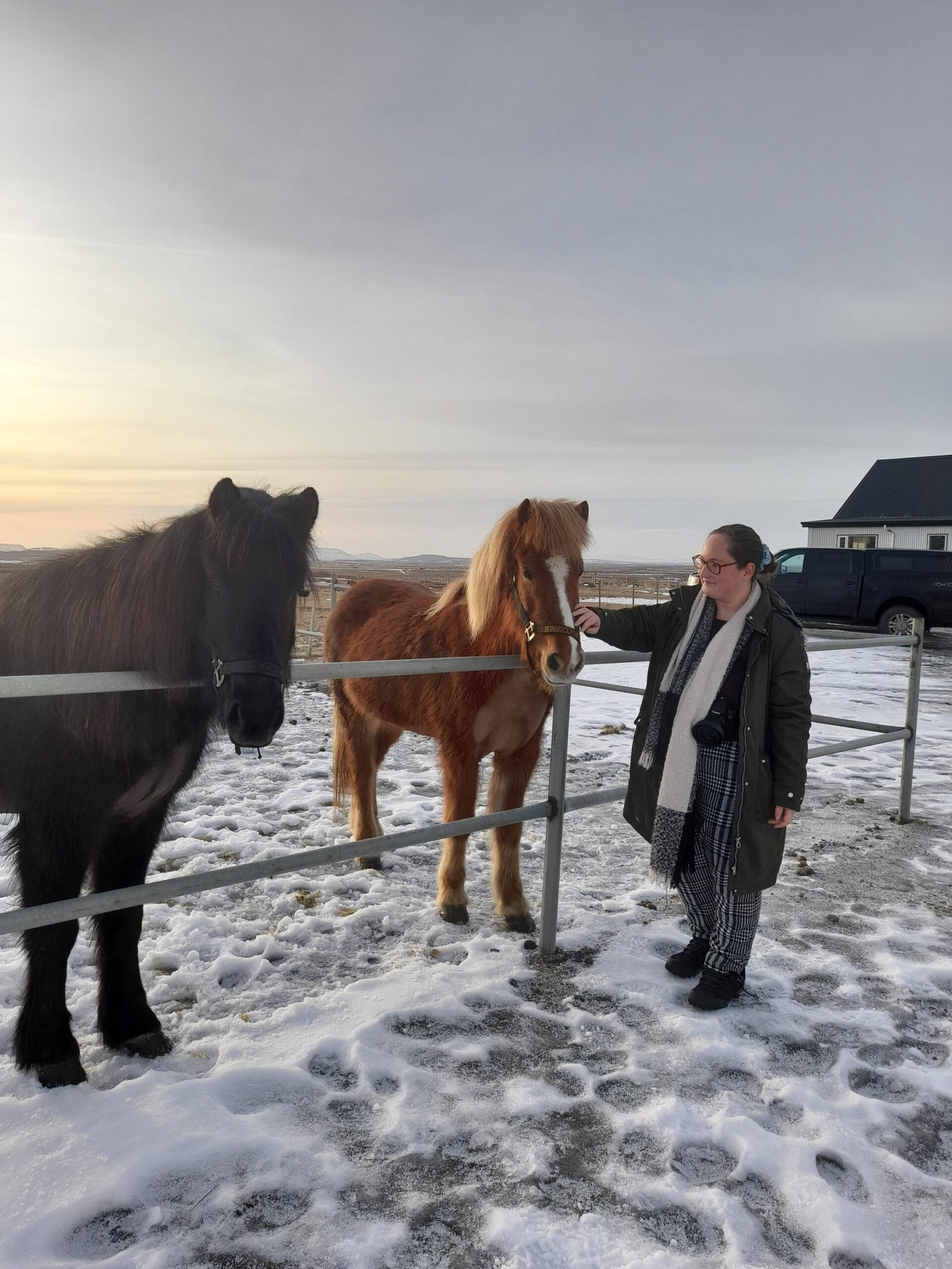
I spent five days solo travelling in Iceland in January, through heavy rain that damaged my camera, thick snow and ice, winds so strong my Snaefellsnes Peninsula tour was almost cancelled, and then suddenly the most unreal sunrise and blue skies over the Golden Circle.
So it’s safe to say I know a thing or two about what actually works in Iceland’s winter weather – thanks to a fair few mistakes I had to learn the hard way!
This guide is for you if you want to feel prepared, safe and confident for your dream trip to Iceland (rather than second-guessing every item in your suitcase).
Ready? Let’s get into everything you need to know to pack smart for Iceland in winter!
Disclaimer: Some of the links on this blog are affiliate links. That means if you click on one and make a purchase, I may earn a small commission – at no extra cost to you. I only recommend products, places and services I genuinely love and use on my own solo travels. Thank you for supporting my adventures so I can continue to provide free content on this blog! 💛
Understand Iceland’s Winter Weather
Before you even think about what to wear in Iceland in winter, you need to understand the weather, as this is where 99% of Iceland packing mistakes happen.
Yep, that’s right, how warm, dry, and comfortable you’ll feel is decided before you even reach the airport!
Icelandic winter weather isn’t just cold. It’s windy, wet, icy, extremely changeable, and extremely unpredictable.
And all of that matters WAY more for packing than just the temperature.
During my January trip, I experienced heavy rain, snow-covered roads, icy pavements, brutal winds, and then suddenly the most beautiful winter sunrise over the Golden Circle.
That’s Iceland in winter for you!
Conditions change hour by hour, so your Iceland winter packing list needs to be flexible.
Here are the stats you need to know:
- Temperatures in winter hover around -4°C to 2°C
- But wind chill often makes the “feels-like” temperature much colder
- Iceland experiences a lot of snow in winter (avg ~15 days in January), but also heavy rain
- Ice on the ground is common, even in Reykjavik and at major tourist attractions
Katie’s Top Tip: When planning your winter packing list for Iceland, always think about wind + wet + cold, not just the temperature number.
My Layering System for Iceland in Winter
The one thing that will make or break your comfort in Iceland in winter is layering.
And by layering, I mean dressing in intentional, removable and breathable layers, where every item serves an individual purpose.
This was the key to my Iceland winter packing list, and it’s what kept me warm and dry through rain, snow, wind and long days out on excursions!
I use a simple three-layer system:
- A thermal, breathable base layer
- An insulating mid-layer
- A windproof, waterproof outer layer
This works because, as I said, Iceland’s winter weather changes constantly.
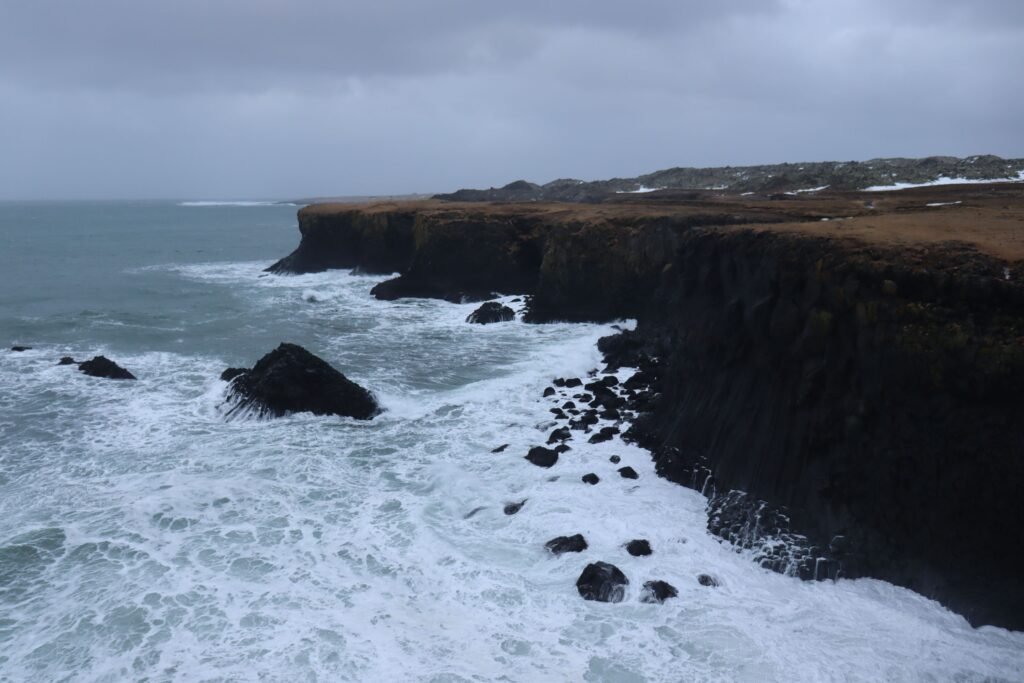
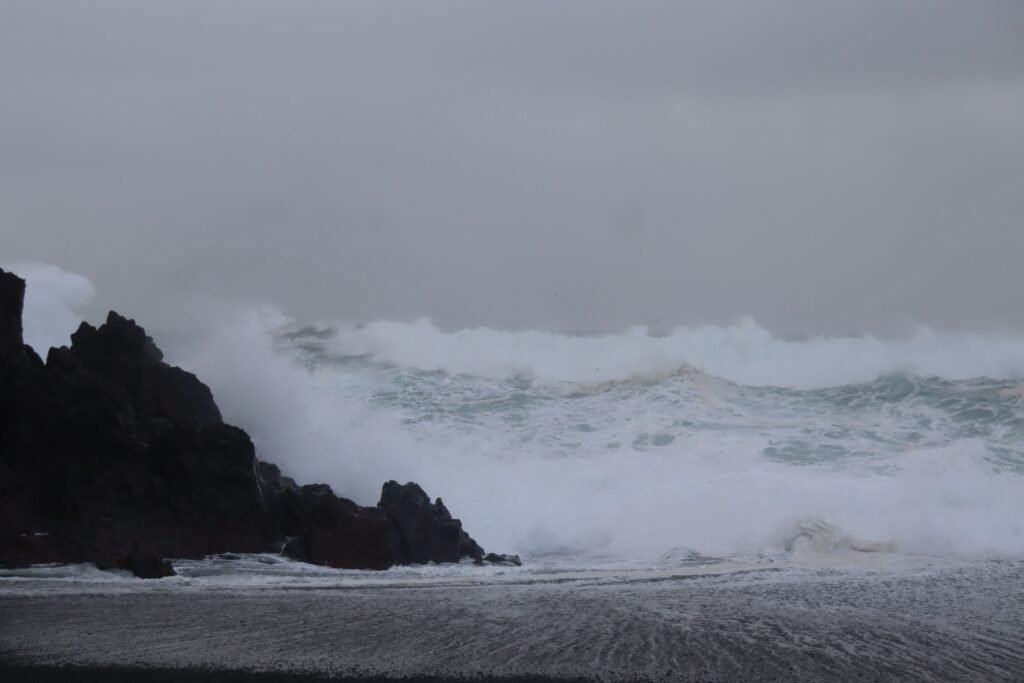
For example, I was out in the cold and wind one moment, photographing waves pounding the Arnarstapi Cliffs. But in the next moment, I was back inside my heated tour bus.
Without being able to easily remove my outer layer (and then easily put it back on for the next stop), I would have spent my day either freezing or boiling!
Katie’s Top Tip: If an item can’t be layered easily AND removed easily indoors, it doesn’t belong in your Iceland winter packing list.
Iceland Winter Outfits: Repeatable Looks Without Overpacking
One of the biggest worries I see from other women travellers in Iceland is how to avoid overpacking while still feeling put-together and staying warm and dry.
And this is where smart outfit planning is SO important.
You don’t need a different outfit for every day, just a small number of reliable layers that you can mix, match and repeat.
This is how I planned my outfits in January:
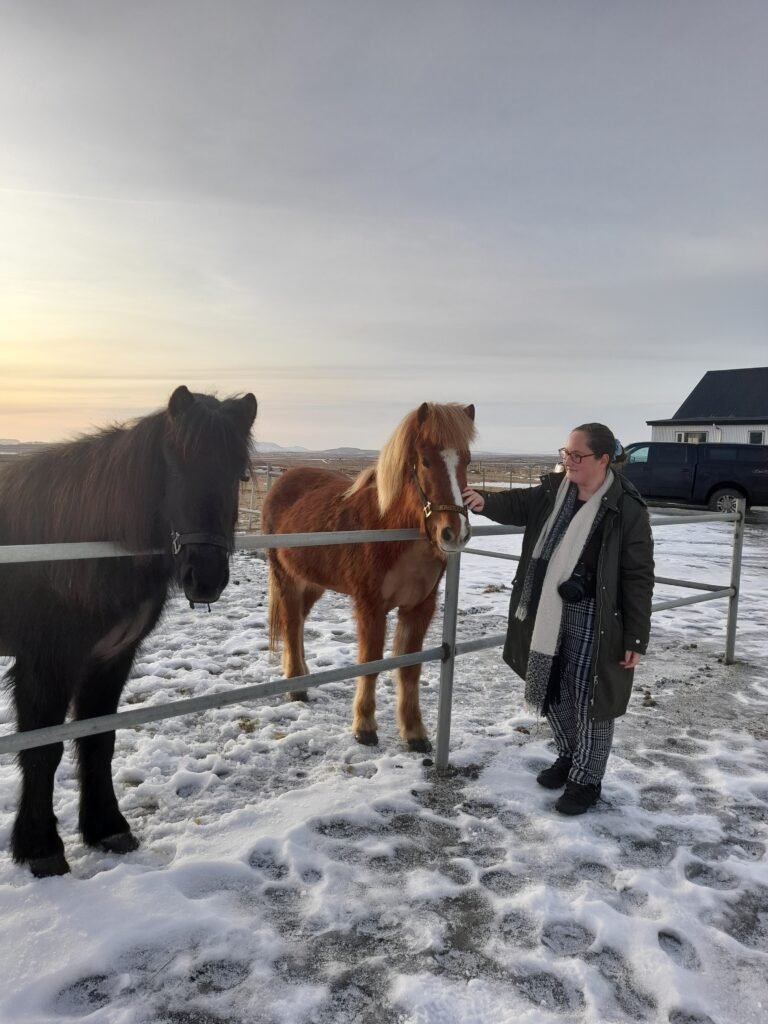
- I packed a few different, neutral-coloured base layers, jumpers and trousers to choose from (I wore black, you could also choose beige or grey)
- I chose a khaki green coat to add a splash of colour
- And then I made my outfits visually different with accessories, packing a couple of different hats and scarves
It really is that simple.
And think about it this way:
Most of the time, your jumpers and base layers are going to be hidden away under your coat. The only things consistently visible are your trousers, coat and accessories.
So if you keep your bottoms neutral, add a splash of colour to your outerwear if you wish and show your style through accessories, you can easily create different outfits without overpacking!
And what I loved most about this approach was how mentally freeing it was.
I wasn’t standing for ages, second-guessing my outfits, because I already had a winning formula to make small tweaks to.
My daily decision fatigue was limited to what colour scarf I was going to add!
Katie’s Top Tip: “Practicality” should be your guiding word for packing for Iceland in winter. So plan outfits, not individual items. If every top works with every layer and your outerwear stays the same, you’ll pack less, dress faster and feel more confident every day!
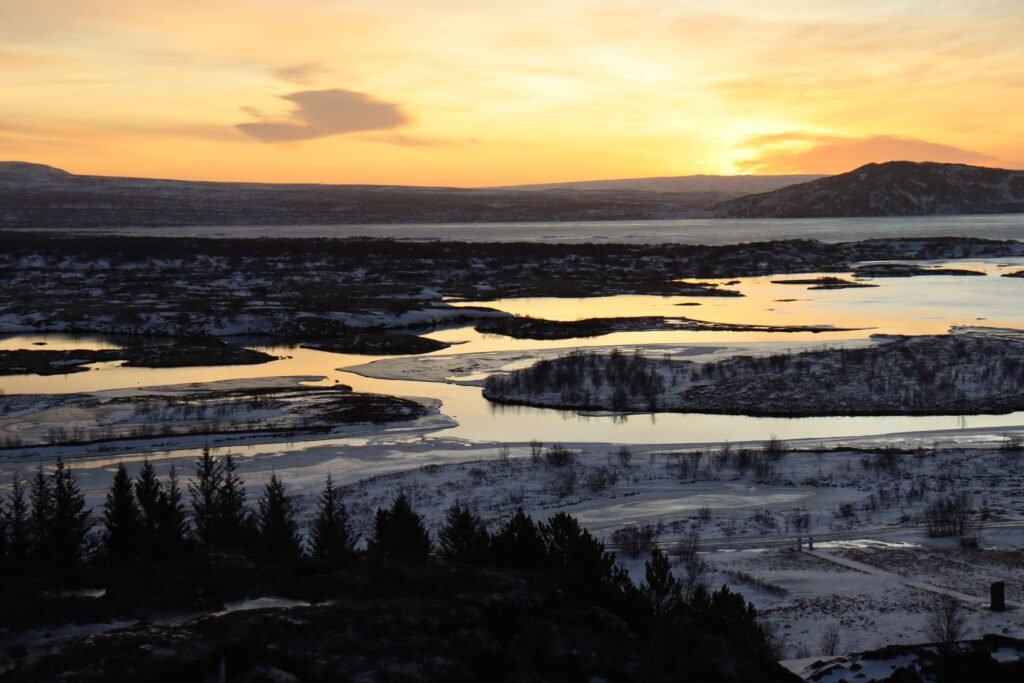
Your Ultimate Iceland Winter Packing List
Base Layers
Base layers are the most important thing you’ll pack for Iceland in winter.
They sit directly against your skin, which means they control your warmth, moisture and comfort from the inside out (especially when you’re moving between indoors and outdoors, and need your temperature to stay regulated).
I had to learn this the hard way, though, during my winter trip to Iceland.
I packed base layers that claimed to be thermal but actually contained cotton. And once cotton gets damp (from rain or even your sweat), it stays damp.
So my base layers stopped doing their job, suddenly every layer on top felt useless, and I felt cold, damp and more than a bit miserable.
Believe me, I learned this the hard way, so you don’t have to: if you have the wrong base layer, the rest of your layering system won’t work.
Katie’s Top Tip: For your Iceland winter packing list, look for merino wool or synthetic (polyester/isotherm) base layers that are specifically moisture-wicking. Do NOT wear anything that contains cotton for any kind of winter travel.
Thermal Long-Sleeve Tops
A thermal long-sleeve top is something you’ll wear every day in Iceland in winter, as it works to trap warmth and wick away moisture (like sweat) to prevent damp and cold.
I wore mine constantly in Iceland and, especially when the wind picked up, having a proper thermal top underneath my jumper made a huge difference to how warm I stayed.
- What I Wore: Mountain Warehouse Talus Long Sleeve Baselayer Top
- Merino Wool Option: DANISH ENDURANCE Merino Wool Base Layer

Thermal Base-Layer Leggings
Thermal base-layer leggings are another essential packing item that you don’t appreciate until you’re standing halfway up Saxholl Crater and wondering why your legs feel frozen…
True story!
I actually didn’t pack them for Iceland in winter, but I wish I did (especially after noticing how much of a difference they made to my warmth and comfort in Norway in winter).
They add an essential layer of insulation in freezing temperatures and also protect against wind chill, which is so important in Iceland!
I layered mine under regular trousers and fleece-lined joggers, and they kept my legs warm without feeling bulky or restrictive.
- What I Wore: Mountain Warehouse Talus Thermal Baselayer Pants
- Merino Wool Option: Icebreaker 175 Thermal Leggings

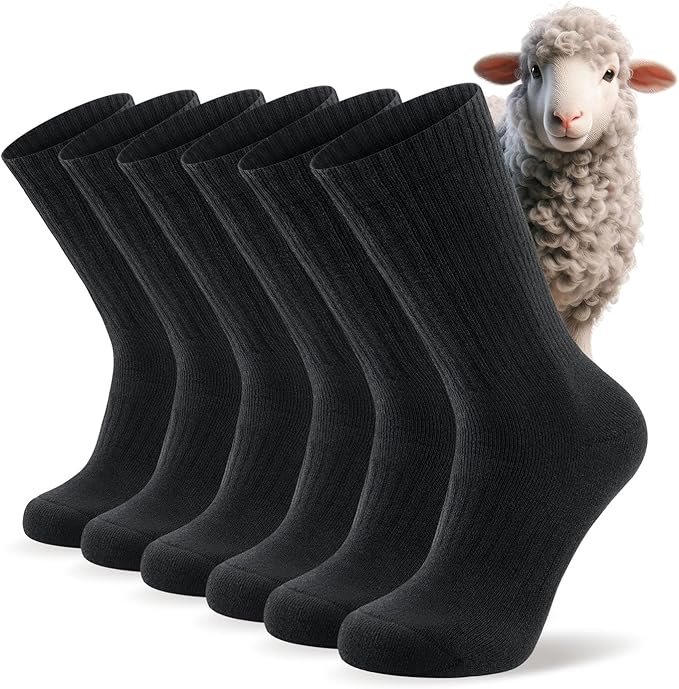
Thick Thermal Socks
Thick thermal socks are non-negotiable for Iceland in winter, as cold or damp feet will ruin your day faster than almost anything else! Plus, they also add comfort and insulation to winter boots.
These are your outer socks, so they need to be thick, cushioned and warm.
- What I Wore: PULIOU Merino Wool Socks
Thinner Wool Socks (For Layering)
Sock layering sounds excessive until you try it, but I can now confirm it is essential for comfortable winter travel!
A thinner wool sock underneath your thicker thermal sock helps regulate temperature, wick away moisture from sweat, and keep your feet warmer for longer.
This was especially essential on days when I knew I’d be outside a lot, or for evening activities like chasing the Northern Lights.
- What I Wore: DANISH ENDURANCE Hiking Socks
Mid Layers
Mid layers are where you trap the warmth created by your base layers. And this is actually where a lot of Iceland packing mistakes are made.
Flexibility matters so much more than bulk for your mid layers.
You’ll be constantly moving between warm, heated indoor spaces (like cafés or tour buses) and cold, exposed outdoor spaces. So it’s important your mid-layers let you easily adapt without overheating OR freezing.
I recommend either fleece or merino wool.
Fleeces are warm, breathable and dry quickly. And merino wool jumpers are warm without being heavy, naturally odour-resistant and very easy to layer (and pack!)
On my trip in January, I packed a fleece-lined hoodie, a lightweight merino jumper and a regular knit for milder days.
And your mid layers should also work with your bottoms. Wearing comfortable trousers or leggings that allow thermal leggings to be layered underneath is key.
Katie’s Top Tip: If a mid-layer is so bulky that it restricts your movement or makes you look like the Michelin Man under your coat, it’s not the right one!
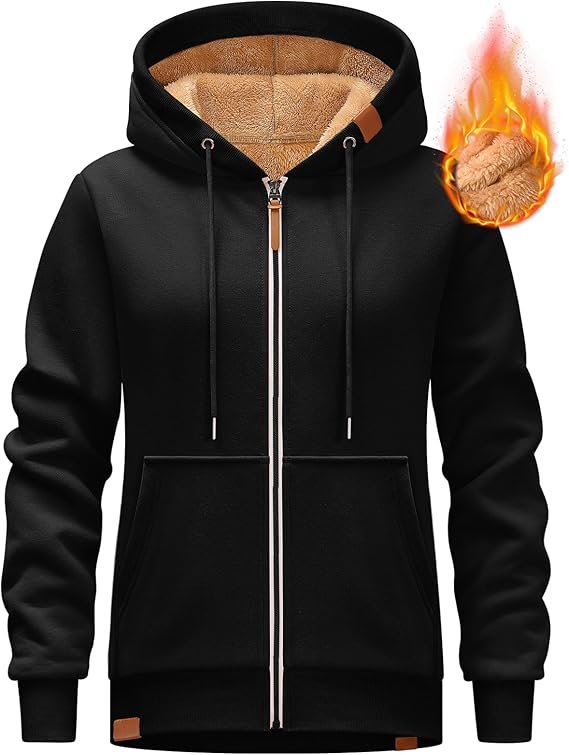
Fleece-Lined Hoodie
A fleece-lined hoodie is one of the most practical mid-layers you can pack for Iceland in winter, as it’s super warm without being bulky, and easy to take on and off.
I wore mine a lot on travel days and in the evenings back at my accommodation.
- What I Wore: TOMEEK Fleece Hoodies for Women
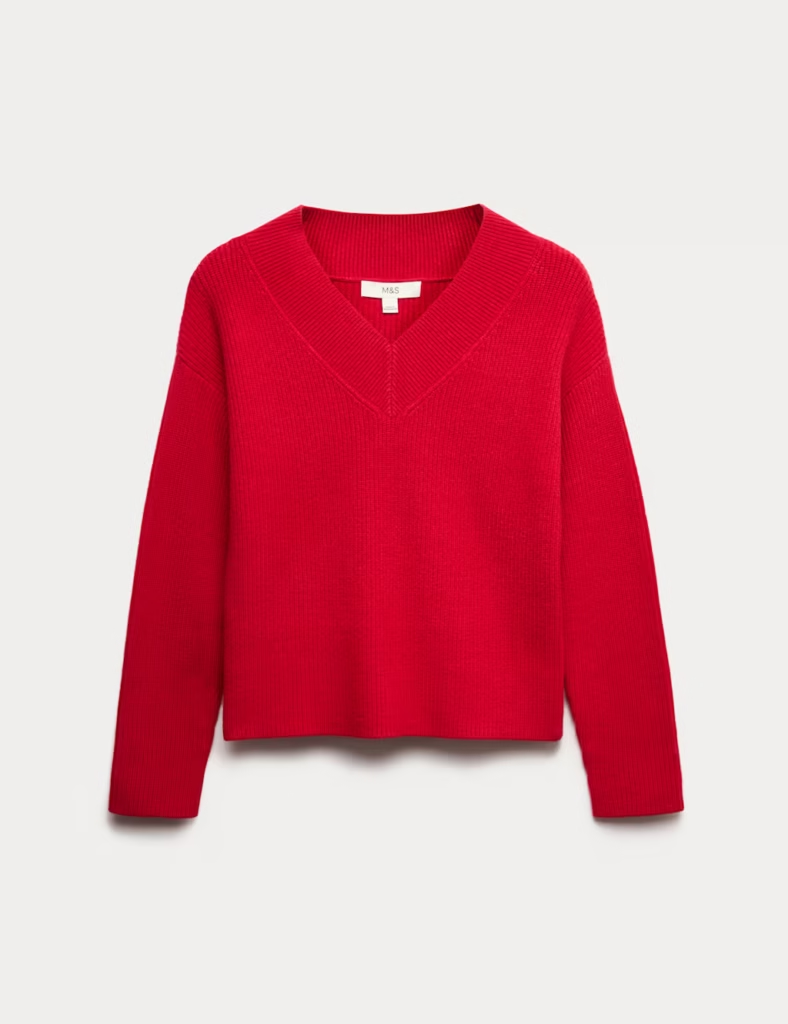
Lightweight Merino Wool Jumpers
A lightweight merino wool jumper is what I wore most days in Iceland in winter because it is breathable, odour-resistant, and seriously warm (without adding bulk) for easy layering.
I prioritised merino wool when I knew I’d be outside a lot (for example, visiting the South Coast and Snaefellsnes Peninsula), and also for evenings chasing the Northern Lights.
- What I Wore: 100% Merino Wool V-Neck Jumper from Marks & Spencer
Regular Jumpers
If merino wool isn’t an option for you (let’s be real, it’s expensive!), regular jumpers are fine for milder days, travel days or days where you’re mostly indoors.
I wore a regular jumper when spending time in Reykjavik, where I was going between indoor and outdoor spaces a lot, rather than standing outside all day.
- What I Wore: Ribbed V-Neck Relaxed Jumper from Marks & Spencer
Trousers or Leggings
These are your everyday bottoms, so comfort really matters here.
You’ll want trousers or leggings that are easy to move in, comfortable for travel days AND downtime, and practical enough for walking around outside.
The key is making sure they’re roomy enough to layer thermal leggings underneath without feeling tight or restrictive. (Aka no jeans – and they’re cotton anyway!)
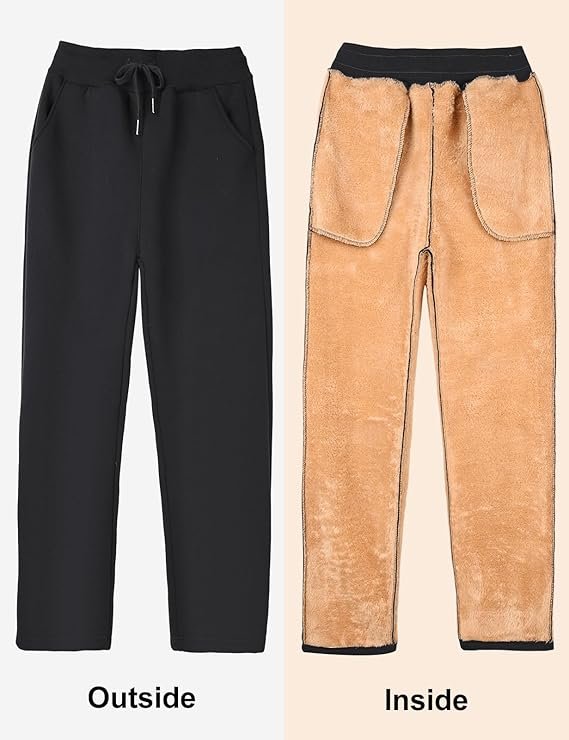
Fleece-Lined Joggers
Fleece-lined joggers are bulky, which almost stopped me from packing them, but they ended up being my most-worn and most-loved item in Iceland!
They’re incredibly warm, soft and perfect for colder days or even just relaxing at your hotel. So if you’re someone who feels the cold easily, these are so worth the suitcase space!
- What I Wore: UMIPUBO Womens Fleece Lined Joggers
Outer Layers
Your outer layers are what protect you from Iceland’s (often brutal) winter elements, so this is not a place to compromise.
In January (especially on Iceland’s South Coast), I experienced heavy rain, snow, brutal wind, ice and sunshine all in one day! And your outerwear needs to handle all of it reliably.
A proper winter coat for Iceland needs to be fully waterproof (not just water-resistant), windproof, and insulated.
Wind chill is a huge factor in Iceland, especially on the coast, so a coat that blocks wind (and is labelled as windproof) will keep you so much warmer than one that just looks thick.
And I also prefer longer coats that cover at least your thighs – that extra coverage makes a huge difference to how warm and dry you feel.
Katie’s Top Tip: Always choose fully waterproof outerwear over water-resistant.
Windproof, Waterproof Winter Coat
A long, insulated, fully waterproof (not just water-resistant) and windproof coat is one of the most important items in your Iceland winter packing list.
Plus, buying that coat in a longer length also helps protect your legs in bad weather.
- Similar To What I Wore: Mountain Warehouse Alaskan Womens 3 In 1 Long Jacket
- Other Option: Helly Hansen Aden Long Insulated Coat

Waterproof Trousers
Waterproof trousers might feel optional (I didn’t pack any!), but in Iceland in January, I really regretted that choice and wouldn’t leave without them now.
Rain, sleet, snow and slush will soak through regular trousers, leaving you cold and uncomfortable for the rest of the day (like I was after getting soaked at Seljalandsfoss Waterfall in South Iceland – not fun!)
- What I Wore: Mountain Warehouse Downpour Waterproof Trousers
- Other Option: Helly Hansen Women’s Aden Waterproof Trousers

The Best Snow Boots for Iceland
I made a classic mistake on my winter trip to Iceland: wearing “winter trainers.”
They were meant to be waterproof – but, spoiler, they weren’t. My feet were cold, even from ground snow soaking through, let alone when we had heavy rain in South Iceland.
And the grip was nowhere near good enough, especially at Strokkur geysir, where the ground felt like an actual ice rink! (I still don’t know how I didn’t fall!)
So take it from someone who knows: footwear will make or break your entire trip.
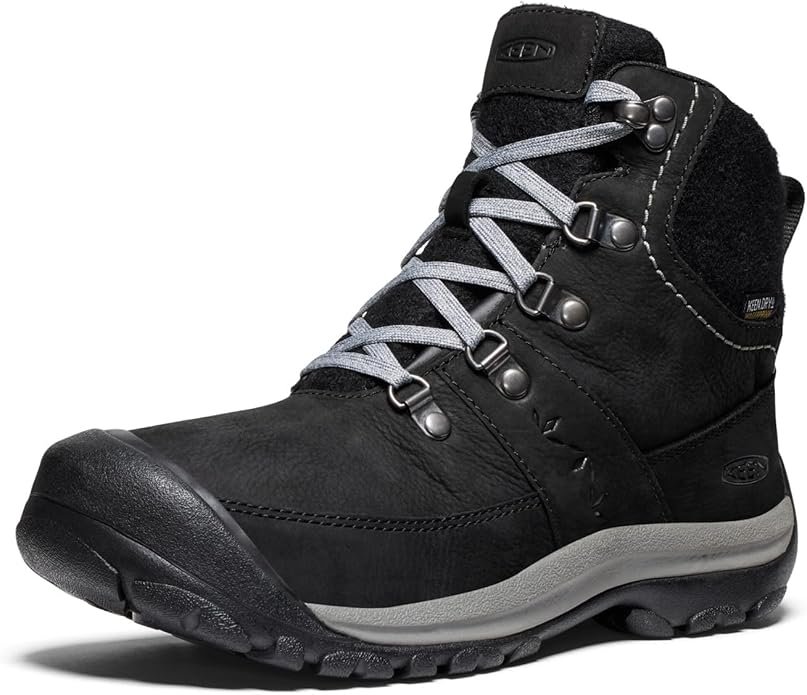
For Iceland in winter, you need boots that are fully waterproof, properly insulated, grippy on ice, and supportive around the ankle.
Fashion boots or trainers just don’t cut it (even if they’re marketed as “winter” shoes).
On my most recent winter trip to Norway, I wore the KEEN Women’s Kaci 3 Winter Mid Waterproof Hiking Boots, and they’re exactly what I would pack for Iceland in winter too.
They kept my feet warm down to -18°C at night in the Arctic (thanks to their -20°C thermal insulation), stayed completely dry in snow and rain, and had great grip on ice and snow.
Katie’s Top Tip: If your boots aren’t warm, waterproof, and grippy enough for Iceland, you’ll really feel it. So this is one part of this Iceland winter packing list where it is essential to invest.
Underwear + Other Clothing
- Underwear
- Bras
- Sports bras
- Thermal tights
- Pyjamas
- Fluffy sleep socks (optional but definitely recommended!)
Winter Accessories
These are all of the accessories that made a huge difference to me in Iceland in winter!
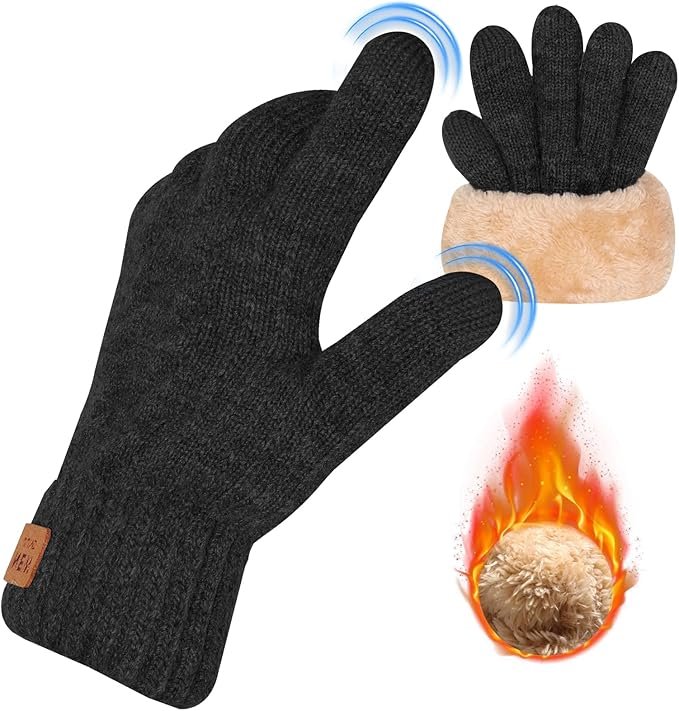
Touchscreen Gloves
Touchscreen gloves are essential in Iceland in winter because you’ll be constantly wanting to take photos of the scenery – and you really don’t want to keep removing your gloves in freezing wind and cold just to do that!
I used lightweight touchscreen gloves for most sightseeing, and switched to a thicker pair on colder, windier days (like the Snaefellsnes Peninsula and Northern Lights chasing).
- What I Wore: Unigear Lightweight Touchscreen Gloves
- I also packed a thicker pair: Bototack Winter Thermal Gloves
- Other Option: Black Diamond Heavyweight Screentap Gloves
Fleece-Lined Hat
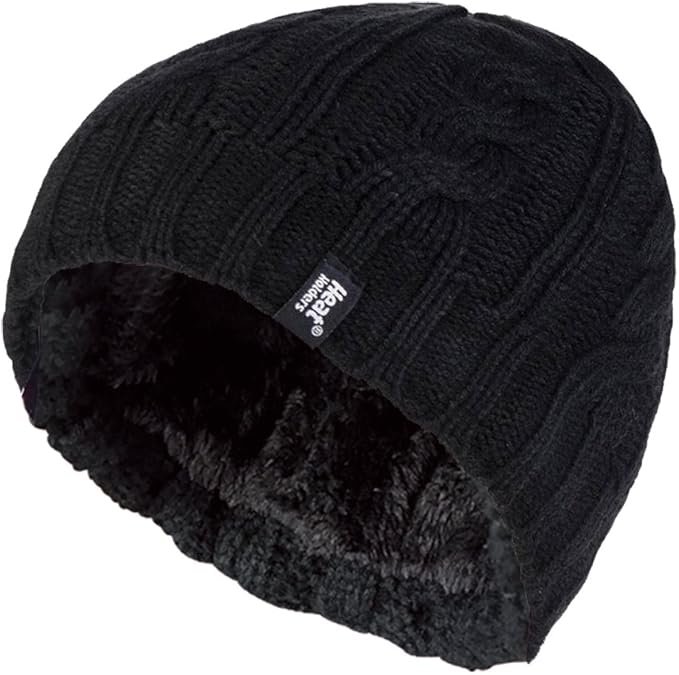
A warm, fleece-lined hat is non-negotiable in Iceland in winter, as your head loses heat the fastest. I wore my hat almost constantly outdoors, but especially at exposed viewpoints along the coast, where the wind was relentless.
- What I Wore: Heat Holders Women’s Fleece-Lined Thermal Hat
Neck Gaiter
A neck gaiter is way more practical than a scarf in wind. It stays put, doesn’t flap around and can be pulled up over your mouth and nose when the wind is particularly intense.
I didn’t pack this for my trip to Iceland in winter, relying only on a scarf. But I have since worn it almost constantly on my winter trip to Norway and wouldn’t go back!
- What I Wore: TSLBW Fleece Lined Thermal Neck Warmer
- Other Option: DANISH ENDURANCE Merino Wool Snood
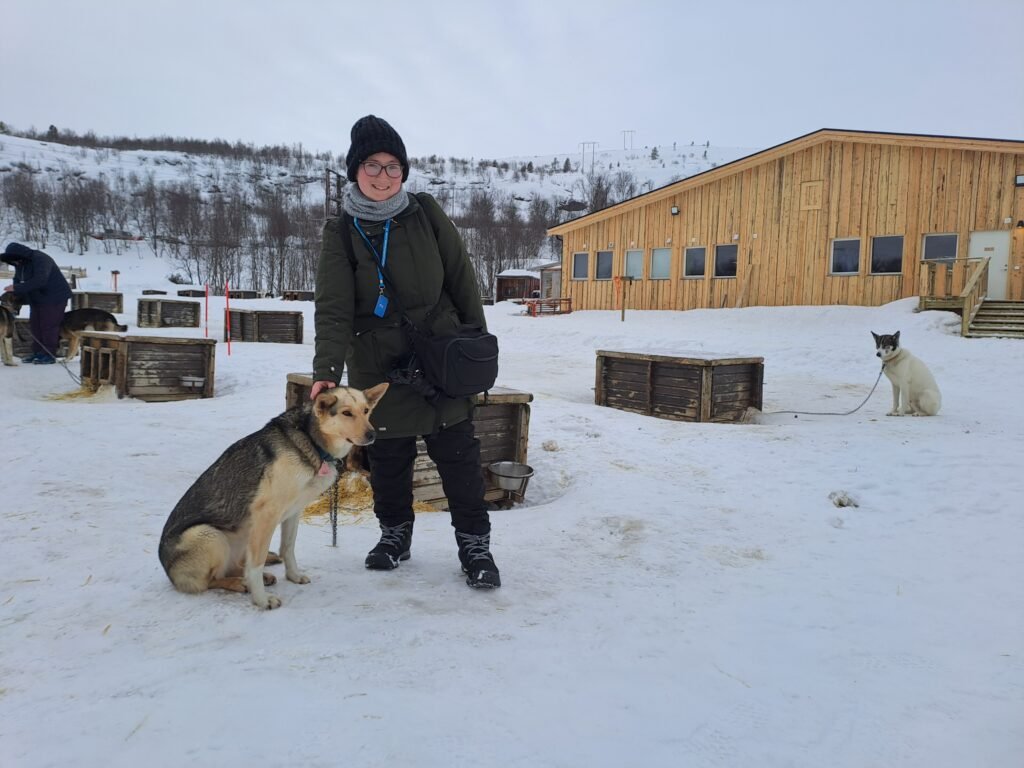
Scarf
A scarf is still worth packing, particularly for city days in Reykjavik or when you’re moving between indoors and outdoors a lot. It gives you more flexibility than a neck gaiter.
On my winter trips, I like having both options so I can choose what feels most comfortable and easy, depending on the weather and my plans for the day.
- What I Wore: ECOMBOS Winter Tartan Scarf
- Other Option: DANISH ENDURANCE Winter Scarf with Merino Wool

Sunglasses
Sunglasses are so important! Snow glare is intense, even on overcast days, and when the sun does come out, it sits low on the horizon. Plus, they also protect your eyes from wind.
I wear prescription sunglasses, but here are a couple of options:
- Budget Option: CARFIA Retro Polarised Sunglasses for Women UV400
- Higher-End Option: Ray-Ban Women’s Rb4171 Sunglasses
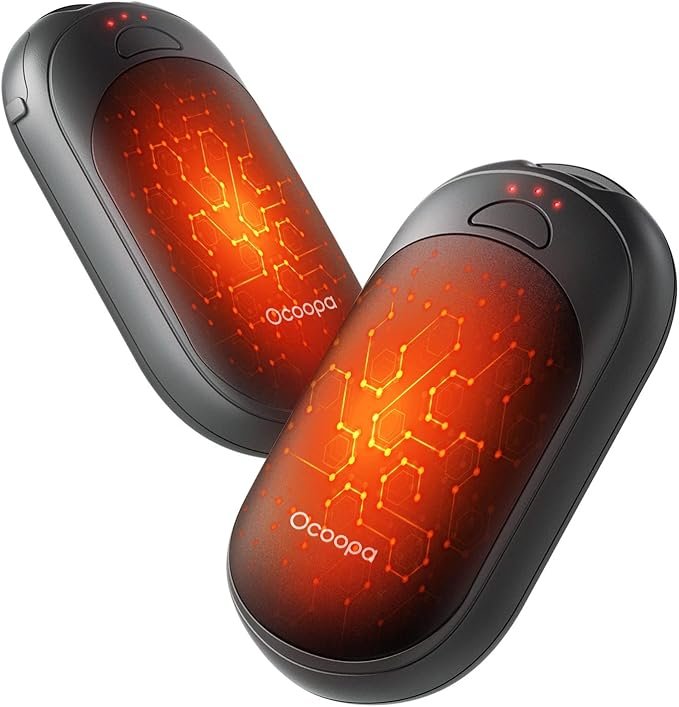
USB Rechargeable Hand Warmers
USB rechargeable hand warmers are a game-changer in Iceland! They last for hours, genuinely warm your hands, and are way more reliable (and sustainable) than disposable ones.
I actually first used these in Iceland and now never travel in winter without them!
- My USB Handwarmers: OCOOPA Rechargeable Hand Warmers 2 Pack
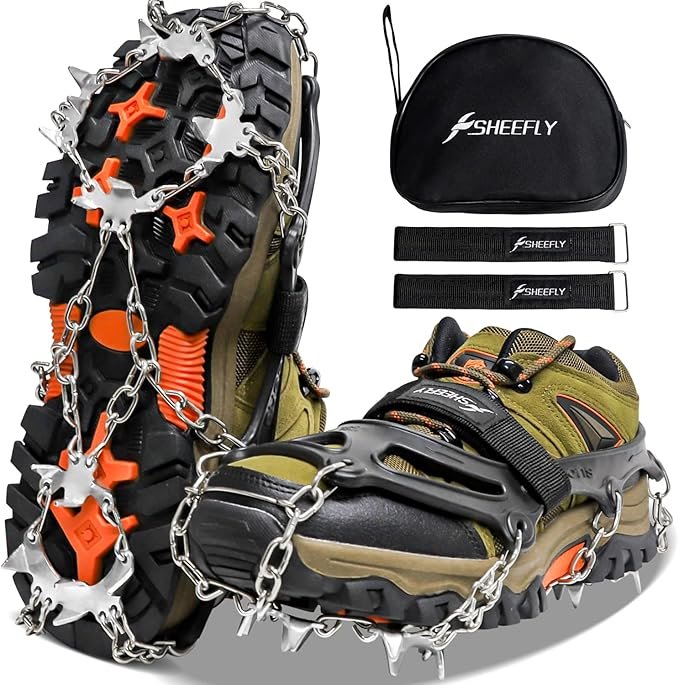
Slip-On Crampons
Iceland gets very icy in winter (the clue is in the name!), even in Reykjavik or at tourist attractions like the Golden Circle.
As a result, slip-on crampons (aka spikes) massively reduce the risk of slipping and are light enough to keep in your day bag at all times, in case you need them.
I wore stud crampons for my Iceland trip in January, but in Norway I switched to these more heavy-duty crampons and found the grip so much better.
If you buy just one thing from this Iceland winter packing list, let it be these, because the last thing you want is to injure yourself.
- My Slip-on Crampons: SHEEFLY Crampons
Sizing note: I’m a women’s UK size 8, but with my snow boots, the XL fit perfectly (the large was too small).
Swimsuit
Even in winter, you’ll absolutely want a swimsuit in Iceland, as the Blue Lagoon, Sky Lagoon, and smaller local hot springs are open year-round.
Soaking in the warm geothermal water of the Blue Lagoon, even while it’s cold outside, was genuinely one of the highlights of my entire 5 days in Iceland!
Pack a swimsuit that’s comfortable and quick-drying. I also recommend throwing it in a reusable zip-lock bag for the journey back.
- A Good Swimsuit Option: Adidas Women’s C-Back Swimsuit
Flip Flops
Flip flops might sound random in an Iceland winter packing list, but again, they’re so important for enjoying Iceland’s geothermal spas.
At the Blue Lagoon, I appreciated having my own for the shared changing areas, wet floors of the showers, and also the outdoor walkways to the lagoon itself (which were freezing underfoot!)
- My Flip Flops: FitFlop Ergonomic Flip Flops

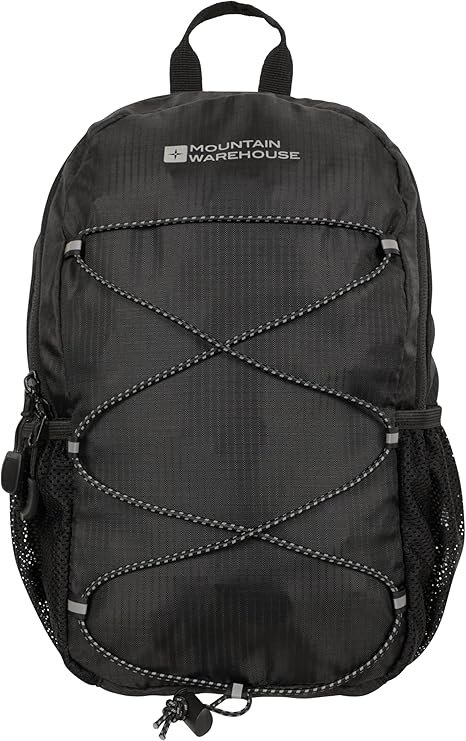
Lightweight Backpack
A small backpack is essential for day tours in Iceland. You’ll need space for extra layers, gloves, hand warmers, chargers, water, snacks and your camera, while keeping things lightweight and easy to carry.
- My Backpack: Mountain Warehouse Trek 8L Backpack
- Other Option: Osprey Daylite Plus
Waterproof Backpack Cover
Snow, sleet and rain will soak your bag. So a lightweight, waterproof cover protects your tech, documents and valuables without needing to invest in a fully waterproof backpack.
My Backpack Cover: Unigear Anti-Rain Backpack Cover, 10-90L

Tech Essentials
The cold drains batteries insanely fast, the spectacular and ever-changing Icelandic scenery will fill up your SD card storage, and winter weather is unforgiving if your tech isn’t protected. So these tech items were essential on my trip:
Phone & Charger
Your phone will be your camera, map, booking software, weather checker, torch… Basically, you’ll use it constantly in Iceland!
Portable Charger
Cold weather drains phone batteries crazily fast, especially when you’re also taking photos of the beautiful scenery all day!
Having a high-capacity power bank means you don’t have to hold back your usage or stress about losing navigation or bookings because your phone dies.
- My Favourite Portable Charger: Anker Power Bank 20,000mAh

Headphones
Perfect for public transport or downtime at your hotel! Noise-cancelling headphones are especially nice if you’re travelling solo (like me!) and want a bit of quiet time.
- My Wireless Earbuds: soundcore V20i by Anker Open-Ear Headphones
- Other Option: Apple AirPods Pro 2 Wireless Earbuds
- My Wireless Headphones: soundcore by Anker Q20i Noise Cancelling Headphones
- Other Option: Bose QuietComfort Noise Cancelling Headphones

Universal Travel Adapter
Iceland uses European plug types (C & F), but a universal adapter is a good investment for future trips too (especially if you travel often!)
- My Travel Adapter: TESSAN Universal Travel Adapter 28W

Kindle
A Kindle is perfect for cosy evenings back at your accommodation or long journeys on public transport. It’s lightweight, waterproof and way more practical than carrying physical books.
- My Kindle: Amazon Kindle Paperwhite Signature Edition
- My Kindle Case: MoKo Case for All-new 7″ Kindle Paperwhite

Waterproof Phone Pouch
Ideal for rain, snow or waterfall spray, when you still want to take photos without risking your phone.
- My Waterproof Phone Pouch: YOSH Waterproof Phone Pouch

Tripod (for Northern Lights)
The Northern Lights really do require a tripod for sharp, high-quality photos, even if you’re just using a phone. So a compact travel tripod will make a massive difference.
- My Phone Tripod: ATUMTEK 55″ Selfie Stick Tripod
- My Camera Tripod: K&F CONCEPT 75″/190cm Compact Camera Tripod
(Some tours provide tripods, so always check before packing your own.)
Camera, Batteries & Memory Cards
If capturing beautiful memories from your trip matters to you, a camera is absolutely worth packing for Iceland. The winter light and spectacular natural landscapes are stunning!
- My Camera: Panasonic Lumix S5 II
- My Favourite Memory Card: SanDisk 256GB Extreme PRO SDXC card
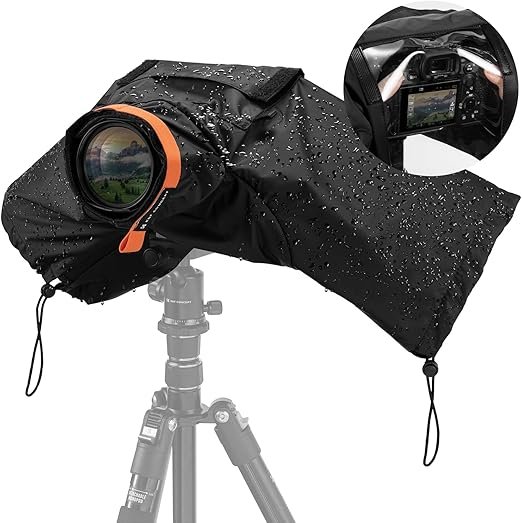
Waterproof Camera Cover
Essential for continuing to take photos in rain, snow and waterfall spray, and for protecting your expensive gear in Iceland’s unpredictable weather.
Without one, you risk damaging your camera.
This is something I learned the hard way on this trip, when my old, trusty Canon got completely soaked in a heavy downpour at Seljalandsfoss waterfall…
…£1500 later for a new camera, and I’ll never travel without my waterproof camera cover again! 🫣
- My Waterproof Camera Cover: K&F CONCEPT Professional Waterproof Camera Rain Cover
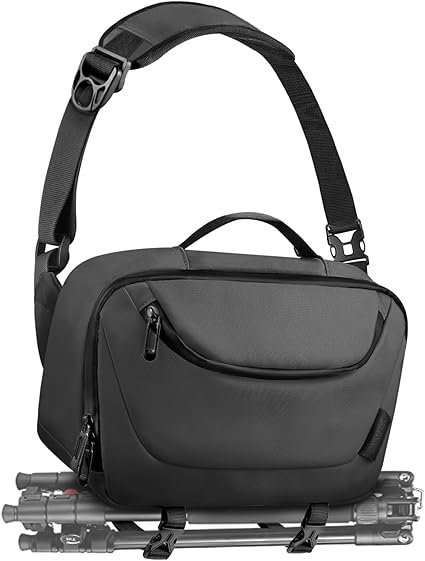
Waterproof Camera Bag
A waterproof camera bag keeps your camera, lenses, batteries and memory cards protected and organised while you’re out exploring, without constant worry about the weather.
For reference, my waterproof camera bag was plenty big enough to store my waterproof camera cover, spare batteries, spare SD cards, my Panasonic LUMIX S5 II camera and 20-60mm kit lens, and my 28mm-200mm zoom lens.
- My Camera Bag: TAAOKA Camera Sling Bag Waterproof
GoPro (Optional)
Great for excursions where you want stabilised footage without worrying about the weather. A GoPro is tough, compact and easy to use.
- Go Pro Option: GoPro HERO13 Black – Waterproof
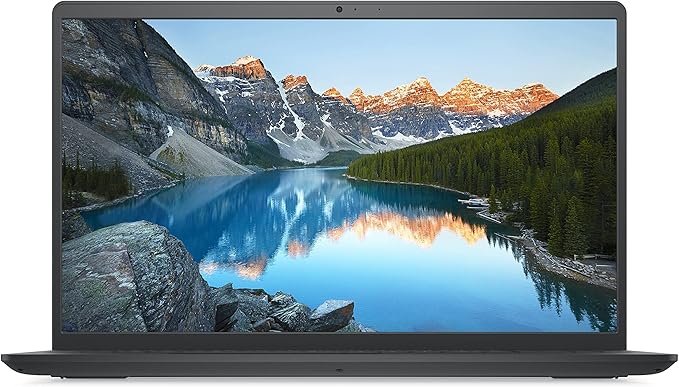
Laptop (Optional)
Only necessary if you’re working, editing photos or blogging during your trip. I didn’t bring mine to Iceland this time, but I have on other trips where I needed it.
- My Blogging Laptop: Dell Inspiron 15 Laptop
Toiletries & Personal Care
Iceland’s cold temperatures, constant wind, and dry indoor heating can be incredibly harsh on your skin, so packing hydrating skin and body care isn’t a luxury.
These are the toiletries you need in Iceland in winter:
Essential Toiletries
- Razor
- Solid stick deodorant
- Toothbrush & toothpaste
- Toothbrush charger
- Lip balm with SPF
- Contact lenses & solution (if needed)
- Period products
Haircare
- Solid shampoo bar
- A case to store your shampoo bar after use
- Conditioner
- Leave-in conditioner
- Hair ties or scrunchies
- Any other essential products you need
Skincare
- Body wash
- Body and hand cream combo (space saving!)
- Face moisturiser
- Any other daily skincare you need to use
Medication & Health
- Painkillers
- Motion sickness tablets
- Any prescription medication
- Savlon
- Muscle relief
- Plasters
- Travel sickness bands
- Travel tissues
Katie’s Top Tip: I packed makeup, but ended up never using it. So think carefully about whether you will, and if so, strip it back to the minimum.
Documents
- Passport
- Travel insurance
- Excursion confirmations
- Bank cards
- Printed and digital copies of key documents
Optional Extras
These aren’t Iceland winter packing essentials, but small, comforting items that make cold, unpredictable travel days feel calmer and easier – especially when you’re travelling solo!
Earplugs
Earplugs are worth packing if you’re a light sleeper, planning to stay in hostels, or wanting to nap on public transport. They take up no space, but make a huge difference to your sleep!
- Earplugs: Loop Quiet 2 Ear Plugs

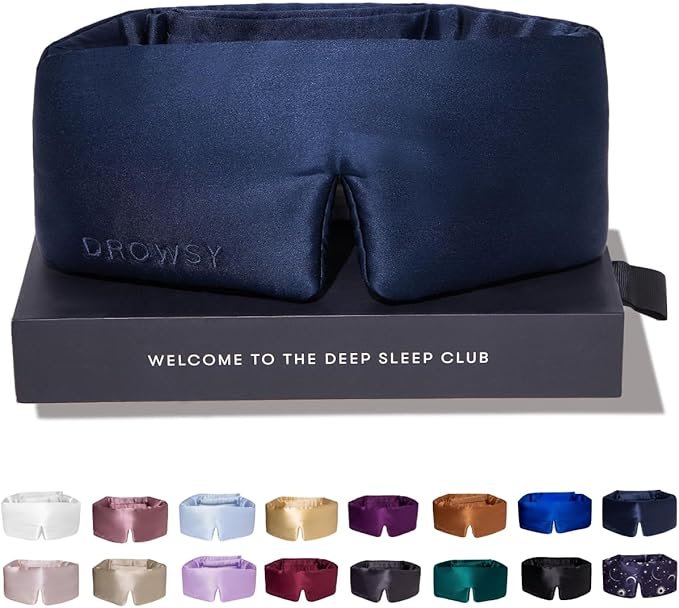
Sleep Mask
A sleep mask is similarly small but surprisingly useful if you’re sensitive to light, staying in hostels or napping on public transport.
- Sleep Mask: DROWSY Silk Sleep Mask
Foldable Tote Bag
A foldable tote is an item you don’t necessarily consider for Iceland travel, but you’ll be constantly reaching for it! I loved having mine for quick grocery shops, carrying extra layers, and picking up souvenirs.
- My Tote: FenFang Reusable Shopping Bag
Notebook or Journal
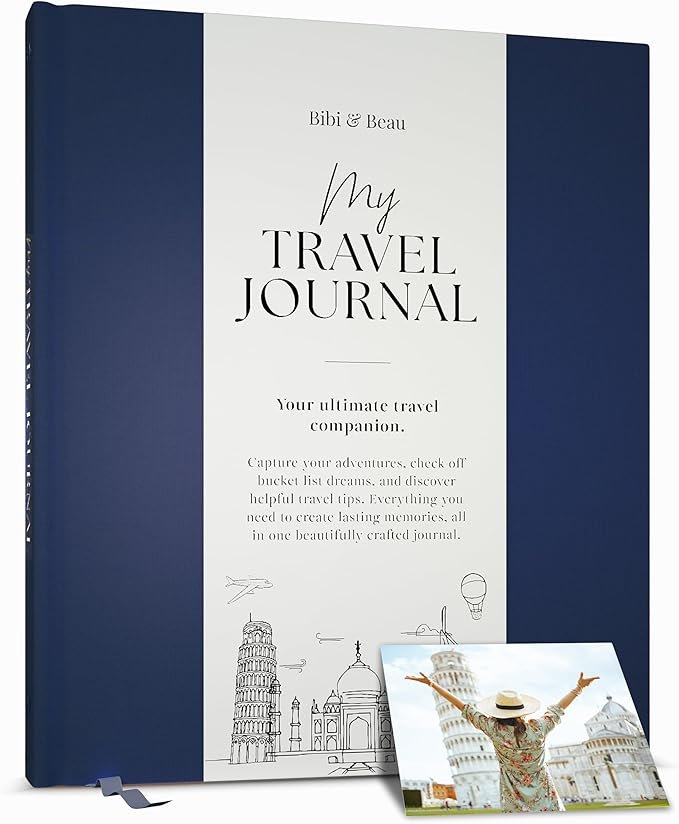
I always pack a journal when travelling! Solo travel especially gives a lot of quiet moments, and journaling helps me process my experiences, capture memories and slow down.
- Travel Journal: Travel Planner & Holiday Journal for 16 Trips by Bibi & Beau
- Blank Journal: Moleskine Classic A5 Notebook
Insulated Water Bottle
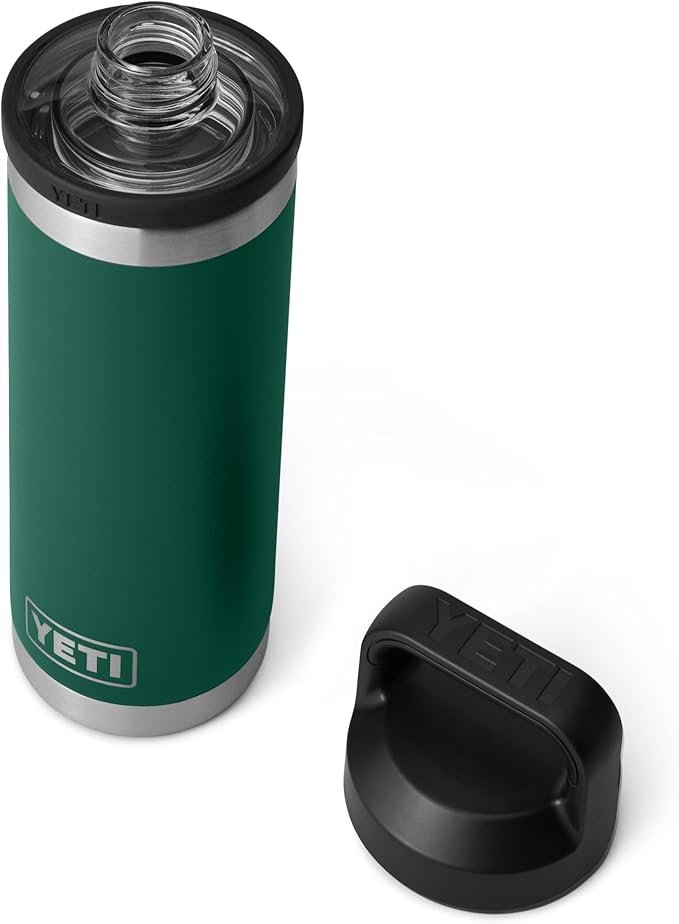
Staying hydrated in cold weather is easy to forget, but it’s just as important as in warmer temperatures. Tap water in Iceland is drinkable, so an insulated bottle lets you refill easily, save money and reduce waste.
- My Insulated Bottle: YETI Rambler Bottle 532ml
Thermal Flask
A thermal flask was a last-minute addition to my Iceland packing list, but I was so glad I brought it. Having a hot drink makes the cold a lot more bearable (and it’s much cheaper than buying hot drinks out all the time!)

Hot Chocolate Sachets
Packing your favourite hot chocolate sachets goes perfectly with the thermal flask, to add a little bit of home comfort to your days.
- My Favourite Hot Chocolate: Cadbury Instant Hot Chocolate Sachets
Cereal Bars
Easy snacks are essential for Iceland winter travel, especially on long tour days when food stops are limited. Make sure you’ve always got a few in your day bag.
- My Favourite Cereal Bars: Nature Valley Crunchy Oats and Chocolate Cereal Bars
Mini Hot Water Bottle
This is optional, but I loved having it with me! I originally packed my hot water bottle for my bad period cramps, but ended up using it way more than I expected.
It was perfect for warming up in the evenings, carrying with me whilst chasing the Northern Lights, and even pre-heating the bed in hotel rooms.
- My Adorable Mini Hot Water Bottle: KUYOU Mini Hot Water Bottle With Pouch

Reusable Travel Cutlery
This isn’t essential for every Iceland trip, but it’s useful if you’re staying somewhere with a shared kitchen or grabbing takeaway food on the go.
- My Travel Set: Sistema Reusable Travel Cutlery Set
Laundry Bag
A laundry bag keeps dirty clothes separate, makes packing and unpacking easier, and simplifies laundry days (if you’re planning on doing them).
- My Laundry Bag: Nidoul Travel Laundry Bag
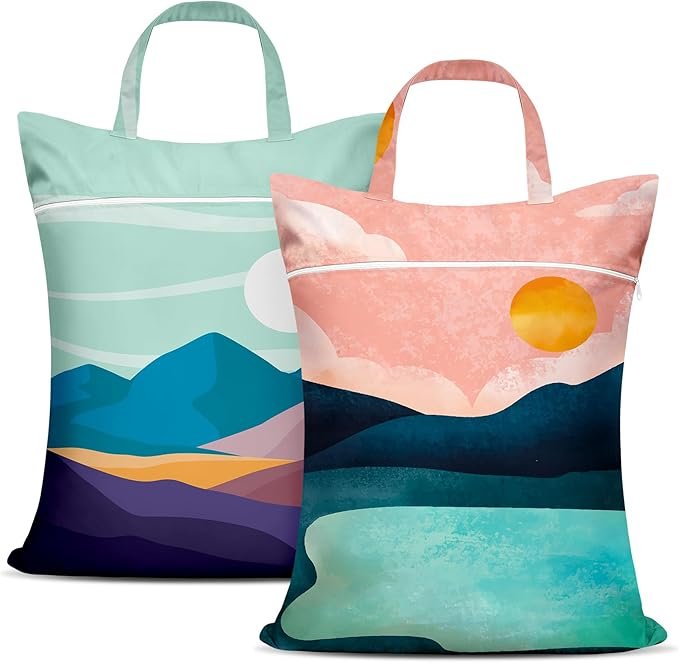
Reusable Ziploc Bags
These are so incredibly useful in Iceland! You can use them to store wet things in your day bag, protect your electronics or documents from damp, or even to store snacks in.
I almost didn’t pack them, and then reached for them every single day of my trip!
- My Pick: Norvens Reusable Ziplock Bags
Portable Laundry Line
If you’re travelling for more than a few days or packing light, a portable laundry line is great. Many winter clothes (like merino wool) aren’t dryer-safe, so air-drying is the best option.
- My Portable Clothesline: PAIDASHU Portable Clothesline

Packing Cubes
Packing cubes are game-changing for Iceland winter travel. Bulky layers take up so much space, and cubes help keep everything organised, compressed and easy to find!
- My Packing Cubes: Gonex Compression Packing Cubes

What to Pack For Iceland in Winter: List Only
Or, if you’re anything like me and love having a physical list to tick off, I made you a FREE PDF version of this entire winter packing list – you can download it here:
Clothes
- Underwear
- Sports bra
- Bras
- Thin wool socks
- Thick wool socks to layer
- Pyjamas
- Thermal long-sleeve tops
- Thermal leggings
- Jumpers
- Fleece (wear this!)
- Trousers or leggings
- Waterproof trousers
- Scarf
- Neck gaiter
- Touch screen gloves
- Hat
- Sunglasses
- Waterproof & windproof coat (wear this!)
- Waterproof & insulated snow boots (wear these!)
- Small backpack
- Swimwear
- Flip Flops
Toiletries
- Leave-in conditioner
- Shampoo
- Conditioner
- Hair ties
- Brush or comb
- Body wash
- Body lotion
- Deodorant
- SPF lip balm
- Moisturiser
- Savlon
- Muscle relief
- Toothbrush (and charger)
- Toothpaste
- Soap holder (if buying solid shampoo)
- Period products
- Pain relief
- Sea sickness tablets
- Plasters
- Razor
- Any vitamins or prescription medication
Tech
- Phone and charger
- Waterproof phone pouch
- Camera and charger
- Waterproof camera cover
- Waterproof camera bag
- Spare camera batteries and SD cards
- Kindle
- Watch and charger
- Wireless earphones
- Portable charger
- Universal adapter
- USB handwarmers
Documents
- Bank cards
- Passport
- Travel insurance
Optional
- Mini hot water bottle
- Crampons
- Travel sickness bands
- Plastic cutlery
- Water bottle
- Flask
- Hot chocolate sachets
- Laundry bag
- Waterproof backpack cover
- Portable clothesline
- Snacks
- Ziploc bags
Final Thoughts: What to Wear in Iceland in Winter
When it comes to what to wear in Iceland in winter, the secret isn’t packing loads but packing smart, using the simple 3-step layering system:
- A thermal, breathable base layer
- An insulating mid-layer
- A windproof, waterproof outer layer
Once you’ve got that, packing becomes simple and getting dressed every day feels easy!
Your base layers (thermal top + leggings) wick moisture and keep you warm.
On top of that, mid layers (merino wool jumpers + fleece) trap heat and give you flexibility, so you can easily add or remove warmth.
And finally, your outer layers (coat + waterproof trousers) are your protection from the elements, keeping the wind and rain out.
Then, it’s time to accessorise.
Proper snow boots with insulation and good grip keep you steady and warm on icy ground, which makes a huge difference to how confident and safe you feel.
And, of course, don’t forget to have fun with your scarves, hats and gloves – as these will be the only clothing visible in photos anyway!
Bottom line? In Iceland in winter, dress for practicality, not for fashion.
When you’re warm, dry and comfortable, you’ll enjoy a truly incredible trip to Iceland!
Want the exact checklist I used for my own Iceland winter trip? Download the full printable version here:
FAQs: Iceland Winter Packing for Women
What should I wear in Iceland in winter as a woman?
Layers are everything. Pack thermal base layers, warm mid layers (like fleece or merino wool), and a fully waterproof, windproof outer layer (trousers and a coat). You don’t need fashion outfits, you need functional, comfortable clothes that keep you warm and dry!
Do I really need waterproof clothing in Iceland in winter?
Yes, absolutely. Snow, sleet and rain are all common in Iceland in winter – often on the same day! Water-resistant clothing definitely isn’t enough – you’ll want to pack a fully waterproof coat and trousers.
Are snow boots necessary, or can I wear trainers?
Snow boots are essential. I wore “winter trainers” on my first Iceland trip and regretted it almost immediately when I had cold feet, damp socks and poor grip on ice.
Proper snow boots with insulation, waterproofing (not just water-resistant), and good grip make a huge difference to how comfortable and safe you’ll feel in Iceland in winter – and how much you’ll enjoy your trip.
How many outfits do I need for Iceland in winter?
Fewer than you think! I rotated the same core layers each day.
For my 5-day trip to Iceland in January, I packed 3 sets of thermal base layers, 1 fleece, 1 merino wool jumper, 2 pairs of trousers and 1 coat. I added variety with hats and scarves, but everything else stayed the same.
Do I need special clothes for the Blue Lagoon in winter?
You’ll need a swimsuit, but you don’t need special winter swimwear. The water is lovely and warm all year round, even when it’s freezing outside!
What matters more is what you wear before and after. I recommend hiring a warm robe, packing your own flip flops for hygiene, and make sure you get out of your damp costume as soon as possible after getting out to change into warm, easy layers.
Read More About Travel in Iceland:
- How to Get Around Iceland Without A Car (Winter Edition)
- The ULTIMATE Iceland Winter Packing List For Women (2026)
- Visiting Iceland in January: Must-See Sights, Weather & Tips
- Where To Stay in Reykjavik (For First Time Solo Travellers)
- Norway vs Iceland in Winter: Ultimate Solo Travel Comparison
- The Ultimate Iceland Solo Female Travel Guide (For 2026!)
- Iceland’s Snaefellsnes Peninsula in Winter (Without a Car!)
- How to Visit Iceland’s South Coast in Winter (Without a Car)
- 7 Unmissable Day Trips From Reykjavik in Winter (No Car!)
- How to See Iceland’s Golden Circle in Winter (Without a Car)
- Iceland’s Blue Lagoon in Winter: What to Expect (and Pack!)
- 15 Iceland Travel Tips for Winter You’ll Be Glad You Know
- How Many Days Do You Need in Iceland in Winter?
- How to Spend 5 Days in Iceland in Winter (Without A Car!)
- 19 Prettiest Places in Iceland Every Traveller Must See
- Is Iceland Worth Visiting in Winter? What You Must Know
- Is Iceland Safe For Solo Female Travellers? An Honest Guide
Grab Your Iceland in Winter Packing List:
Pin Me For Later!


3 Comments