
How to Get Around Norway in Winter (Without a Car!)
Travelling in Norway in winter without a car sounds intimidating, right?
After all, Norway’s winters are well known for their icy roads, short daylight hours, unpredictable weather and remote landscapes.
But I’ve actually found that Norway is one of the easiest countries in Europe to get around without a car – if you know how the public transport system actually works!
I’ve travelled in Norway as a solo female traveller in winter, relying entirely on public transport, the Coastal Express and guided tours.
I know what it’s like standing at an icy bus stop in Tromsø, hoping I’m in the right place – but I also know how smooth (and scenic!) Norway’s winter transport can be.
So in this guide, I’m going to show you exactly how to get around Norway in winter using trains, buses, flights, ferries and the famous Coastal Express, without missing out on the places that make winter in Norway so magical!
Does Norway’s Winter Transport Actually Work? (My Experience)
It’s easy to assume that getting around Norway in winter is so difficult it’s not even worth it.
Snow, storms, darkness and remote landscapes sound like a logistical headache, right?!
But in reality, Norway is one of the best countries in Europe to explore without a car, because its public transport systems are generally well-built for these conditions.
I spent three weeks travelling solo through Norway in winter – from Oslo all the way up to Kirkenes – using only trains, buses, flights, the Coastal Express, and a few guided tours.
And overall, I had a surprisingly smooth experience!
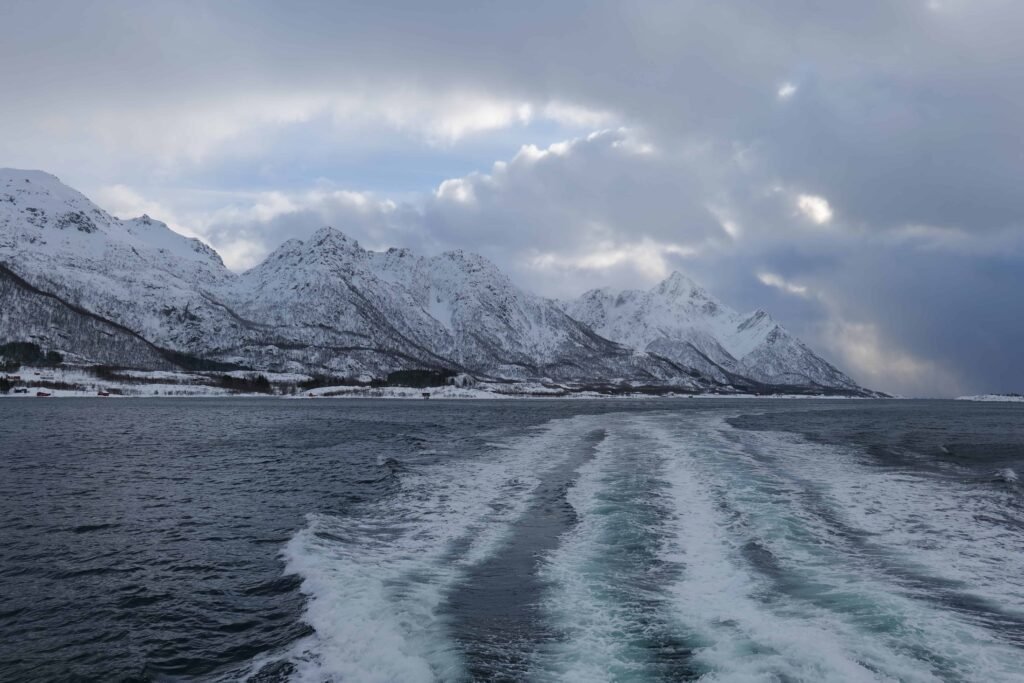
I didn’t have a single public transport cancellation. And the only real delay I experienced was waiting for the Coastal Express from Svolvaer one evening.
It arrived about an hour late, and yes, standing in that tiny ferry terminal at 8pm in the freezing cold wasn’t fun, but it was also just a small inconvenience.
The only cancellations I experienced during the entire trip were two excursions: a boat trip to the Geirangerfjord and a guided tour around South Lofoten.
So yes, Norway winter travel is impossible to control and difficult to predict, and you should definitely add buffer time to your itinerary.
But for a three-week trip where I saw places like North Cape, Trollfjord, Mount Aksla, remote Arctic towns, stunning fjords and snow-covered cities, I absolutely can’t complain!
Every train, bus, ferry and flight I used felt reliable, comfortable, safe as a solo female traveller, and insanely scenic!
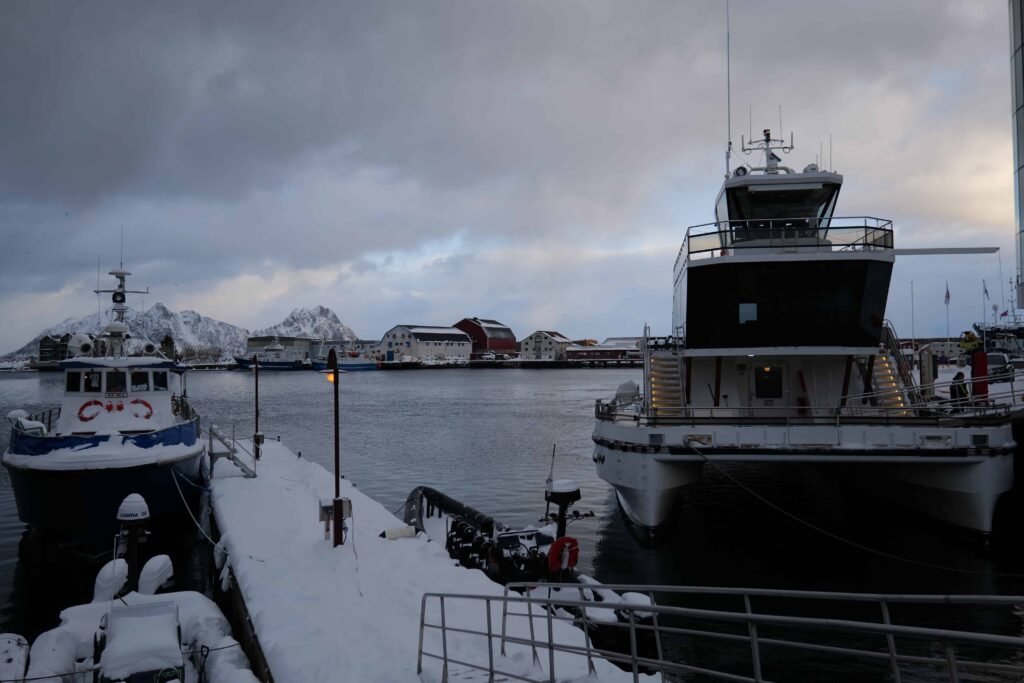
Norway’s Winter Transport System in a Nutshell
If you’re trying to figure out how to get around Norway in winter, you don’t need a car, but you do need to understand which transport option works best for your itinerary.
Trains, buses, ferries, domestic flights, the Coastal Express, and guided tours all connect different places, so when you use them together, travelling around Norway in winter becomes surprisingly easy!
Here’s an overview:
- Trains: The best option for long-distance winter travel between cities. Comfortable, scenic and one of the safest ways to travel Norway in winter!
- Buses: Great for regional connections and smaller towns, although schedules are often reduced in winter.
- Domestic flights: The quickest way to cover long distances, especially between southern and northern Norway.
- Ferries & local boats: Essential for fjord crossings and coastal routes, running year-round but very dependent on weather.
- The Coastal Express (Havila or Hurtigruten): An essential transport link and popular cruise route, connecting remote coastal towns even in deep winter.
- Guided tours: Not always necessary, but amazing for places that are difficult to reach alone in winter.

Let’s break it down further now and get into each option individually:
Travelling Norway by Train
If you’re trying to figure out how to get around Norway in winter, trains are definitely one of the safest, easiest and most scenic transport options.
Norwegian trains are designed to run even in snow and ice, and while weather or avalanches can cause delays, full cancellations are quite rare (especially for major routes).
I found the trains themselves to be warm, comfortable and easy to navigate, even with luggage. And all announcements were in English and Norwegian.
As a solo female traveller, I felt completely comfortable on every train I took.
Plus, most long-distance trains have:
- Reserved seating
- Spacious luggage racks
- Toilets
- Power sockets
- On board cafés or snack trolleys
Katie’s Top Tip: Book Norway’s top train routes in advance and always reserve a window seat if possible. Plus, winter daylight is very limited, so aim for a departure with the most daylight hours to enjoy the spectacular scenery!
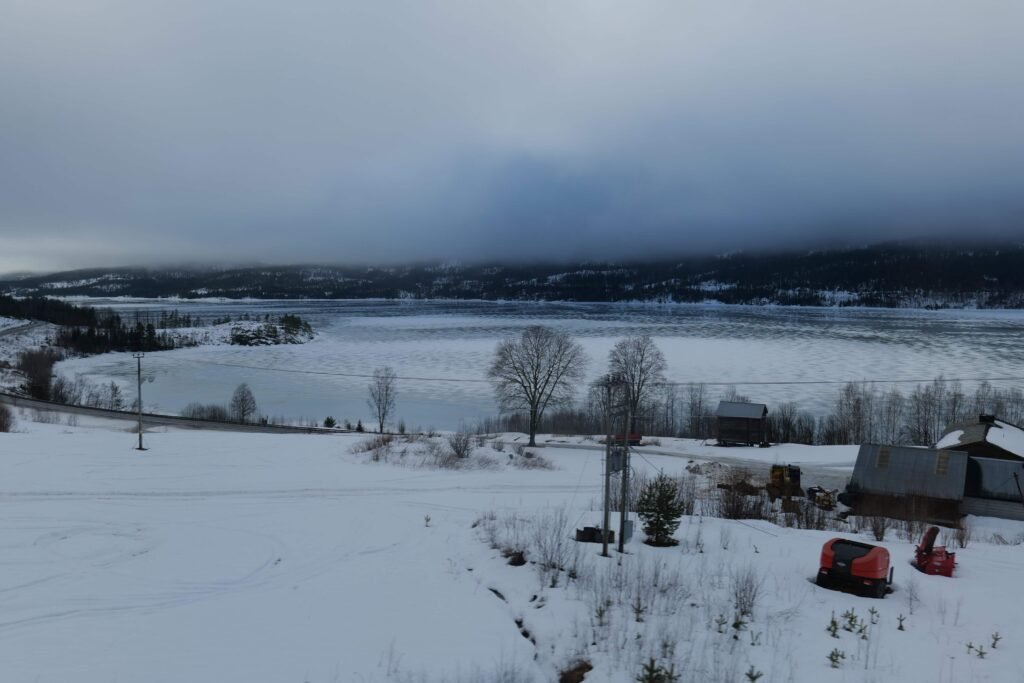
Here are Norway’s best train journeys for winter travel:
Oslo to Bergen Railway
This was my favourite train journey in Norway!
In fact, I preferred it to the famous Flåm Railway (which is probably an unpopular opinion!)
In winter, the Oslo to Bergen line feels like you’re travelling through a snow globe, with frozen lakes, snowy mountains, quaint cabins and endless winter scenery.
I’m not kidding, I spent the whole journey pressed against the window with my camera!
The route also crosses the Hardangervidda plateau, one of the highest railway crossings in Europe, with dramatic winter scenery.
The full journey takes 6.5 hours. Or you can get off at Myrdal (4.5 hours).

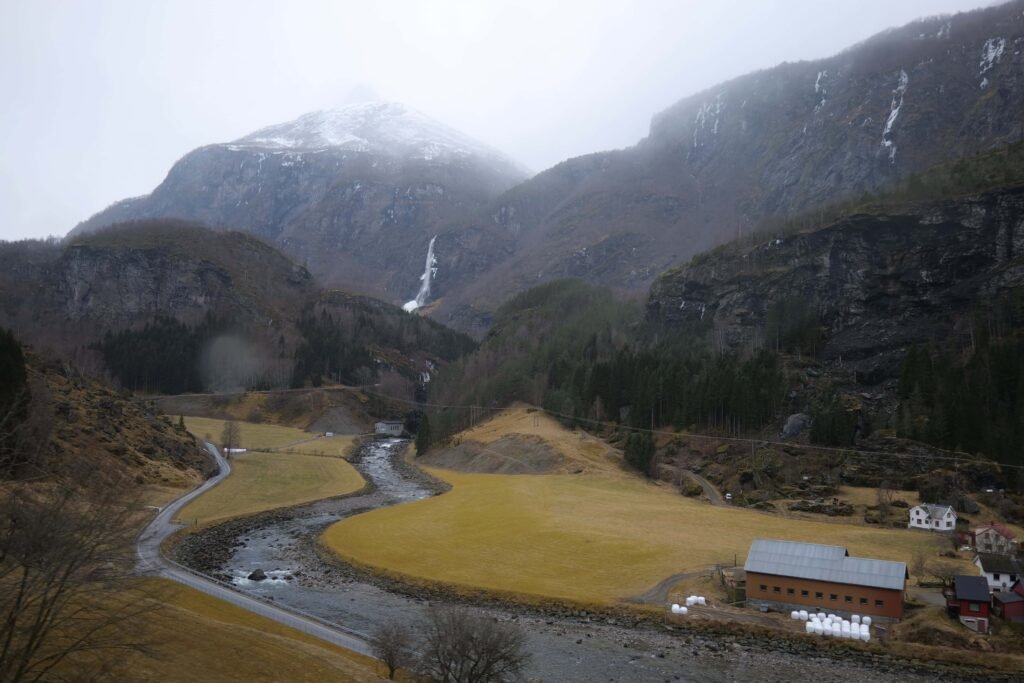
Flåm Railway (Myrdal to Flåm)
The Flåm Railway only lasts around 50 minutes, but the views are spectacular – it’s even known as one of Norway’s best rail journeys!
The train travels steeply down from the mountain station at Myrdal to the fjord village of Flåm, passing frozen waterfalls, deep valleys, and dramatic cliffs.
I took this route in winter and especially loved the waterfall stop, which was completely frozen over mid-cascade!
Because this route is so popular, it can feel a bit more touristy than others, but it’s still well worth the detour from the Oslo to Bergen line.
Dovre Line (Oslo to Trondheim)
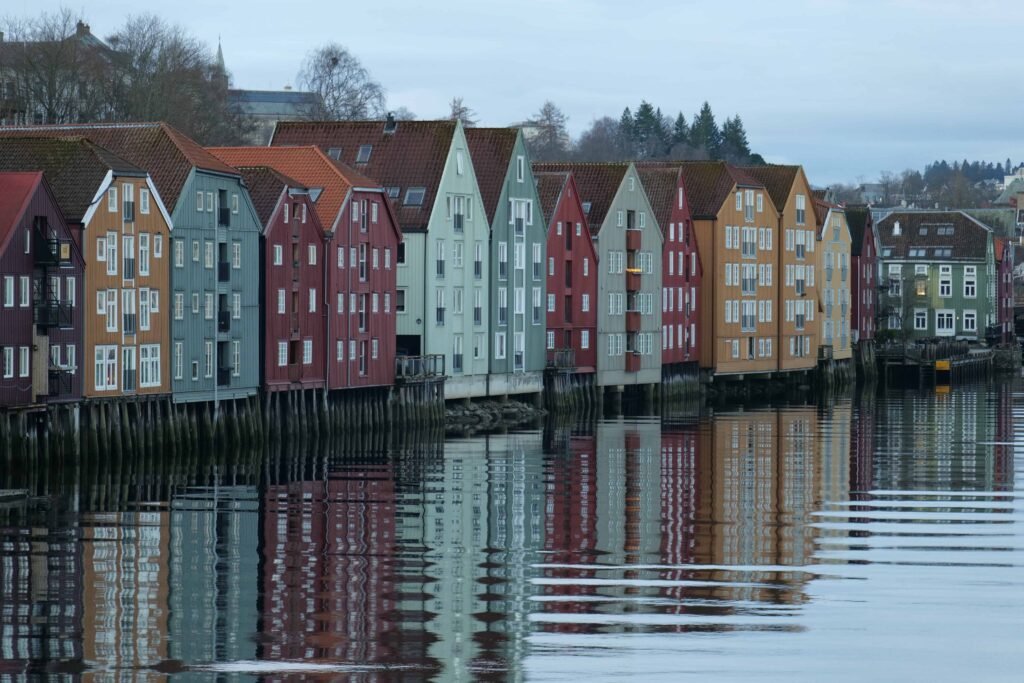
The Dovre Line connects Oslo with Trondheim and is a great route if you want to see a quieter, less touristy side of Norway in winter!
The landscapes are ever-changing, from forests to valleys and mountains, and in winter, everything again looks like a snow globe!
This is another long journey, taking around 6.5 hours, but it’s comfortable, reliable and a great start to an itinerary to explore Norway’s lesser-visited gems!
Nordland Line (Trondheim to Bodø)
This is the longest direct train on this list, taking around 10 hours! But, after all, it does cross the Arctic Circle and pass through some of northern Norway’s most remote terrain!
It’s a long journey, but comfortable, safe, and a lot less stressful than winter driving – a great way to get around Norway without a car while still reaching more remote areas!
Note for 2026: The route has recently been affected by landslides and a lack of trains, so always stay up to date with the latest updates from the operator, SJ.
In Bodø, I highly recommend you take a day trip to see the mighty Saltstraumen tidal current.

Rauma Line
The Rauma Line is often described as one of Norway’s most beautiful train journeys, taking you through the Romsdalen valley.
On the way, you pass mighty rivers, snow-covered mountains and frozen waterfalls, making the entire journey feel cinematic and picturesque!
It’s shorter than some of the other train journeys mentioned, at just 1 hour 40 minutes long, but the route packs an insane amount of spectacular scenery into that time.
Getting Around Norway by Bus
When I was thinking about how to get around Norway in winter, I first dismissed the bus because I assumed snow and ice would impact the schedules too much.
But in reality, buses are really important to Norway’s public transport network, especially beyond the big cities.
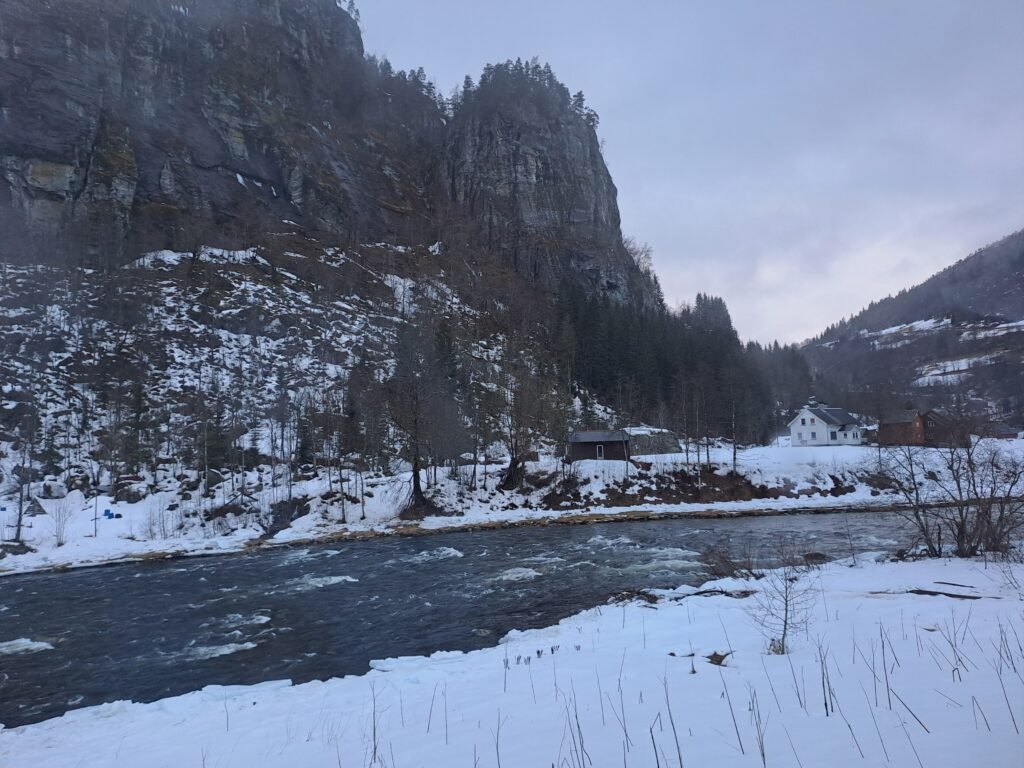
They’re comfortable, clean, warm, driven by experienced drivers used to winter conditions, and are often the only public transport option connecting smaller towns and villages.
Also, if you’re wondering how to get around Norway on a budget, buses are usually the most affordable option!
Katie’s Top Tip: Some bus routes do reduce frequency in winter, and delays can happen due to bad weather, so flexibility in your itinerary matters.
City Buses in Norway
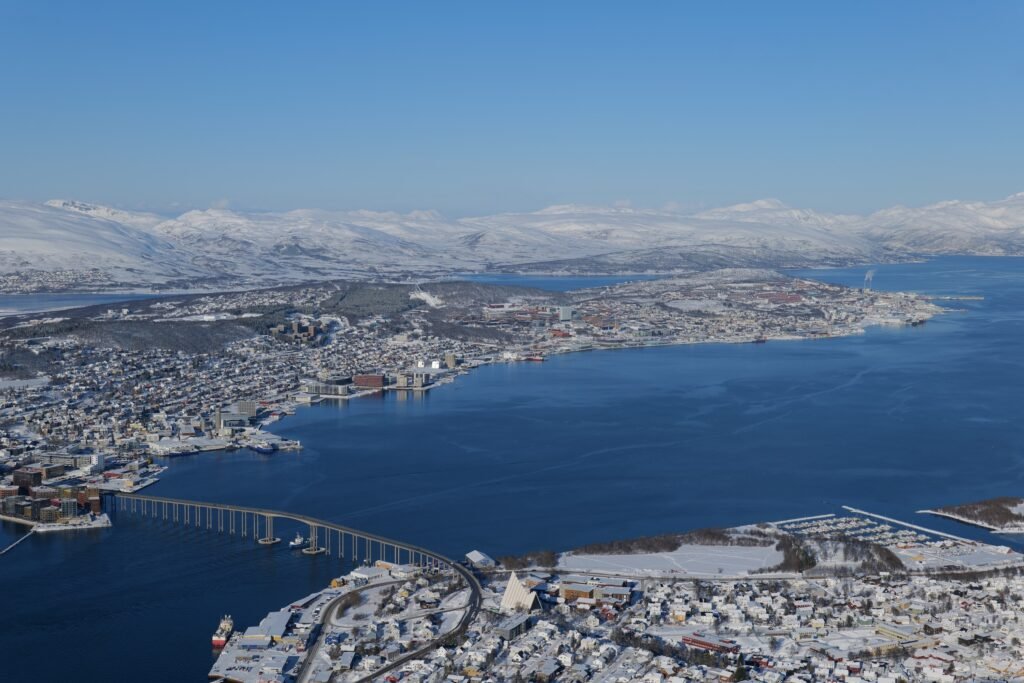
In major cities like Oslo, Bergen and Tromsø, I found buses weren’t essential.
These cities are all compact and walkable, even in winter (and actually, walking is the best way to sightsee!)
However, in Tromsø, I used the local bus 26 to get from the city centre to the Fjellheisen cable car because the pavements were too icy to feel safe walking the route.
In Bergen and Oslo, I didn’t use any public transport to get around.
Regional Buses in Norway
Buses are most important for regional connections between smaller towns.
So you might be thinking, “Okay, but I don’t need to visit any smaller towns” – and that’s what I thought too!
Until I discovered that one of the most touristy routes in Norway requires a bus:
The route from Gudvangen to Voss.
I took this bus as part of my journey from Oslo to Bergen via the Flåm Railway (also known as “Norway in a Nutshell”).
This connection was seamless with the ferry from Flåm to Gudvangen and incredibly scenic!
Other popular regional bus routes in Norway are:
- Oslo to Bergen
- Bergen to Ålesund
- The Atlantic Road
- Buses around the Lofoten Islands
Katie’s Top Tip: To tie all of your public transport routes together, I recommend using the Entur app. It combines all transport into one journey planner, which makes navigating winter in Norway a lot less stressful!
Taking Domestic Flights in Norway
If your itinerary covers large distances, flying is the best way to travel Norway in winter.
Norway is an incredibly long country, and while trains and buses are amazing for short(er!) distances, domestic flights will save you days of travel time in some cases.
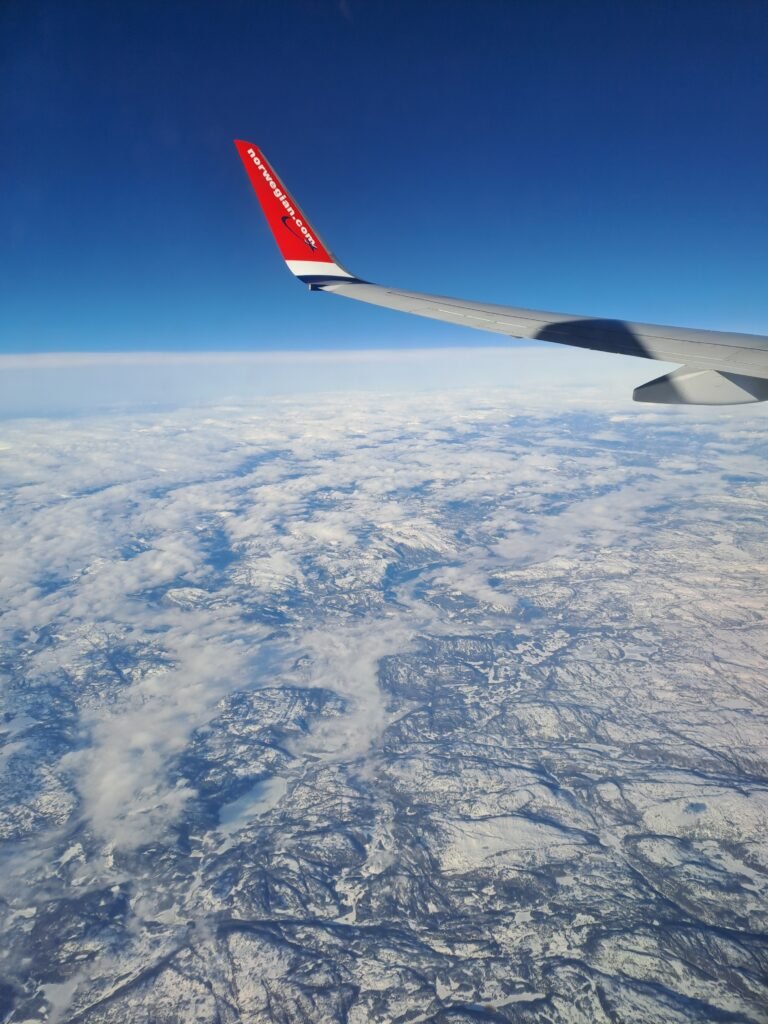
As an example, for me, flying from Bergen to Tromsø with Widerøe was the quickest, easiest and most affordable way to travel between south and north Norway.
Norway’s internal flights are amazing, with regular connections to cities like Tromsø, Trondheim, Bodø and Kirkenes, as well as to other tiny airports throughout the country.
The main airlines operating Norway’s internal flights are:
- SAS
- Norwegian
- Widerøe
Of course, delays and cancellations are possible due to bad weather (as with any airline in any country), but overall, I found the flights to be reliable.
The only delay I experienced was on my late-night flight from Tromsø back to London, where we had to wait for the plane to be de-iced and for snow ploughs to clear the runway!
Watching that process from the window was surreal (Tromsø was buried in snow!), but I never felt unsafe.
Another thing that makes domestic flying in Norway particularly easy is that there are no passport controls when flying between cities. You land and walk straight out of the terminal!
Katie’s Top Tip: Book morning flights where possible, as they’re less likely to be delayed by knock-on weather disruptions later in the day.
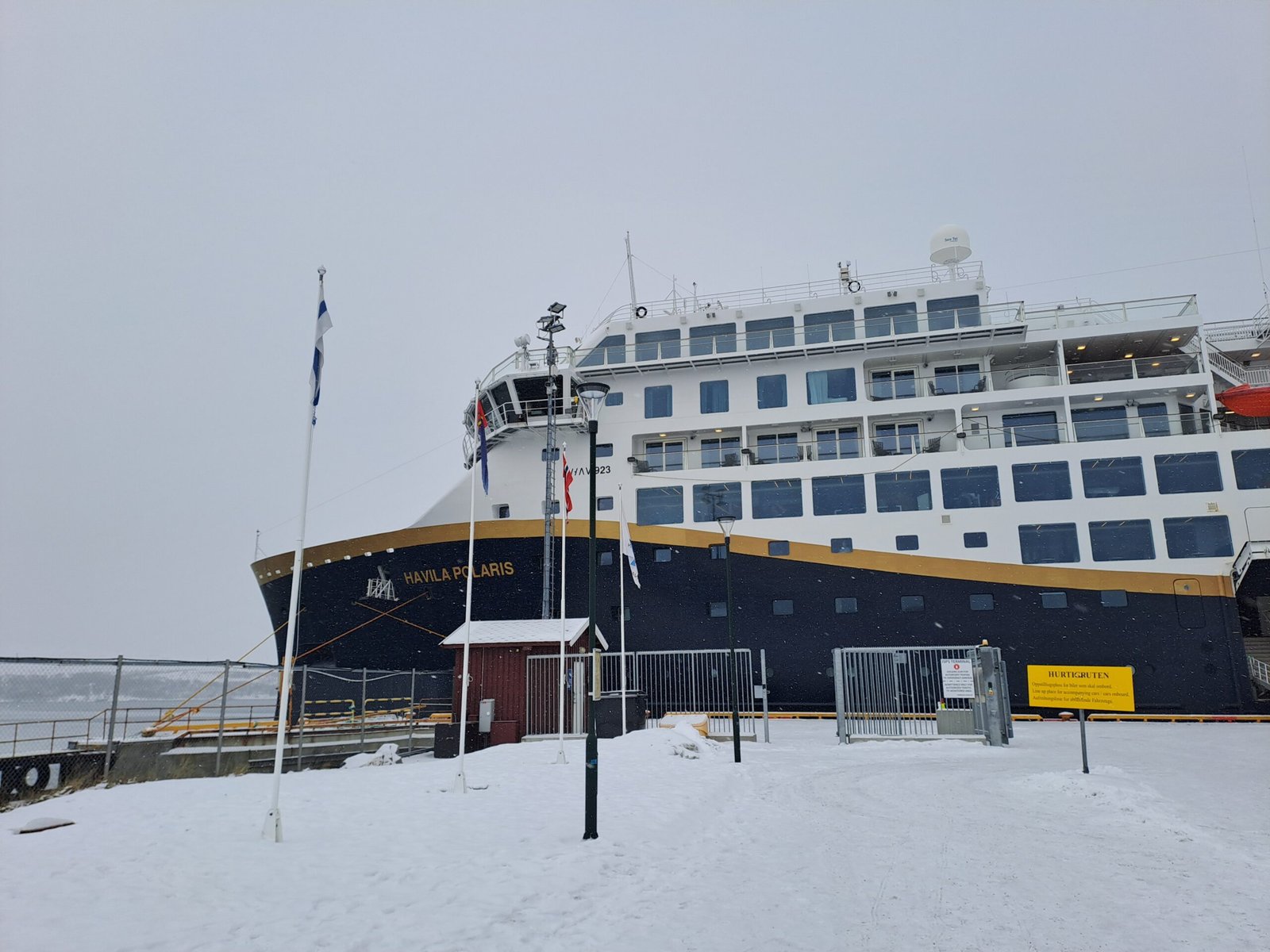
The Coastal Express (Havila or Hurtigruten)
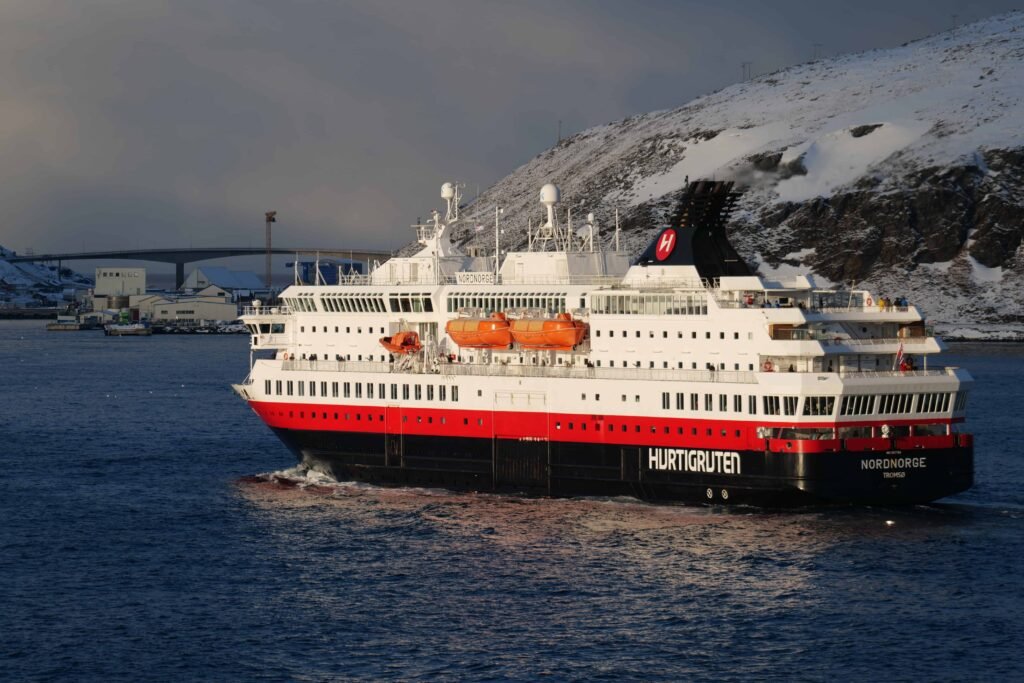
The Coastal Express is one of the most unique and beautiful ways to get around Norway!
Often described as a cruise, it’s actually a working passenger ferry and postal ship that connects remote towns and villages along Norway’s coastline – many of which are inaccessible by other public transport!
You can travel northbound, southbound, round-trip, or book shorter port-to-port journeys.
I’ve personally done both. I joined the full 12-day round-trip from Bergen in March, and also shorter port-to-port journeys between Tromsø and Svolvaer.
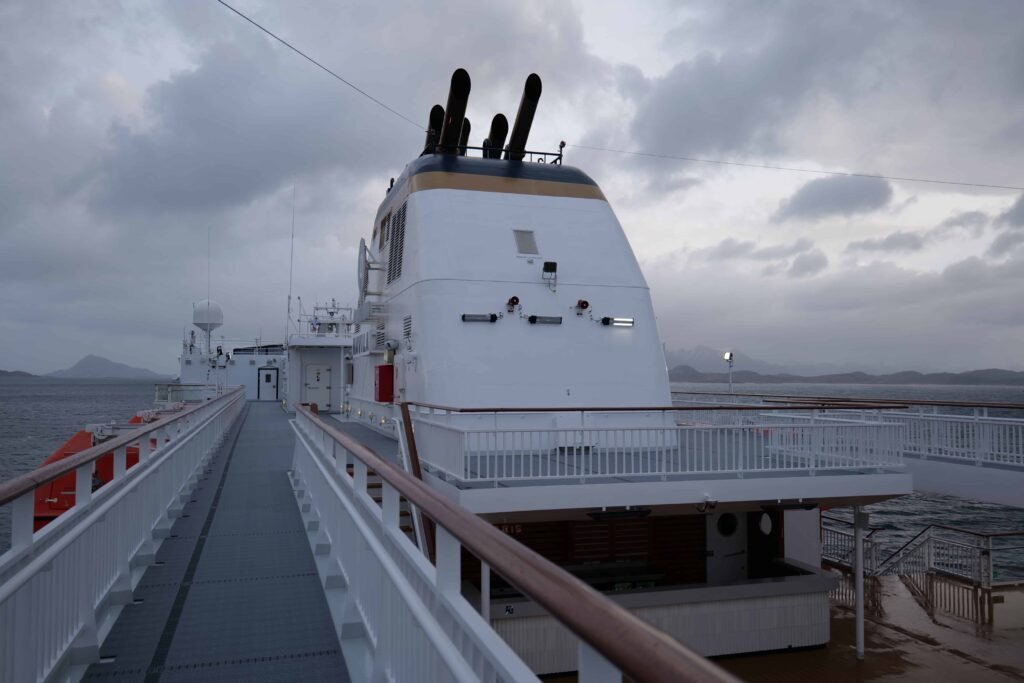
Onboard, the experience is calm and comfortable, with a restaurant, café, panoramic lounge, viewing decks, Northern Lights alerts and optional excursions.
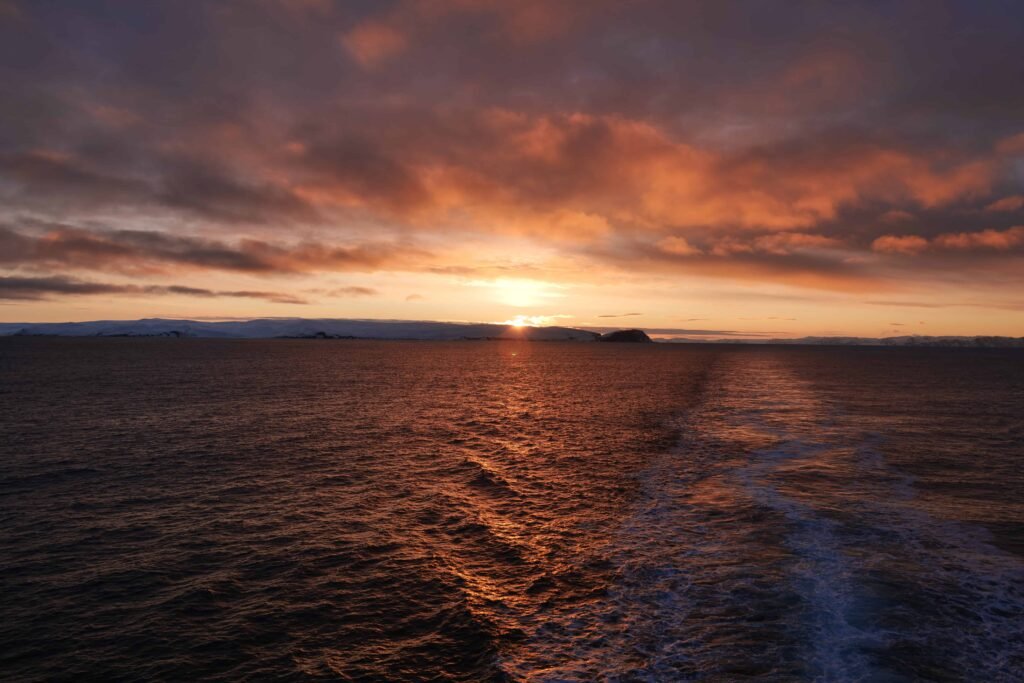
It’s also a photographer’s dream, as the scenery is constantly changing, and some of my favourite moments of my entire trip to Norway came from this route, including an unforgettable sunset near Kjøllefjord!
On board the Coastal Express, you’re not just getting from A to B, but seeing beautiful parts of Norway that most visitors never reach.
Havila or Hurtigruten?
There are two main operators for the route: Havila and Hurtigruten.
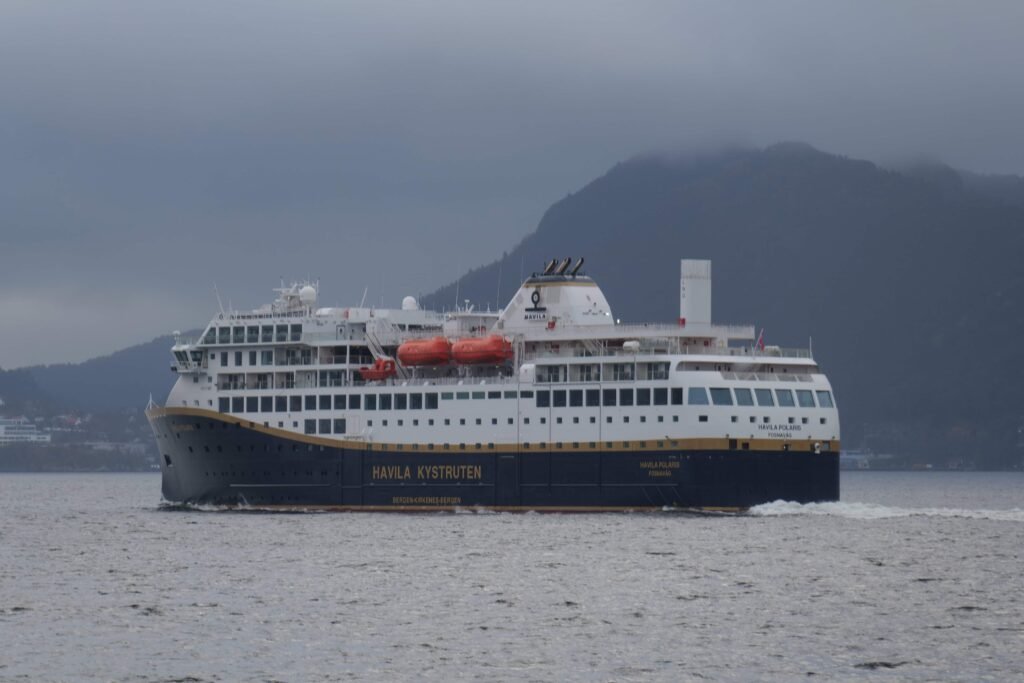
I chose Havila for its more modern cabins and interiors, and because it was significantly cheaper for me, as they removed the solo supplement 90 days before my sailing.
But having said that, both companies run the same itinerary, stop at the same ports and offer similar excursions – so you can’t really go wrong!
You can read my full Havila vs Hurtigruten comparison here.
Katie’s Top Tip: Winter reliability is generally very good, although ports can be skipped due to weather, so it’s good to be flexible. I didn’t experience any port cancellations, just one delay while waiting to board in Svolvaer.
Ferries & Local Boats
One of the most underrated ways to get around Norway in winter is by ferry.
It’s easy to assume boats stop running in winter, but Norway’s ferries are relied upon by locals and tourists all year round.
And in many regions, ferries are the most reliable transport when roads are icy or closed!
One of my favourite journeys was the Flåm to Gudvangen ferry, sailing through the picturesque, narrow fjords.
And as I said, the most well-known ferry is the Coastal Express with Havila or Hurtigruten.
It plays the role of passenger ferry, cargo ship, mail vessel, and cruise ship, connecting remote coastal towns from Bergen all the way to Kirkenes.
Plus, the process is so simple: turn up at the terminal (10–15 minutes early for small ports, longer for Bergen, Kirkenes or Tromsø), check in onboard, and you’re good to go!
It feels as easy as hopping on a bus (with infinitely better views!)
Katie’s Top Tip: If you’re nervous about winter transport but want to explore Norway fully, build your itinerary around the Coastal Express and then add trains, buses or tours around it.
Guided Tours in Winter
Most winter tours in Norway are surprisingly reliable, but cancellations do happen.
I only had two tours cancelled during my trip: one to the Geirangerfjord and one to South Lofoten, both due to bad weather.
Pick-up is also usually straightforward, either from your hotel or a central meeting point.
But, during winter, guided tours can either be unnecessary or the only realistic way to reach certain places safely, and knowing the difference is important for your budget!
As a solo female traveller, I definitely learned to be selective on this trip!
Some experiences aren’t accessible any other way in winter, while other places are a lot better (and more affordable!) when explored independently.
Let me give you the low-down:
Norway Guided Tours I Loved
There are some winter experiences in Norway where a guided tour is essential.
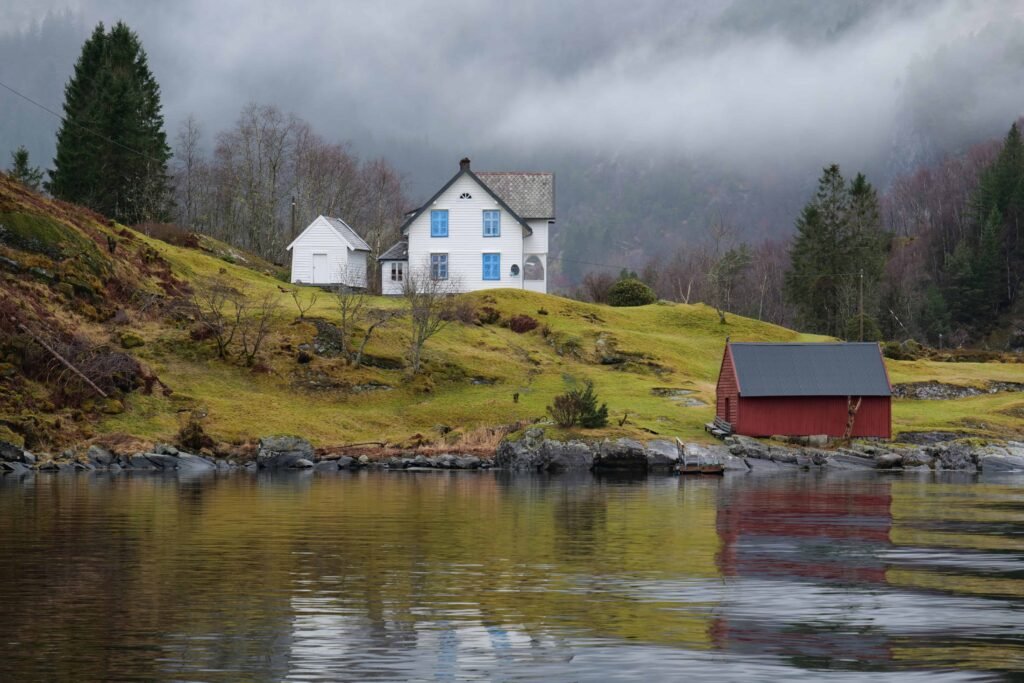
Mostraumen Fjord
The Mostraumen Fjord boat trip from Bergen is a great example, as it is best explored from the water either on a slow, scenic cruise or a fast, thrilling RIB boat tour.
This incredible half-day trip sails deep into two narrow fjords, under partially frozen waterfalls, past colourful cabins and to the tiny village of Mo!
You can read my full guide to visiting Mostraumen Fjord from Bergen here.
Saltstraumen Tidal Current
From Bodø, I took a guided trip to the Saltstraumen Tidal Current – the strongest tidal current in the world!
Timing is everything for this one due to the tidal cycles, so having a local guide who understood the conditions made it stress-free and super interesting.
You can read my full guide to visiting Saltsraumen here.

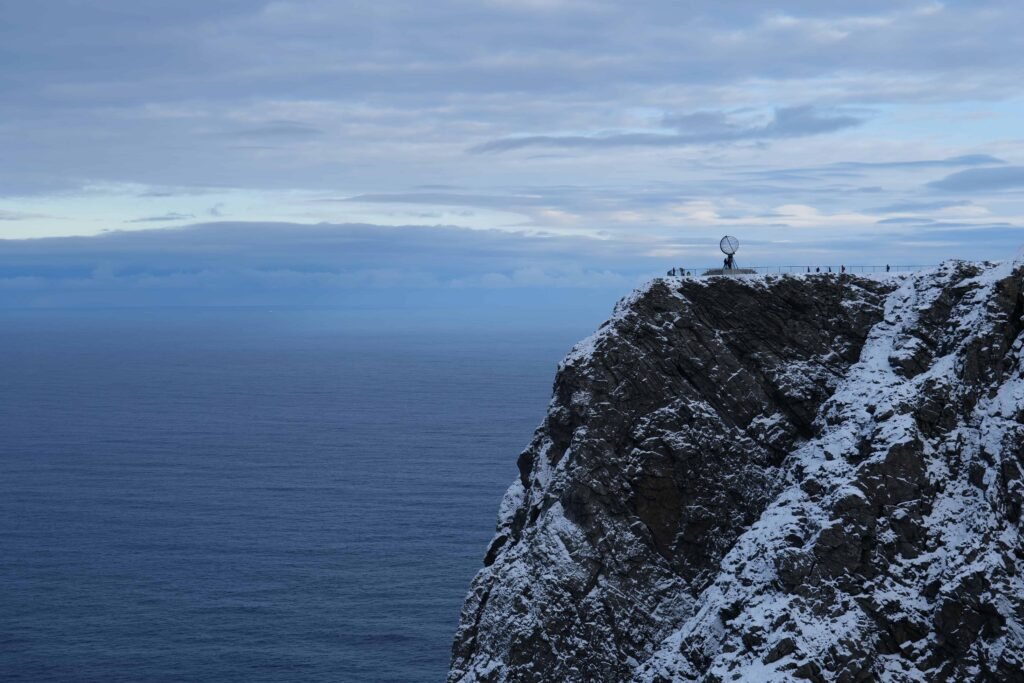
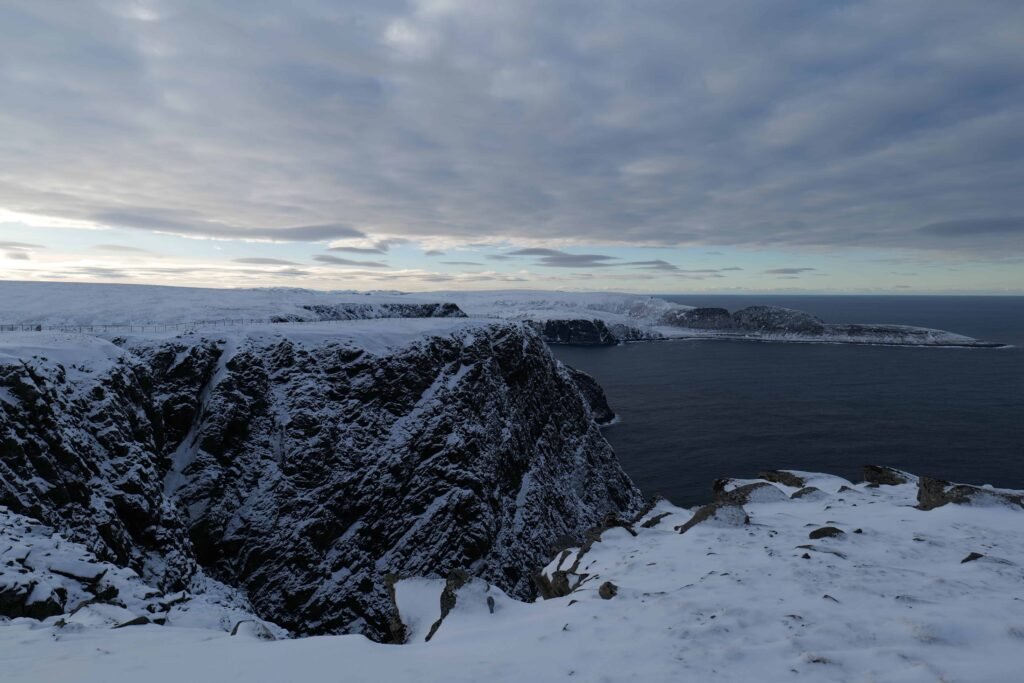
North Cape
Further north, the North Cape tour from Honningsvåg is another example where a guided tour is the best way to visit in winter without a car.
Winter road closures on the remote island of Magerøya, no public transport in winter, and convoy driving with a snowplough to get access mean independent travel is not advised.
You can read my full guide to visiting North Cape here.
Husky Sledding
In Kirkenes, husky sledding was one of the highlights of my entire trip! It’s a true bucket-list experience in the Arctic, where you really need the experience of a professional!
Going with a licensed operator ensures animal welfare standards and easy, safe, reliable and comfortable transport to get to your experience.

Hammerfest
I also loved the sightseeing tour in Norway’s northernmost town: Hammerfest.
I booked the excursion on my Coastal Express voyage, as the port stop is short and you dock out of town, so I wouldn’t have been able to see the beautiful viewpoints without it!
You can read my full guide to visiting Hammerfest here.

Tromsø
I explored Tromsø city centre independently as it’s easily walkable, but I also booked a few tours during my stay in the Arctic capital!
My highlights were a small-group Northern Lights tour (with the added bonus of free portraits from your professional photographer guide!), and a tour to explore the beautiful surrounding fjords and beaches in a small group.
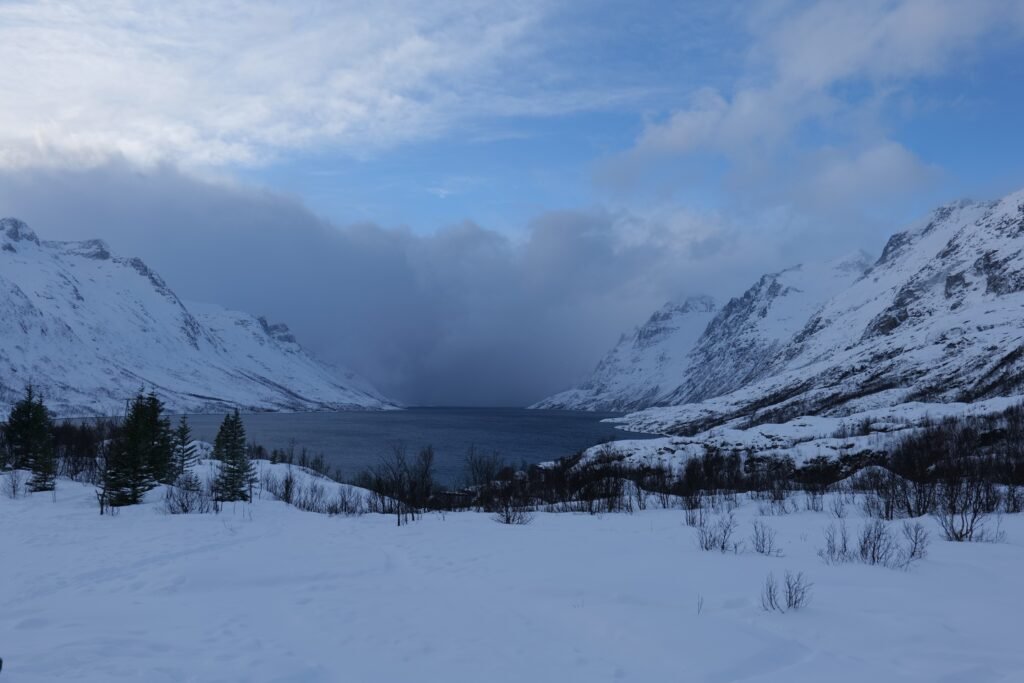
The Tromsø fjords and beaches tour was actually one of my most memorable, as it was nearly cancelled due to heavy snow and low visibility. Our amazing guide explained it all clearly, gave us the choice as a group, and we decided to continue.
It turned into one of my favourite days, with wild weather, empty beaches, and a feeling of experiencing the true Arctic – unlike on blue-sky days!
Svolvaer
Like Tromsø, I explored the centre of Svolvaer solo, but I also booked an incredible boat trip to Trollfjord and a photography tour to explore more of North Lofoten.
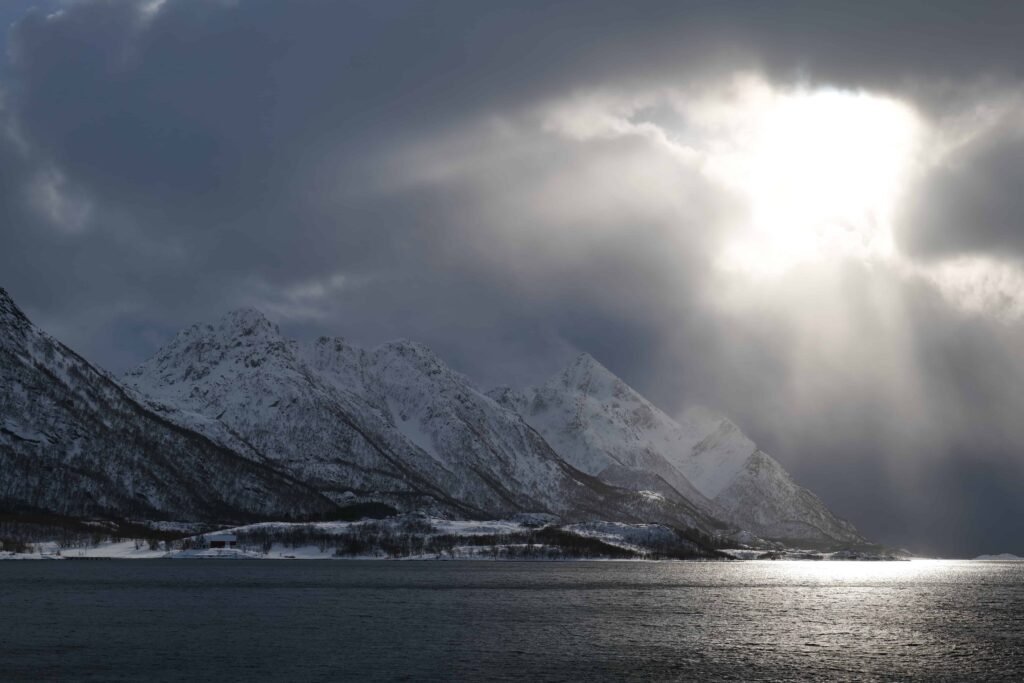
The Trollfjord boat trip was actually one of the highlights of my entire trip to Norway, with the sun breaking through dark clouds, snow-covered mountains and sea eagles overhead!
You can read my full guide to visiting Trollfjord here.
Katie’s Top Tip: In winter especially, always prioritise small-group tours over big coaches. They’re more flexible with weather, feel safer as a solo traveller, and you get a more personal experience with your guide!

Places I Chose to Explore Independently
Tours are great, but there are plenty of towns where I deliberately skipped excursions to save money and explore independently – and honestly, I never felt like I missed out.
Popular cities like Bergen, Tromsø, Oslo and Trondheim are extremely walkable in winter, with plenty to see and do at your own pace without the need for a guide.
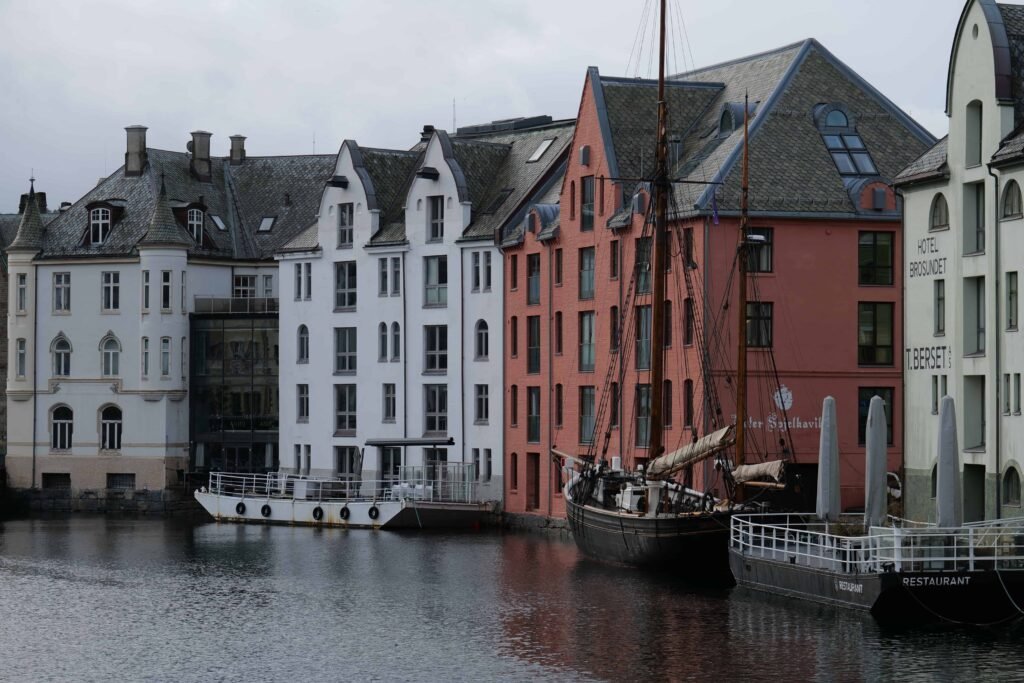
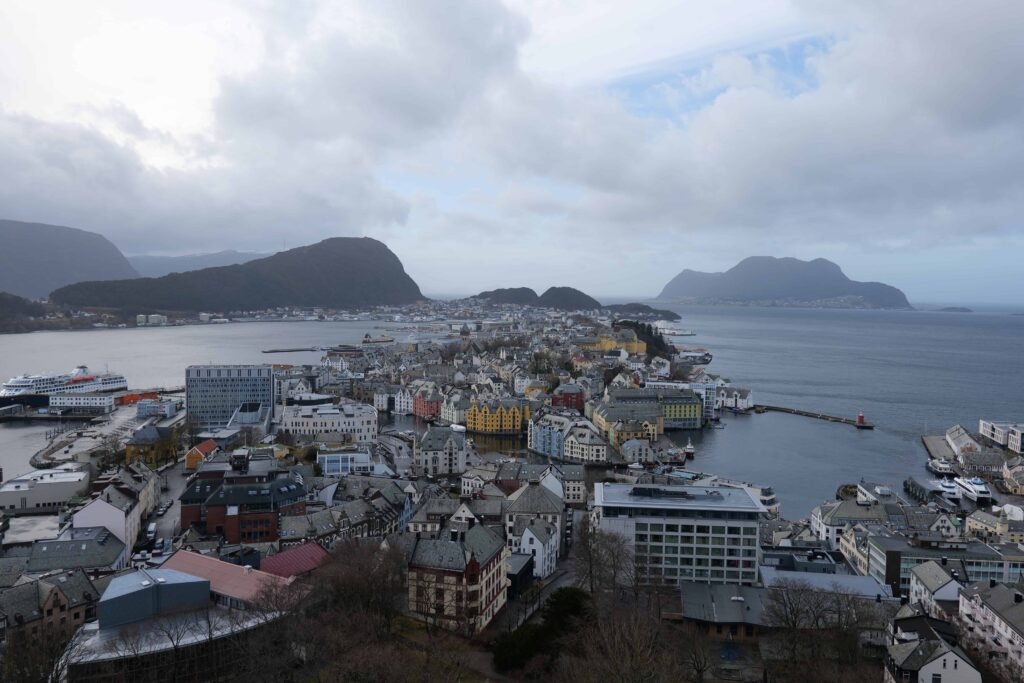
Ålesund is another great example, as you can hike the Mount Aksla steps to the most spectacular viewpoint and explore the Art Nouveau architecture easily in the centre.
Also, the underrated coastal town of Brønnøysund was amazing to explore solo, exploring the picturesque harbour, nearby lake, and iconic monument to the midpoint of Norway!
Katie’s Top Tip: Knowing when not to book a tour is so important for how to get around Norway in winter on a budget. To find out, ask yourself whether this place requires local knowledge, skills or transport to help you get there safely and enjoy your trip. If the answer is no, definitely consider exploring independently!
Winter Closed Roads in Norway
Not everywhere in Norway can be accessed year-round.
Mountain passes regularly close due to snowstorms, avalanche risk or high winds, and some scenic summer driving routes or hiking trails don’t exist at all in winter.
Here are some of the most common road closures in Norway in winter:
- Trollstigen
- Sognefjellet
- Valdresflye
- Aurlandsfjellet
- Gamle Strynefjellsvegen
As a result, I always advise against using a car in Norway in winter.
Google Maps doesn’t always reflect up-to-date closures, and remote routes can be impassable or dangerous.
So, when you’re figuring out the best way to visit Norway in winter without a car, sticking to reliable public transport is best.
Trains, buses, ferries, guided tours and especially the Coastal Express are designed for winter conditions and operate with local experience and safety in mind.
Katie’s Top Tip: Winter doesn’t mean missing out on Norway’s hidden gems! In particular, the Coastal Express is one of the best ways to explore remote, underrated places in Norway that most tourists don’t visit!
Safety Tips You Need for Travelling Around Norway in Winter
Norway is a safe country, but winter adds extra logistics that these tips will help with:
- Build buffer time into your itinerary. Winter transport in Norway is reliable, but weather is unpredictable, so build in extra nights between important tours or long journeys.
- Check transport the morning of travel. Conditions change fast, so always re-check public transport statuses just before you travel.
- Dress for waiting. Platforms, ferry terminals and bus stops are often exposed therefore freezing! Dress in layers that are easy to take on and off.
- Stick to official transport apps and websites. Using Entur keeps all your routes and updates in one place.
- Avoid tight connections. Leave more time than you think you need between connections in winter to avoid rushing.
- Choose daytime travel where possible. Travelling during daylight feels less stressful, makes navigation easier, and lets you enjoy the scenery.
- Be realistic about what’s accessible. Some mountain roads, hiking trails, and remote areas aren’t practical in winter. Use trains, or the Coastal Express instead.
- Use guided tours for hard-to-reach locations. In places like Lofoten, North Cape, or the Arctic fjords, tours are often the safest way to explore solo.
- Keep someone at home updated. Share your itinerary with a trusted friend or family member.

How to Get Around Norway in Winter on a Budget
Norway definitely has a reputation for being expensive, but winter can actually be one of the best times to keep costs down.
Here are my top 5 tips to save money travelling around Norway:
- Book long-distance transport as early as you can. Trains, domestic flights, and the Coastal Express are almost always cheaper when booked in advance.
- Be flexible with dates and times. Travelling midweek or outside peak hours can save money on some routes.
- Use trains for scenery, but flights for distance. Trains are one of the best ways to travel Norway in winter for short or medium routes. But flying makes more sense (and often costs less) for longer distances.
- Compare everything in one place. Using Entur helps you spot cheaper combinations of trains, buses, ferries and flights.
- Be selective with guided tours. Tour costs add up quickly, so save them for places that genuinely need them in winter.
Katie’s Top Tip: The exception to booking the Coastal Express early is for solo travellers. On my voyage with Havila, I found they removed the solo supplement 90 days before departure.
Example Car-Free Norway Winter Itinerary
If you want a realistic itinerary to see Norway in winter without a car, this is the route I did:
- Start by flying into Oslo, and enjoy a few days’ city break.
- Take the F4 train from Oslo to Myrdal (stunning scenery on this route!)
- Join the incredible Flåm Railway to the village of Flåm and stay overnight.
- The next morning, take the picturesque ferry from Flåm to Gudvangen.
- Then the bus from Gudvangen to Voss, where you’ll pick up the F4 train to Bergen.
- In Bergen, take a few days to explore the city and join a fjord trip to Mostraumen.
This itinerary can be enjoyed on its own in 4-7 days.
Alternatively, in Bergen, you could take an internal flight to Tromsø for Northern Lights season or board the Coastal Express from Bergen!
Adding Tromsø would take your itinerary to 7-10 days.
Adding the Coastal Express would add 12 days for the round-trip or 7 days just northbound.
Final Thoughts: Winter Travel in Norway
I know winter travel in Norway can feel overwhelming, especially when you’re travelling solo and without a car.
But once you understand how the public transport system works, Norway actually becomes one of the easiest countries in Europe to explore in winter!
Public transport is reliable, safety standards are incredibly high, and there are clear options for every type of traveller.
The key to how to get around Norway in winter is good planning, having realistic expectations, and choosing transport that’s built for the season.
So, bottom line? Please don’t let Norway’s winter weather scare you off.
With the right transport, winter is when Norway feels quieter and more magical!
How to Get Around Norway in Winter: FAQs
Is travelling around Norway in winter safe?
Yes, Norway is one of the safest countries I’ve ever travelled around as a solo traveller, as public transport feels very well-organised.
What makes winter travel feel especially safe is how companies and the government put safety first. Trains don’t run if it’s unsafe. Roads close. Tours get cancelled.
That might feel frustrating at first, but it’s actually incredibly reassuring!
What’s the best way to travel in Norway if I’m scared of driving in snow?
If driving in snow and ice makes you feel a bit sick (because same!), you don’t need to drive.
The best way to get around Norway in winter without that stress is by combining trains, buses, ferries, domestic flights and the Coastal Express. These systems are reliable and very used to winter conditions.
I didn’t drive at all on my winter trips, and I never felt limited.
Some of Norway’s most spectacular routes (like the Oslo-Bergen railway or the Coastal Express) are actually only possible without a car!
Is it better to take trains or buses in Norway in winter?
In general, trains are the most reliable and comfortable option for winter travel in Norway, especially for longer distances. They’re less affected by snow than roads, run frequently and are incredibly scenic.
But, of course, buses are important too – especially for shorter connections within cities and between towns where train lines don’t exist. In winter, bus schedules may be reduced, and delays are more common, but they’re still safe and well-run.
Are domestic flights in Norway reliable in winter?
Yes! Norway’s domestic flights are generally reliable, even in winter. Airports are well equipped for snow, planes can be de-iced, and any delays are well-communicated.
I flew between Bergen and Tromsø in winter and found flying to be the quickest, smoothest and most affordable way to cover the long distance.
How do I plan a Norway itinerary if I don’t drive?
Planning a car-free itinerary in Norway is all about working with the transport network.
Start by mapping out well-connected bases you could stay in (like Oslo, Bergen or Tromsø), and then connect them to the places you want to visit using trains, buses, flights or ferries.
I also always recommend building in buffer days and avoiding tight, same-day connections in winter. As this gives you flexibility if weather changes and keeps the trip feeling relaxed.
Is Norway expensive to get around in winter?
Norway definitely isn’t cheap, but winter travel can be a lot more affordable than summer if you plan ahead.
Booking trains, flights, and ferries early makes a huge difference to overall cost. And always consider whether a guided tour is actually essential or if you can explore a place alone.
What happens if a storm cancels my tour or transport?
Safety always comes first, so if weather cancels or delays public transport, options and alternatives are clearly communicated. You’re not left guessing or scrambling on your own.
I’ve had tours cancelled and transport delayed, and each time the process was well-organised.
For example, when my Coastal Express port-to-port from Svolvaer was delayed, updates were shared on the Havila website. And when my tour to Geirangerfjord was cancelled I was informed the day before and given a full refund.
The key is having flexibility built into your itinerary, so a delay never feels like a disaster.
Do I need to pre-book everything in Norway?
You don’t need to pre-book everything, but you do need to pre-book the important stuff.
Long-distance trains, internal flights, the Coastal Express, and popular winter tours should be booked in advance for better prices and peace of mind.
For local transport, city buses, and short ferry hops, you can book closer to the time or even on the day.
Read More About Travel in Norway:
- Northbound vs Southbound Norway Coastal Express: Compared
- What to Wear in Norway in Winter? (+ Norway Packing List)
- How to Plan a Trip to Norway in Winter (Step-by-Step Guide)
- Norway vs Iceland in Winter: Ultimate Solo Travel Comparison
- Where to Stay in Bergen (+ Best Areas For Solo Travellers)
- Where to Stay in Tromsø (+ Best Areas For Solo Travellers)
- Hurtigruten vs Havila: Which is Best For Solo Travellers?
- Is Saltstraumen Worth Visiting from Bodø? (+ What to Expect)
- How to Get Around Norway in Winter (Without a Car!)
- How to Visit Trollfjord: Northern Norway’s Most Iconic Fjord
- How to Visit Mostraumen Fjord (Bergen’s Best Day Trip!)
- 7 Things To Do in Hammerfest (Hammerfest Travel Guide)
- Mount Aksla Hike: How to Find the Best Ålesund Viewpoint
- 8 BEST Things To Do in Brønnøysund, Norway: Havila Port Stop
- 21 Most Beautiful Places in Norway You Have To Visit
Grab Your Solo Female Travel in Europe Starter Kit:
Pin Me For Later!
Share This Guide to How to Get Around Norway in Winter:


One Comment